Anniversary Flowers by Year: The Traditional List From 1st to 50th
Nobody tells you that your tenth anniversary has its own flower. Most people find out the night before, while standing in a grocery store aisle holding a bunch of whatever is left. A little planning turns the traditional list into one of the easiest gift ideas you will ever get.
The idea is old and slightly playful. Each year of marriage is paired with a gift material, and in the flower version each year gets a bloom that fits the mood of that stage: sweet and young, then warm, then steady, then grand. This guide gives you the full list, what each flower says, how long it lasts in a vase and what it costs this year. If you want to never miss the date in the first place, read our simple date system for birthdays and anniversaries.
The traditional anniversary flower list, year by year
This is the list most US florists and card shops follow. You will see small differences between sources, especially in the middle years, so do not worry if a card says something else. Nobody is grading.
| Year | Flower | What it says |
|---|---|---|
| 1st | Carnation | Young love, fascination |
| 2nd | Lily of the valley | Sweetness, returning happiness |
| 3rd | Sunflower | Warmth, loyalty |
| 4th | Hydrangea | Gratitude, abundance |
| 5th | Daisy | Simplicity, a fresh start |
| 6th | Calla lily | Elegance, devotion |
| 7th | Freesia | Trust, lasting friendship |
| 8th | Lilac | First love remembered |
| 9th | Bird of paradise | Joy, adventure |
| 10th | Daffodil | New beginnings, a decade of hope |
| 11th | Tulip | Perfect love |
| 12th | Peony | Happy life, good fortune |
| 13th | Chrysanthemum | Loyalty, long life |
| 14th | Dahlia | Commitment, lasting bond |
| 15th | Rose | Love, always |
| 20th | Aster | Patience, deep affection |
| 25th | Iris | Faith, wisdom |
| 30th | Lily | Devotion, pride |
| 40th | Nasturtium | Victory over the years |
| 50th | Violet | Faithfulness, modesty |
Meanings come from the Victorian language of flowers, which was never one fixed dictionary, so a few are more tradition than science. That is part of the charm.
Years 1 to 5: carnation, lily of the valley, sunflower, hydrangea, daisy
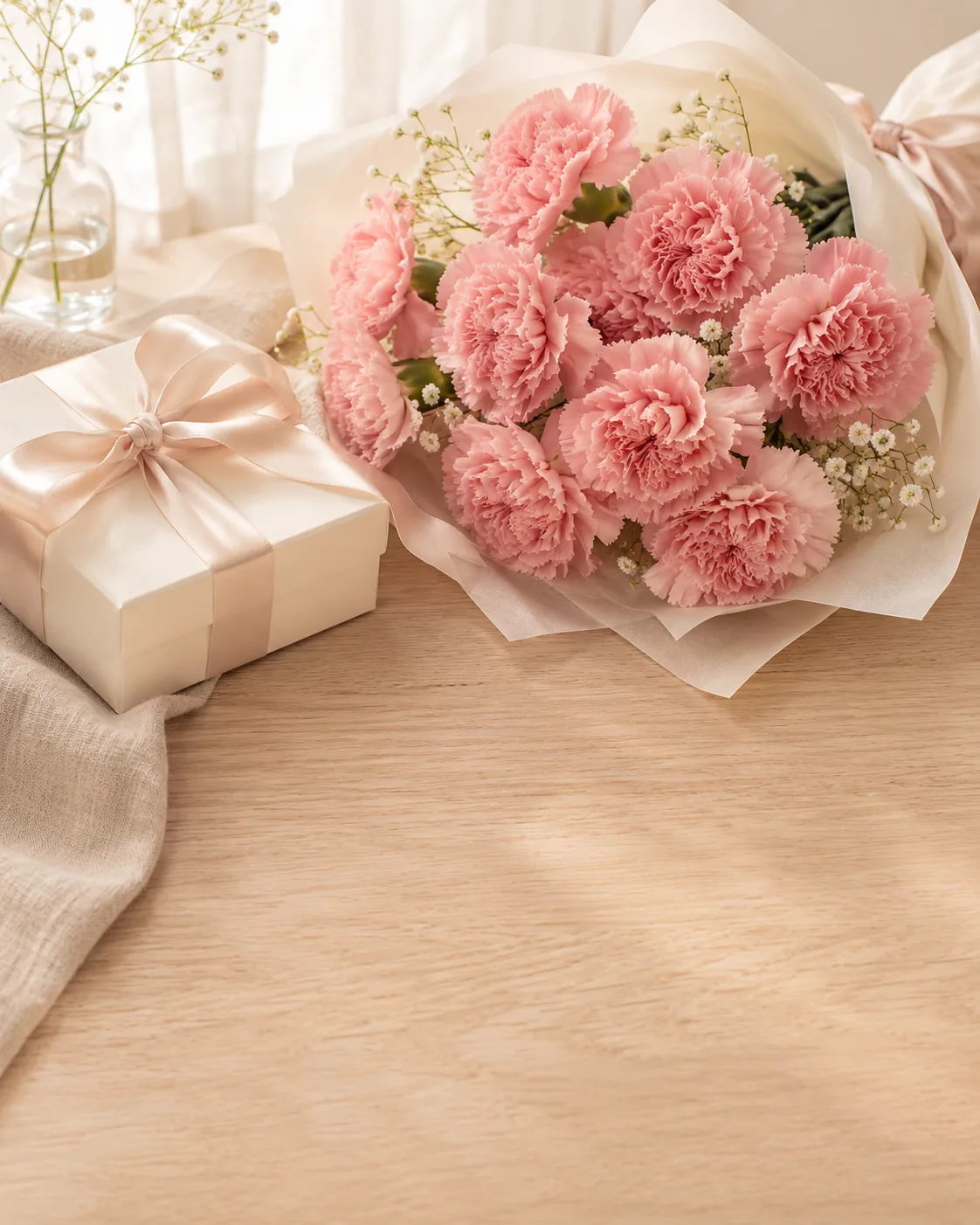
Year 1, carnation. Carnations get a bad reputation for being everyday flowers, but a full armful in blush or white looks soft and modern. They last 10 to 14 days in a vase, longer than almost anything else, and a dozen stems usually costs $15 to $30. Pair them with a small gift and you have a lovely first-year present.
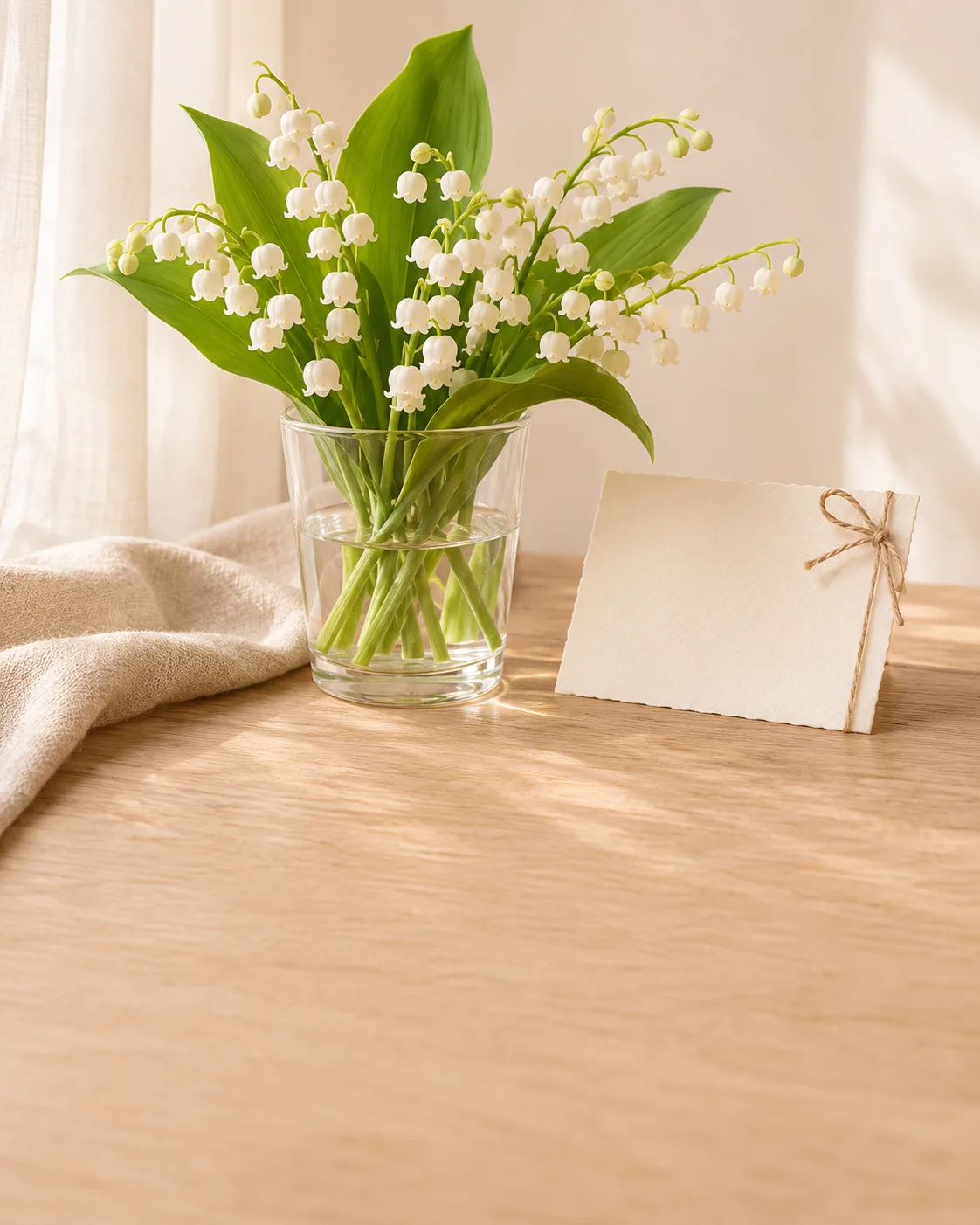
Year 2, lily of the valley. Tiny white bells with a famous scent. Real lily of the valley is seasonal and pricey, often $40 to $80 for a small bunch in spring, and it lasts about 5 to 7 days. Outside spring, florists often swap in white freesia or sweet peas for the same delicate feel, or tuck a few precious stems into a small glass.
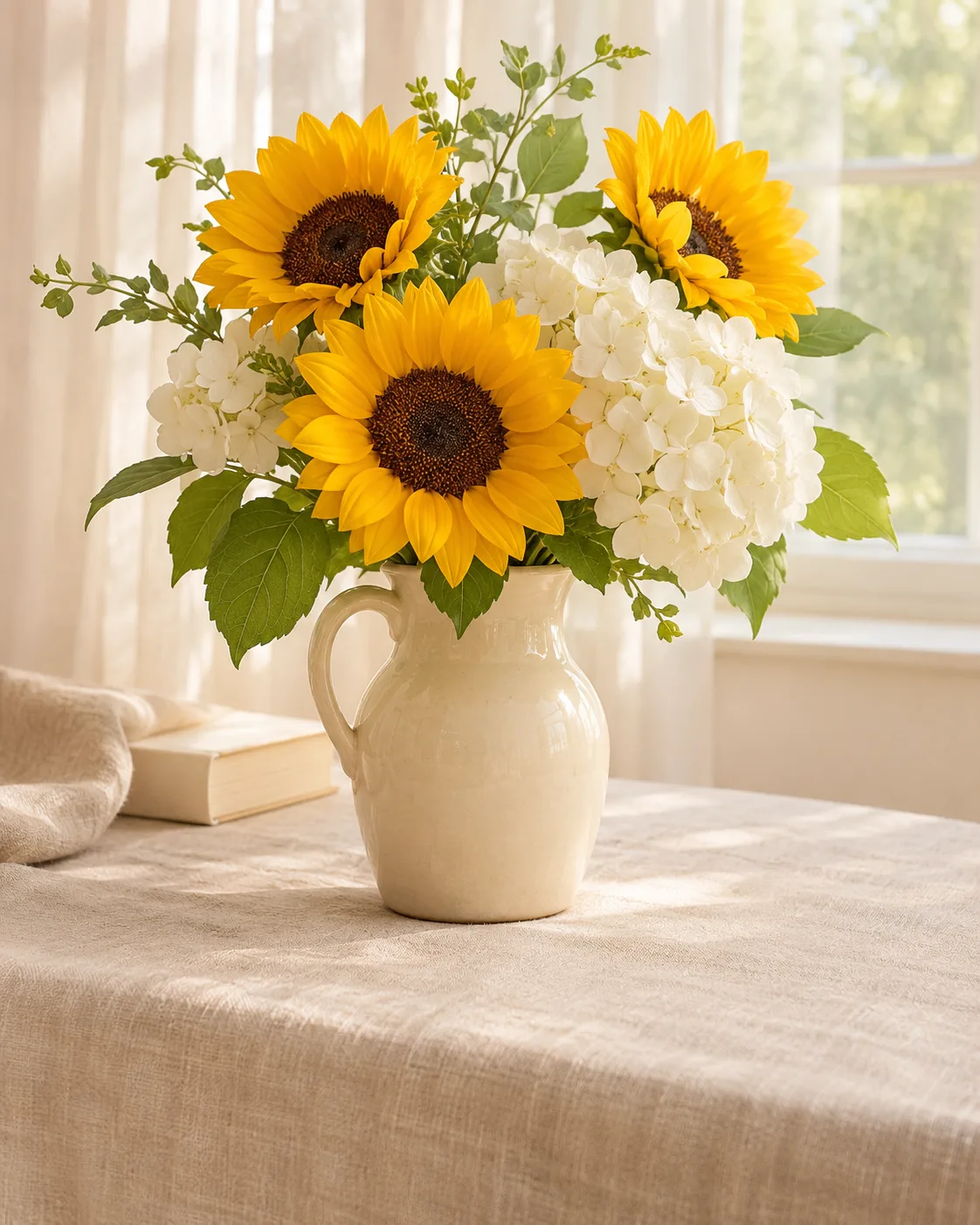
Year 3, sunflower. The easiest year of all. Sunflowers are cheerful and sturdy, last 7 to 10 days and cost about $20 to $40 for a bunch of five. Add a little greenery and they look like a bouquet from a farm stand in the best way.
Year 4, hydrangea. Big, full heads that make one stem look like a bouquet. A hydrangea lasts 5 to 7 days if you keep it well watered, and it is one flower that can be revived: submerge the whole head in cool water for 30 minutes when it droops. Three stems in a vase are plenty.
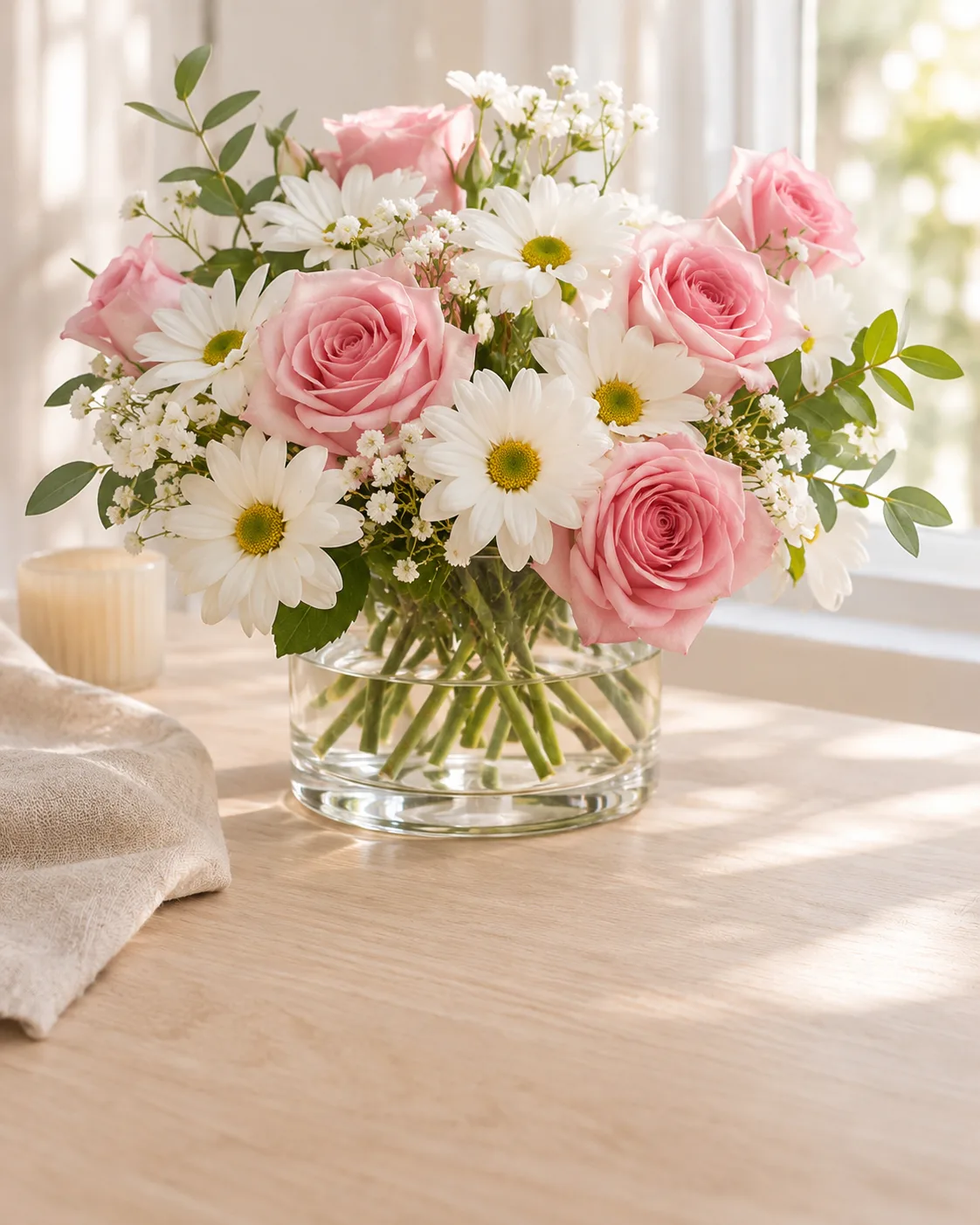
Year 5, daisy. Simple, bright and honest. Daisies are the flower of a couple that does not need fuss, and they run about $15 to $30 a bunch. Five years in is a good moment for something casual and happy.
Years 6 to 10: calla lily, freesia, lilac, bird of paradise, daffodil
The middle stretch has more elegant picks, and several are seasonal, so planning matters more.
- Calla lily (6th). Sleek and sculptural, lasting 7 to 10 days. Stems cost $4 to $8 each, so a bouquet of ten is roughly $45 to $80.
- Freesia (7th). Fragrant and delicate, about 7 days. A bunch is often $15 to $30 and it fills a room with scent.
- Lilac (8th). A spring flower. Fresh lilac is hard to find in fall and winter, and short lived at 4 to 6 days, so many couples choose lilac-colored stock or lisianthus on off-season dates.
- Bird of paradise (9th). A bold tropical bloom that lasts a long 10 to 14 days. Two or three stems make a statement for around $25 to $50.
- Daffodil (10th). Bright and early in spring, lasting 5 to 7 days. Important tip: daffodils release sap that shortens the life of other flowers, so give them their own vase for the first day.
A decade is worth marking. If your tenth falls in fall, pair a smaller daffodil bunch (if you can find one from a greenhouse grower) with their favorite flowers rather than trying to build a whole bouquet around it.
Years 11 to 15 and beyond: tulip, peony, chrysanthemum, dahlia, rose
From here the list gets grander. The classics return, and many couples choose to switch to a favorite rather than follow the table exactly.
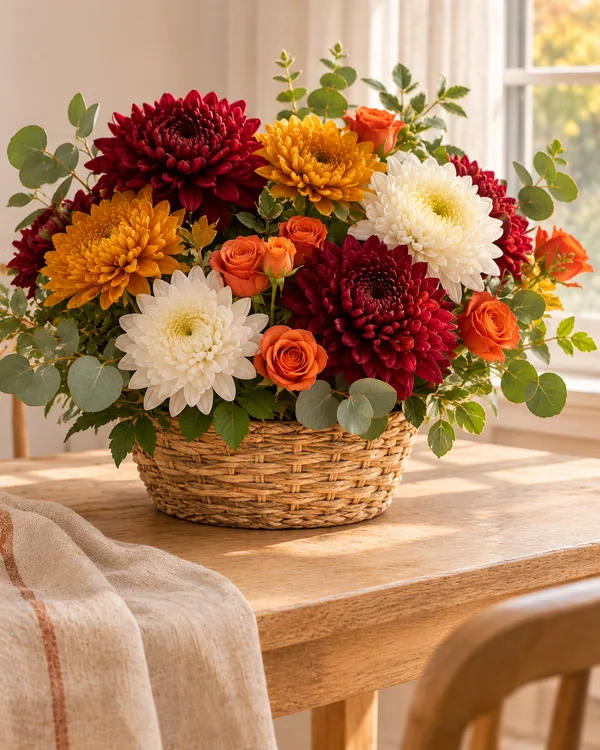
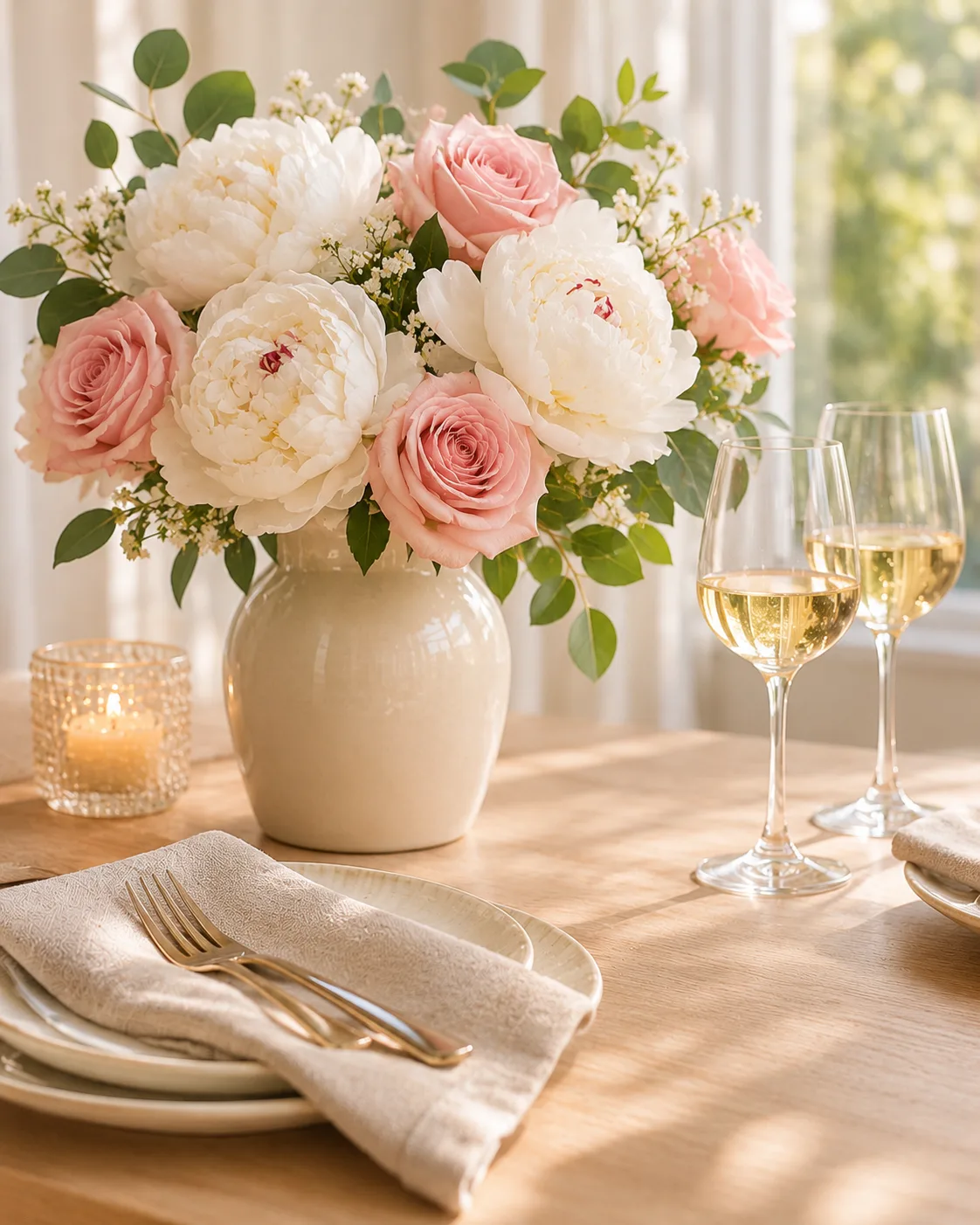
Tulip (11th) is a winter and spring flower and one of the few that keeps growing in the vase, so arrange them loosely and let them lean. A bunch of ten costs $15 to $30. Peony (12th) is the luxury pick, in season from late April to June. Stems run $6 to $12 each at retail, and a bouquet can reach $90 or more, but nothing else looks like it. Chrysanthemum (13th) is excellent news for a fall date: it lasts 14 days or more and is affordable at $15 to $30 a bunch. Dahlia (14th) is a late summer to fall flower that lasts 4 to 6 days, so buy it the day you give it.
Rose (15th). Fifteen years is the point where the rose, the flower everyone expects, finally becomes the official choice. A dozen red roses in 2026 usually costs $60 to $110, and our guide to what rose colors mean can help you choose a shade that says what you mean.
Later milestones keep the pattern: aster at 20, iris at 25, lily at 30, nasturtium at 40 and violet at 50. For a silver or golden anniversary, most people skip the list and give a big bouquet of white and cream flowers, because the occasion is the point, not the species.
How to choose when the traditional flower is out of season
Some years the flower on the list simply is not available. Lilac in November and peonies in January are the classic problems. You have three good options.
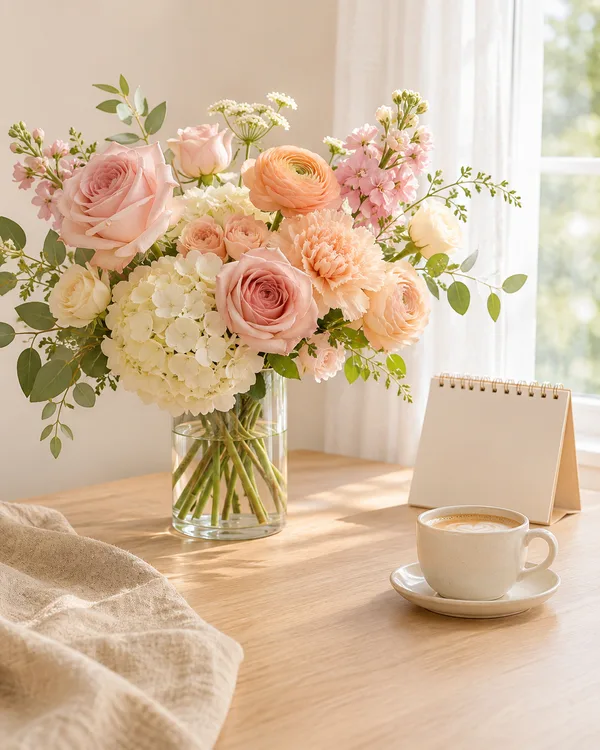
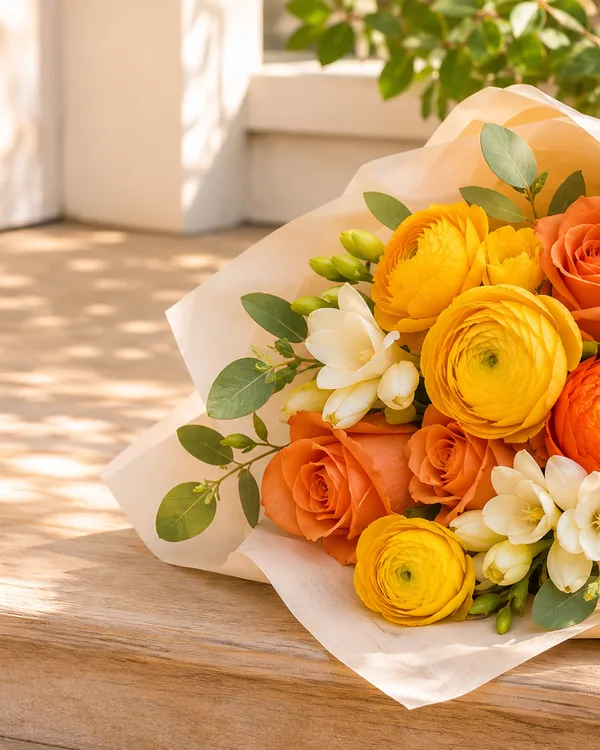
- Use a close substitute. Lisianthus or stock for lilac, ranunculus for peony, white roses for lily of the valley. Ask your florist what is good this week.
- Choose by color and feeling. A lilac-toned bouquet still nods to year 8 even if it has no lilacs in it.
- Use their favorite flower. This always wins. The list is a tradition, not a requirement, and a bouquet of exactly what they love beats a perfect match to a chart.
When in doubt, mention the year on the card. A line such as "Year 6: calla lilies for six years of you" tells them you know the tradition without pressing the point.
What to spend and when to order
For most couples a bouquet between $35 and $90 is the sweet spot in Orange County in 2026. A simple bunch from a market is $15 to $30, a florist-made bouquet in a vase is $60 to $120, and a premium arrangement with peonies or long-stem roses can pass $150.
| Budget | What you get |
|---|---|
| From $15 | A bunch of one flower, such as daisies or carnations, wrapped in paper |
| From $35 | A hand-tied bouquet with greenery |
| From $60 | A designed bouquet in a vase, ready to put on the table |
| From $100 | Peonies, long-stem roses or a large mixed arrangement |
Order at least 2 days ahead for the best selection. Same-day delivery is available from many local florists if you order in the morning, and you can read how it works in our guide to same-day flower delivery in Orange County. If your anniversary lands on a weekend or near a holiday, order a week ahead.
Small ideas that make the flowers feel personal
Flowers are lovely on their own, but a small detail makes them feel chosen. A few that work every time:
- Write the year on the card. Two or three lines is enough. Say one real thing from the past year.
- Match the vase to the table. A low vase for a dinner table, a tall one for a hallway or entry.
- Add the flower from your wedding. If you carried peonies or ranunculus, tuck a few stems into the bouquet. It is the nicest detail you can add.
- Give flowers on the morning, not at dinner. They get a full day of attention and the evening stays about the two of you.
- Keep one stem. Press a single bloom in a book each year. After ten years you have a small collection that says more than any gift.
Anniversary flowers FAQ
What is the traditional flower for each anniversary?
The traditional US list is carnation (1st), lily of the valley (2nd), sunflower (3rd), hydrangea (4th), daisy (5th), calla lily (6th), freesia (7th), lilac (8th), bird of paradise (9th), daffodil (10th), tulip (11th), peony (12th), chrysanthemum (13th), dahlia (14th) and rose (15th). Later milestones are aster, iris, lily, nasturtium and violet.
Is it okay not to follow the list?
Yes. The list is a tradition, not a rule. Most people use it as inspiration and add their partner's favorite flower or color. A bouquet they love always beats a perfect match to a chart.
What flower is best for a first anniversary?
Carnations are the traditional pick and they last up to two weeks in a vase. If you want something less expected, a bouquet of blush carnations with a few roses looks modern and costs less than an all-rose bouquet.
What if the flower for my year is out of season?
Ask a florist for a close substitute in the same color or feeling, such as lisianthus for lilac or ranunculus for peony. You can also choose their favorite flower and mention the traditional one on the card.
How much should I spend on anniversary flowers?
Most people spend $35 to $90 in Orange County in 2026. A simple bunch is $15 to $30, a florist-designed bouquet in a vase is $60 to $120, and a premium arrangement with peonies or long-stem roses can pass $150.
How far ahead should I order?
Two days ahead gives the best selection, and a week ahead is safer near weekends and holidays. Same-day delivery is possible if you order in the morning, but your first choice of flower may not be available.
The short version
Every anniversary year has a traditional flower, from carnation at year one to rose at year fifteen. Use the list as a starting point, swap in a close substitute when the flower is out of season and add their favorite when you can. Write the year on the card, order two days ahead and give the flowers in the morning. That is all it takes to make the date feel planned instead of remembered at the last minute.