Tulips Keep Growing After You Cut Them: How to Keep Them Straight
Put a fresh tulip bouquet in a vase in the evening and by morning it looks different. The stems are taller, the flowers have shifted sideways, and one or two are leaning over the rim like they are trying to read something on the counter. Nothing is wrong. Tulips are the only common cut flower that keeps growing in the vase, and they do it fast.
This guide explains what is going on inside a cut tulip, why the stems curve, and how florists keep a tulip bouquet looking neat for a full week. You will also find a quick comparison of the tulip types you will see in shops, which ones are safe around pets, and what to do if your tulips have already gone wild.
Why do tulips keep growing after they are cut?
A tulip grows from a bulb, and the bulb holds a store of sugar and energy. When a grower cuts the stem, the flower is separated from the bulb, but the stem is still alive and still full of growth hormones. Water in the vase keeps the cells in the stem swelling, and the stem stretches. Most tulips gain about an inch in the first few days, and some gain more. A bouquet that looked compact on Monday can be noticeably taller by Thursday.
The stretching is not even. The stem grows mostly just below the flower head, which is why the top of the stalk does the bending and twisting. It also explains why tulips look as if they are moving. In a way, they are, slowly.
Why do tulips bend toward the window?
Plants grow toward light, a response known as phototropism. In a cut tulip, the side of the stem facing away from the light stretches a little faster than the side facing it, so the stem curves toward the window. Tulips also react to gravity, and as the heavy flower head opens it pulls the stem downward. Put those two things together and you get the classic drooping, swooping tulip.
Some florists lean into this and design bouquets that are meant to move. A loose, curving tulip arrangement looks like a painting of a spring garden. But if you prefer clean, upright stems, a few habits make a big difference. We cover them below.
How to keep tulips straight in a vase
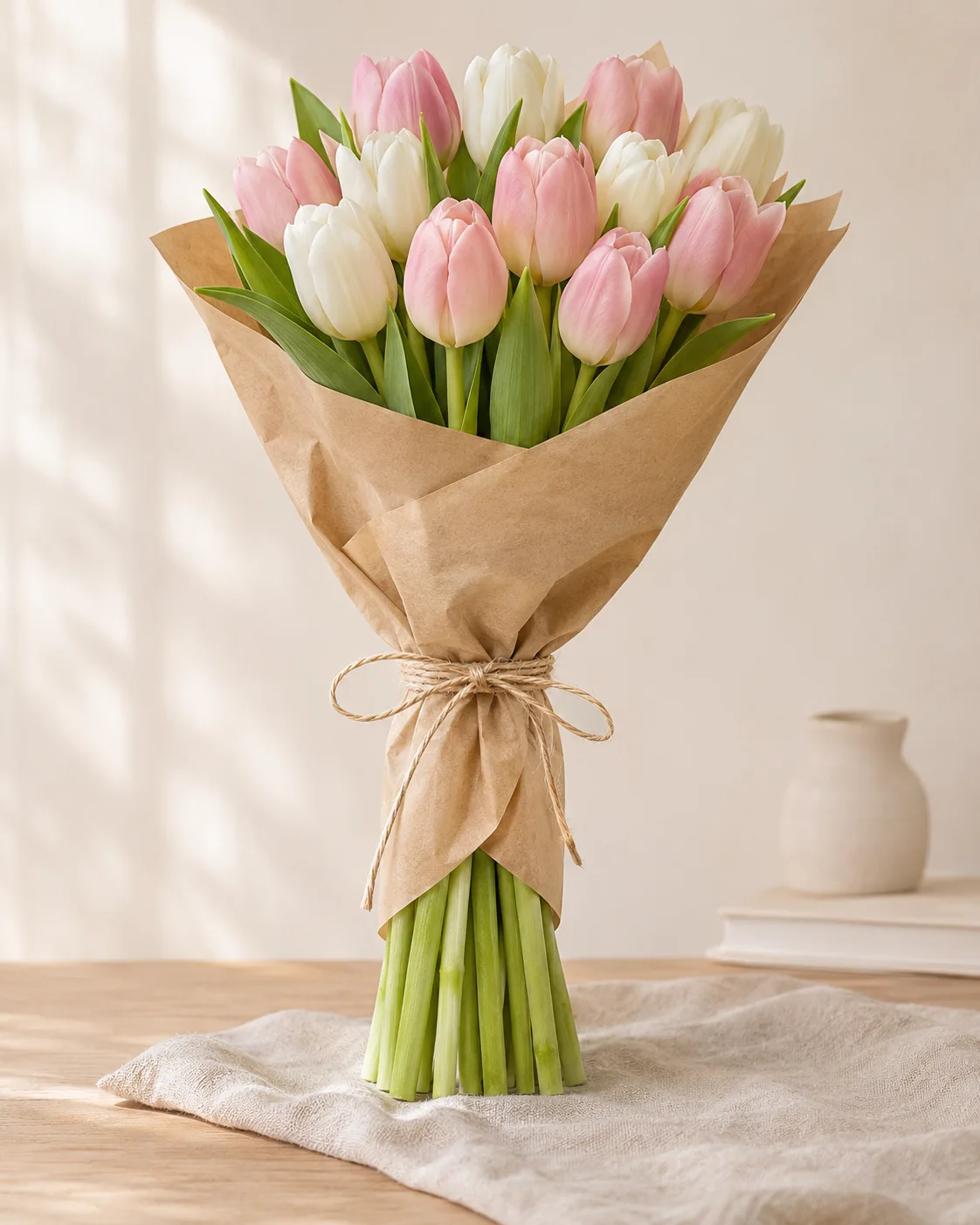
- Wrap them first. This is the trick florists use most. Roll the whole bunch tightly in paper, stems and heads together, and stand it in a deep container of cold water for one to two hours. The stems drink, firm up and straighten while the paper holds them in line. Then unwrap and arrange.
- Cut the stems fresh. Trim about an inch off each stem with a sharp knife or clean scissors, cutting straight across or at a slight angle. Do this every time you change the water.
- Use cold, shallow water. Tulips do well with only three to four inches of cold water. Deep water makes the soft stems flop, and warm water speeds up both growth and wilting.
- Turn the vase. Rotate the vase a quarter turn each day. As the tulips lean toward the light, you turn the lean back the other way.
- Keep them cool. Tulips are spring flowers and they open fast in a warm room. Keep the vase away from radiators, sunny windows, TVs and the fruit bowl. Ripe fruit gives off ethylene gas, which shortens the life of many cut flowers.
- Use a tall, narrow vase. The vase should come up at least halfway on the stems so they have something to lean on. A wide, short vase lets the stems fall in every direction.
For more general tips that apply to every bouquet, see our guide on how to make flowers last longer.
Do the pin and the penny tricks work?
Two old tricks come up every spring. One says to poke a tiny hole in the stem just under the flower with a pin. The other says to drop a copper penny into the vase. Florists disagree about both, and there is no solid evidence that either one stops a tulip from bending. The pin trick is meant to let trapped air out of the stem. The penny is said to slow bacteria. Neither will hurt a bouquet, but neither replaces the methods above. If you want to try one, treat it as a bonus, not a fix.
Tulip types at a glance
Not every tulip behaves the same way. The shape of the flower affects how heavy the head is, and heavy heads bend more.
| Type | Look | Stem strength | Best for |
|---|---|---|---|
| Single (classic) | One layer of petals, cup shape | Strong, stays fairly upright | Everyday bouquets |
| Double | Many layers, looks like a peony | Heavier head, bends sooner | Statement vases |
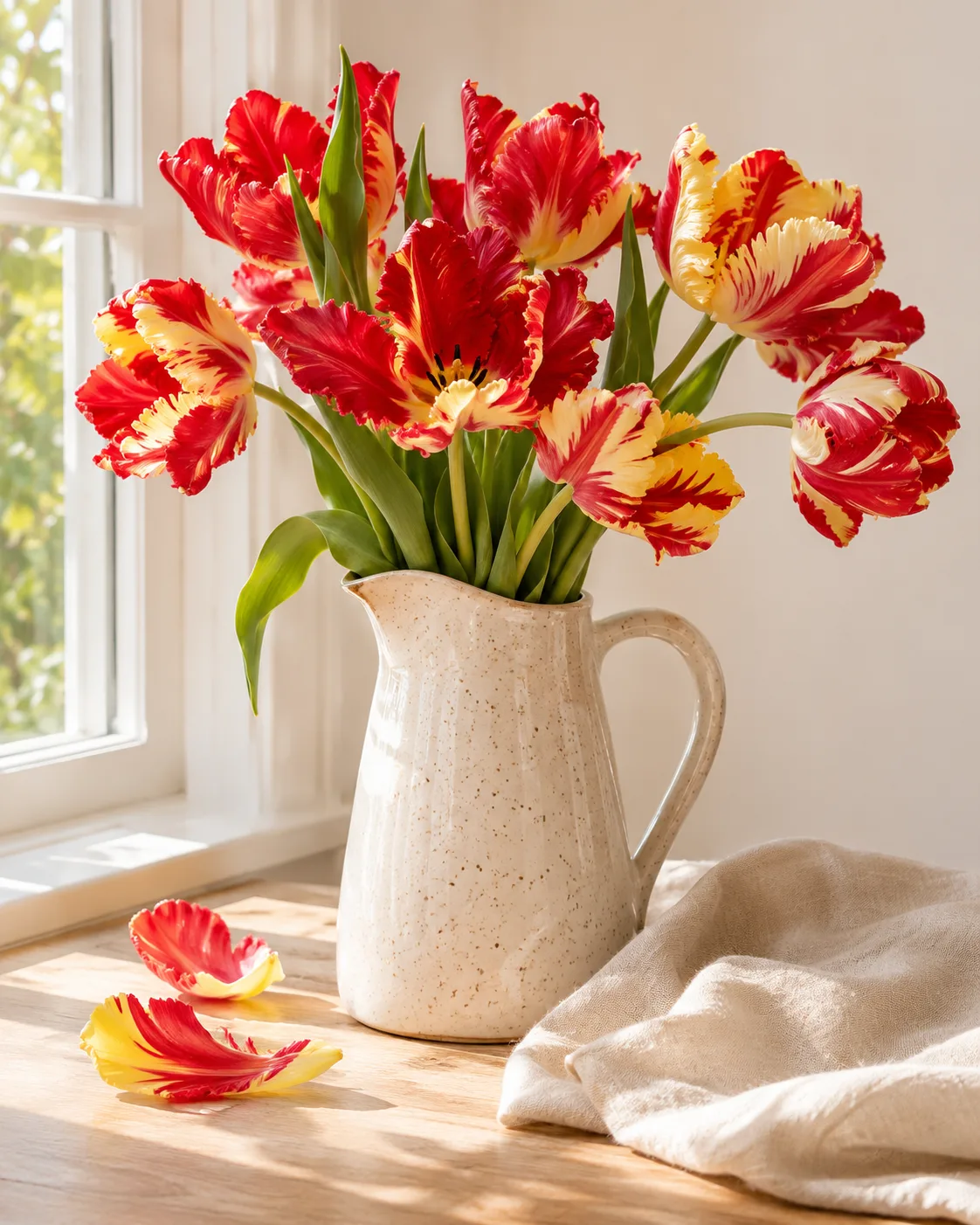
| Parrot | Ruffled, feathered petals | Very curvy and dramatic | Loose, artistic arrangements |
| French | Tall, elegant, long petals | Long, graceful stems | Tall vases and events |
| Triumph | Classic goblet shape, many colors | Sturdy, reliable | Mixed bouquets |
If upright stems matter to you, ask for single or triumph tulips. If you want a wild look, parrot tulips are the choice.
A short history of the tulip
Tulips are native to Central Asia and were grown in the Ottoman Empire long before they reached Europe. They arrived in the Netherlands in the late 16th century and became so fashionable that, in the 1630s, single bulbs sold for very high prices during what is now called tulip mania. The bubble burst in 1637, but the Dutch love of the flower never faded. Today the Netherlands is still the world's biggest tulip producer, and many tulips sold in the United States in winter and early spring are grown there. Domestic growers, such as farms in Washington State, supply fresh tulips in spring.
What do tulips mean?
Tulips are a cheerful flower with a few clear meanings. Red tulips are the traditional declaration of love. Yellow tulips stand for happiness and sunshine, a meaning that is more modern than the older idea of hopeless love. Pink tulips mean caring and affection, white tulips mean respect and fresh starts, and purple tulips have long been linked to royalty. Mixed tulips are a safe, friendly choice for a birthday or a thank-you. If you like symbolism, our guide to what rose colors mean follows the same logic for roses.
Are tulips safe for pets?
The ASPCA lists tulips as toxic to cats and dogs, with the bulb being the most dangerous part. A pet that nibbles a petal or drinks vase water usually gets nothing worse than a mild stomach upset, but it is still wise to keep the vase on a high shelf. If a pet eats a tulip bulb or a large amount of the plant, call your vet.
What to do if your tulips are already droopy
A drooping tulip is often just thirsty. Take the tulips out, cut an inch off each stem, wrap the bunch in paper and stand it in cold water for an hour or two. Most of them perk up. If a single stem is still bent, you can leave it that way and tuck it low in the arrangement as a curving accent. Tulips are forgiving, and a leaning bunch has its own charm.
Tulip FAQ
How long do cut tulips last?
Cut tulips last about 5 to 7 days in a vase. Cool rooms and fresh cold water can add a day or two, while warm rooms shorten their life.
Do tulips really keep growing after they are cut?
Yes, cut tulips can grow an inch or more in the vase. The stem keeps stretching because it is still alive and takes up water.
Why are my tulips drooping?
Drooping usually means the stems are thirsty or the room is too warm. Recut the stems, wrap the bunch in paper and stand it in cold water for an hour or two.
Should I put tulips in the same vase as daffodils?
No, keep them in separate vases. Freshly cut daffodils release a sticky sap that clogs tulip stems and shortens their life.
Can I replant cut tulips?
No, a cut tulip has no bulb or roots, so it cannot be replanted. To grow tulips, plant bulbs in the fall in a cool climate, or chill them first in warm climates.
The short version
- Tulips grow an inch or more after cutting and bend toward the light.
- Wrap the bunch in paper and stand it in cold water for an hour or two before arranging.
- Use shallow cold water, a tall vase and fresh cuts every other day.
- Choose single or triumph tulips for upright stems and parrot tulips for a wild look.
- Keep tulips away from daffodils, ripe fruit, heat and pets.
A tulip bouquet is a small lesson in how alive cut flowers still are. FlowerEase opens on November 21 with same-day delivery in 3-hour windows from a florist near the recipient, so a bouquet can arrive fresh and ready to open. Until then, see which blooms are at their best in our guide to November flowers in season.