How to Make Flowers Last Longer: 12 Florist Tips That Actually Work
A bouquet that looks perfect on Monday and droops by Thursday is not bad luck. In almost every case, the flowers ran out of water. Stems get clogged by bacteria, air bubbles block the cut end, or a warm room makes the blooms drink faster than they can pull water up.
The good news is that cut flowers care is simple once you know what is going on inside the stem. Florists keep flowers fresh in their coolers for days before you ever see them, and the same habits work on a kitchen counter. Below are 12 tips that actually make a difference, a vase life chart for popular flowers, a quick fix table for common problems, and the myths you can safely ignore.
Why cut flowers wilt
A cut flower is still alive. It keeps breathing, opening and drinking, but it has lost its roots and its food supply. Three things shorten its life:
- Bacteria. Microbes grow in vase water, especially around rotting leaves, and they plug the tiny tubes that carry water up the stem.
- Air in the stem. When a stem sits dry for even a few minutes, an air bubble can form at the cut end and block water uptake.
- Ethylene. This natural gas, released by ripening fruit and aging flowers, tells blooms to open faster, drop petals and fade.
Every tip below fights one of these three problems.
12 florist tips to make flowers last longer
1. Start with a truly clean vase
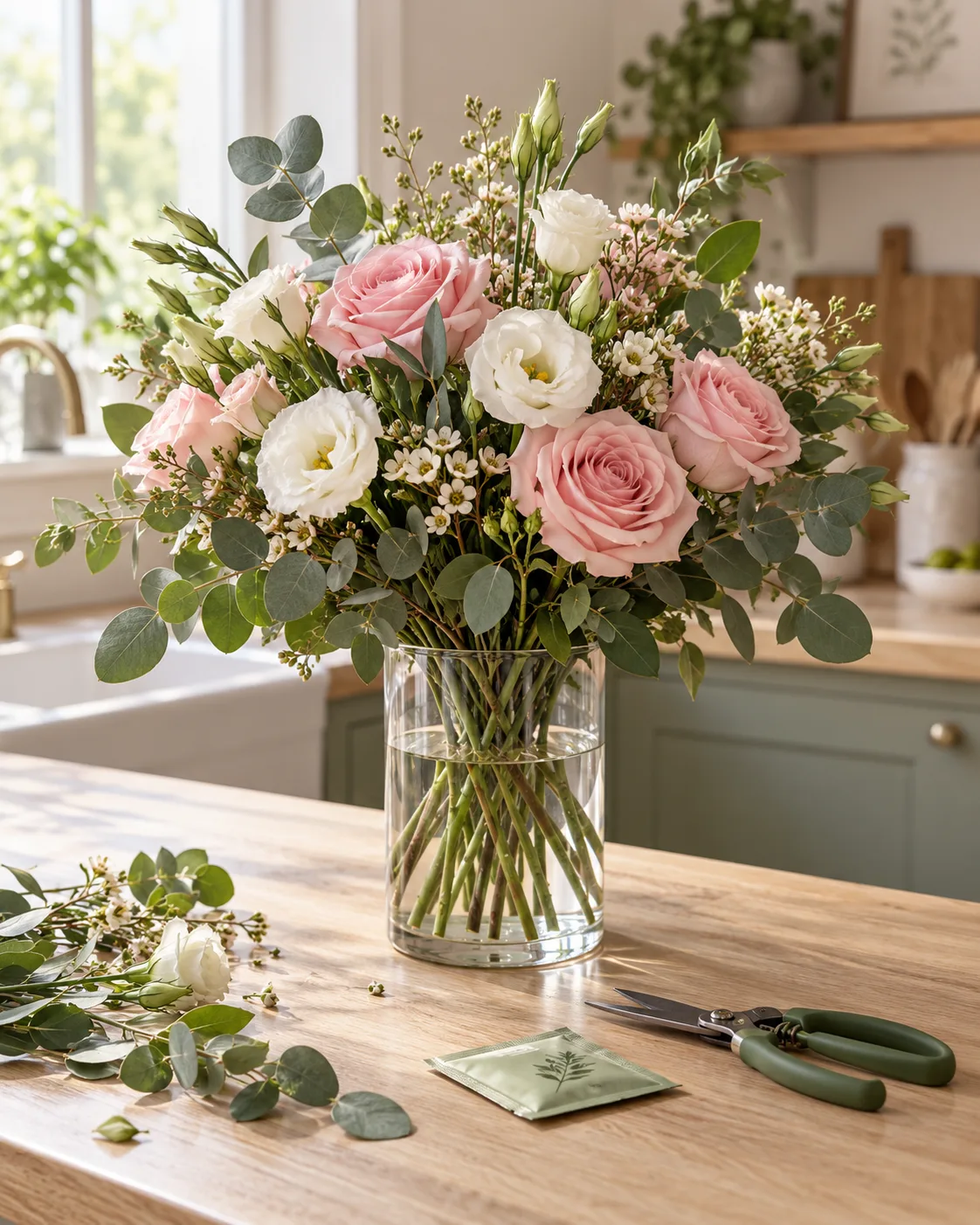
Wash the vase with hot soapy water, or a capful of household bleach in a sink of water, and rinse well. A vase that looks clean can still hold a film of bacteria from the last bouquet.
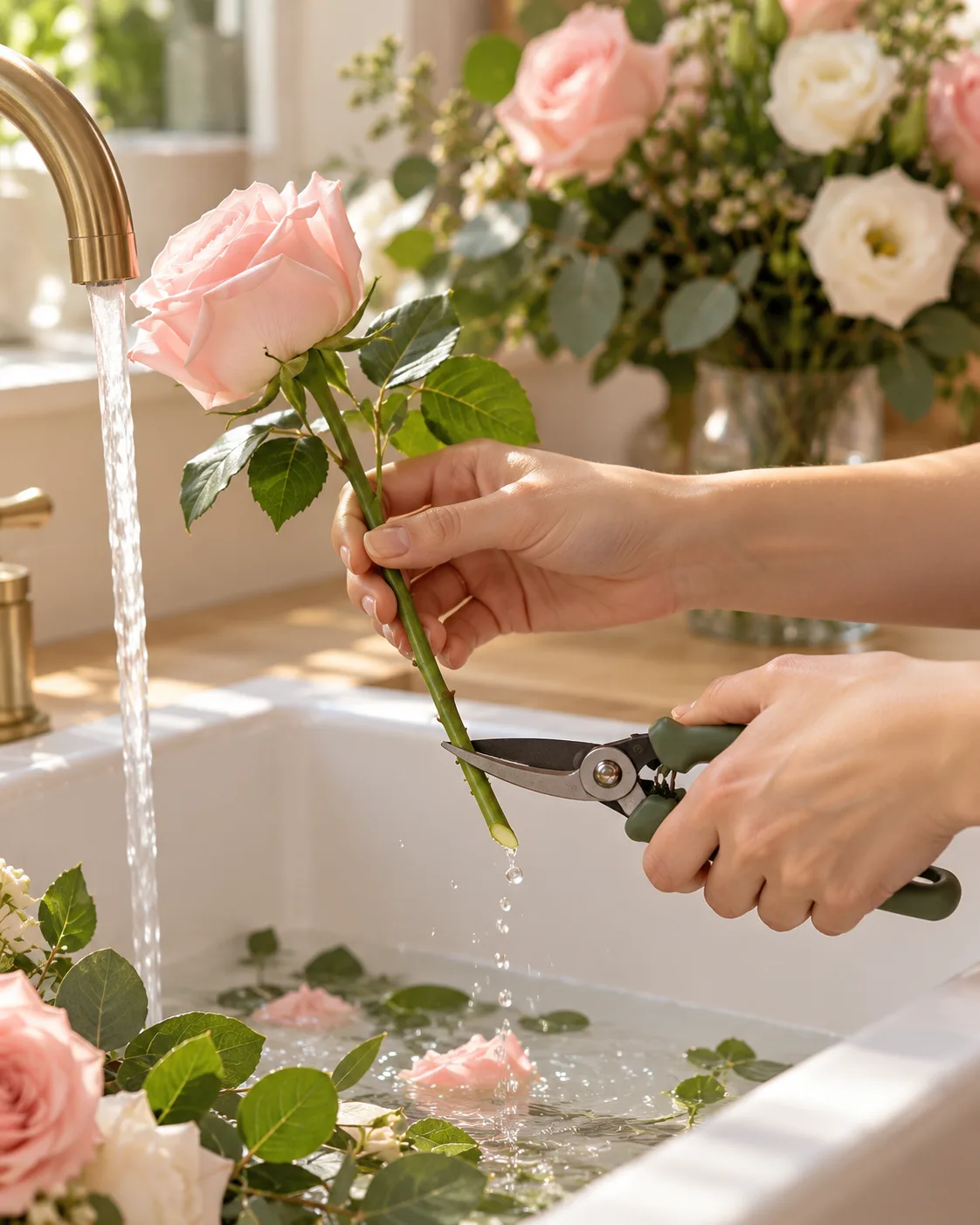
2. Cut stems at a 45-degree angle
Trim 1 to 2 inches off each stem with sharp scissors or a knife. An angled cut gives the stem more surface to drink from and stops it from sitting flat on the bottom of the vase. Dull scissors crush the stem, so use the sharpest blade you have.
3. Cut under water if you can
Cutting with the stem ends held under running water or in a bowl keeps air from getting into the stem. Then move the flowers straight into the vase.
4. Use the flower food packet
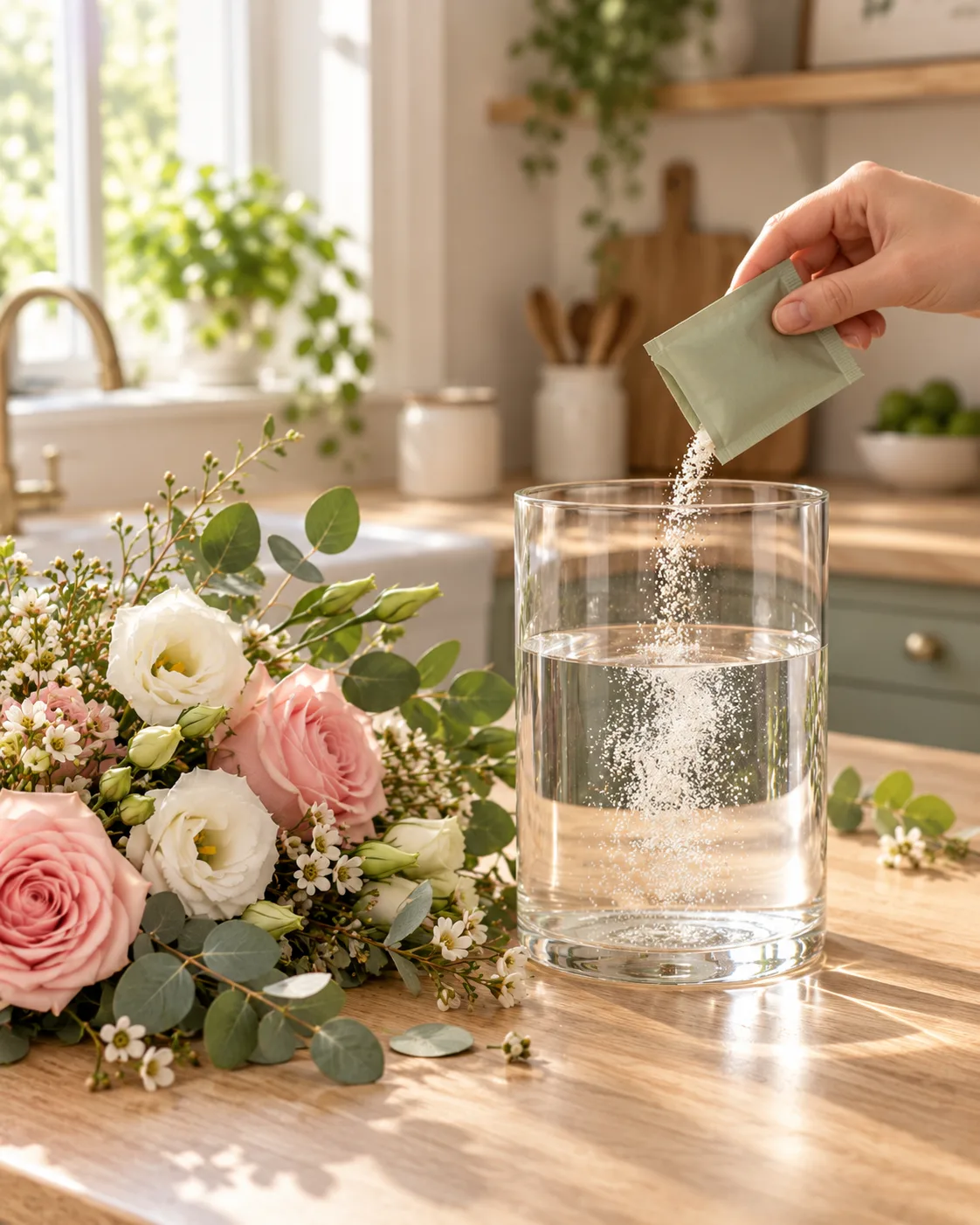
That small packet is not a gimmick. Commercial flower food has three parts: sugar to feed the bloom, an acidifier to help water move up the stem, and a biocide to slow bacteria. Studies from flower industry groups show it can add several days of vase life. Mix it with the amount of water printed on the packet, since too little water makes the solution too strong.
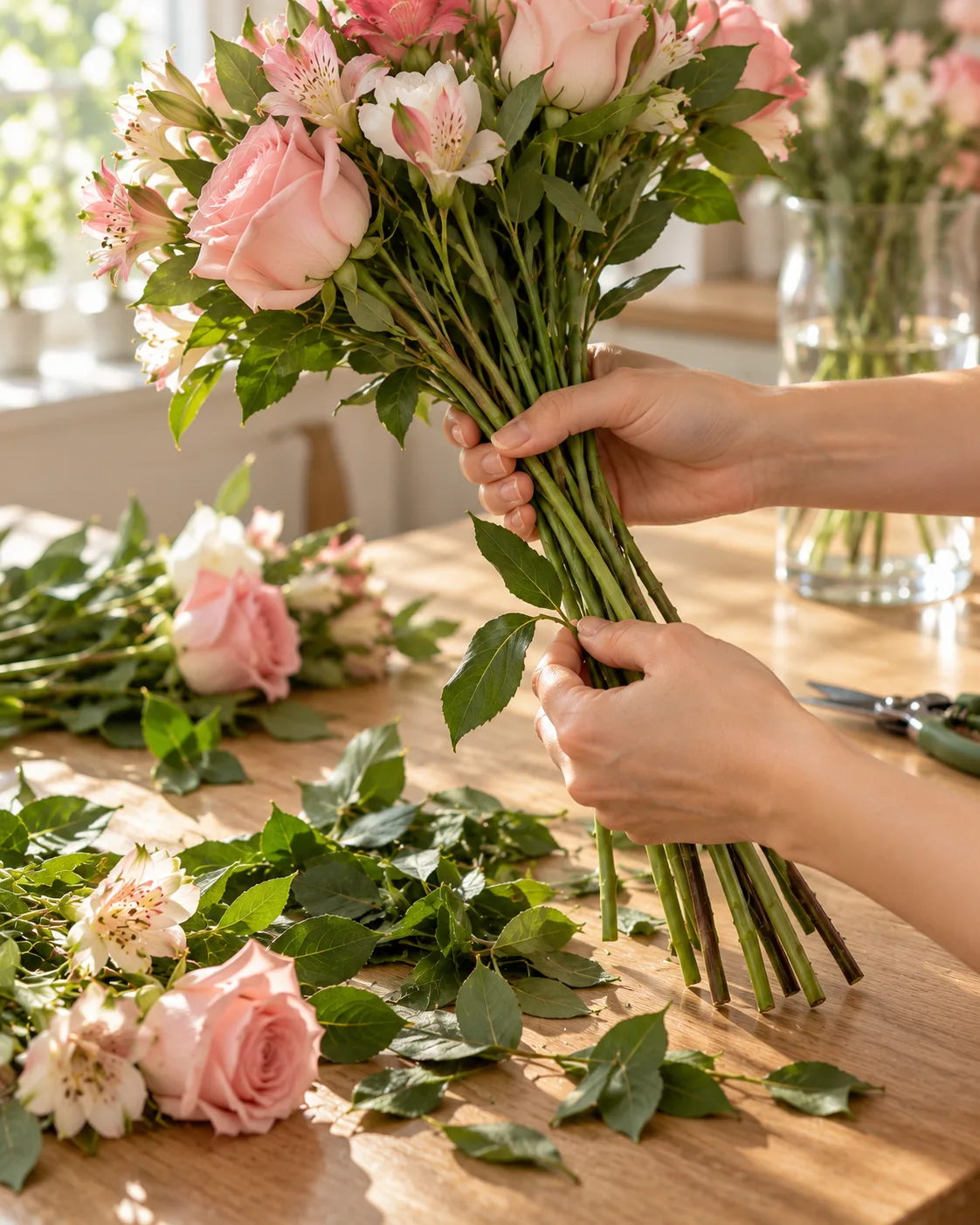
5. Remove every leaf below the waterline
Leaves sitting in water rot within a day or two and feed bacteria. Strip them off before arranging. Keep the leaves above the water, since they help the stem pull moisture up.
6. Use cool or room-temperature water
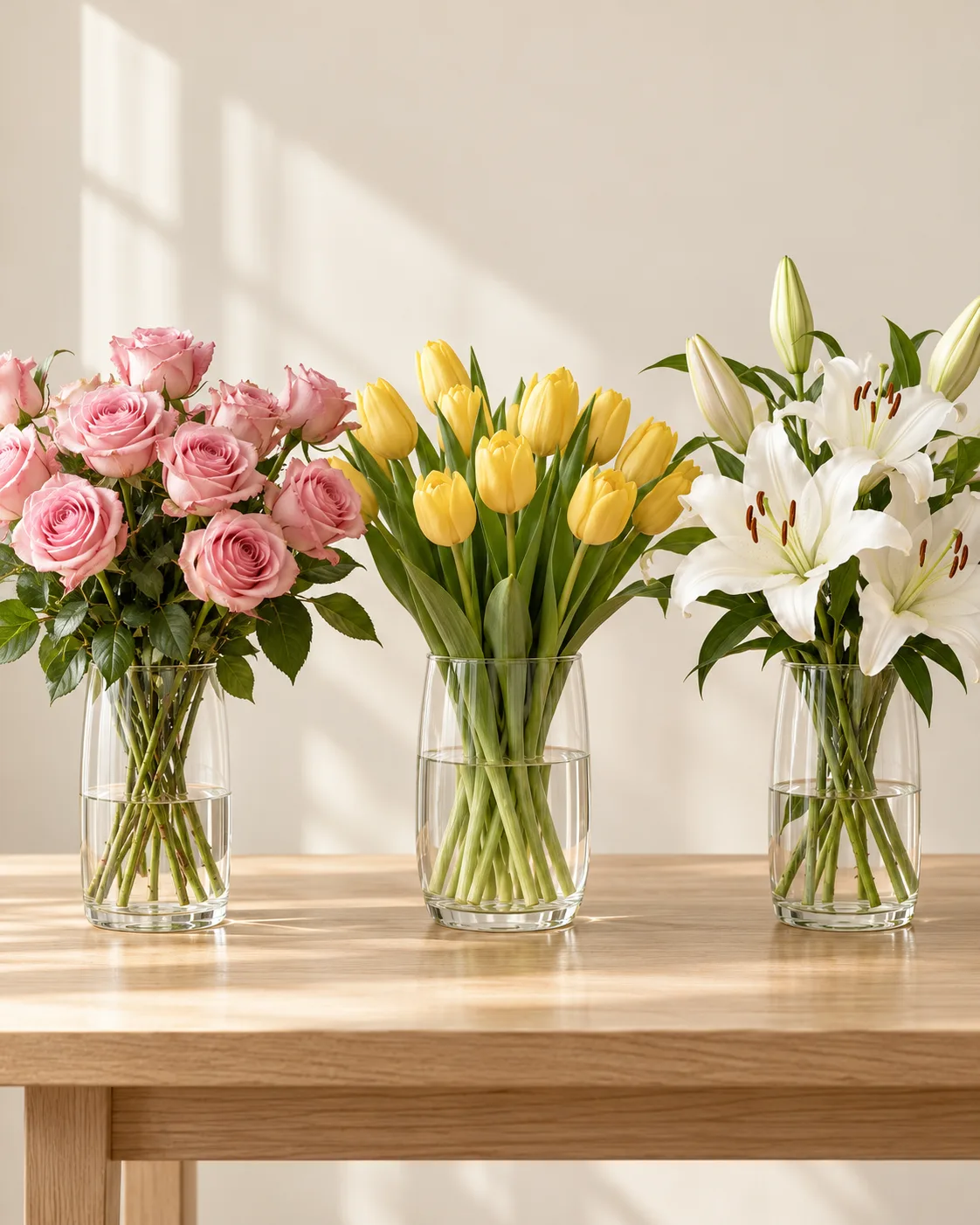
Most flowers do best in cool or room-temperature water. Warm water is used by some florists to wake up wilted stems, but cool water slows bacteria and keeps blooms from opening too fast. Bulb flowers like tulips and daffodils especially prefer cold water.
7. Change the water every 2 days
Pour out the old water, rinse the vase, and refill with fresh water and a little more flower food if you have it. If the water looks cloudy, change it that day.
8. Recut the stems each time
Every time you change the water, trim another half inch off each stem. The cut end slowly seals over, and a fresh cut reopens it.
9. Keep flowers away from fruit
Ripening bananas, apples and pears release ethylene gas. A bouquet next to a fruit bowl can age days faster. Carnations, roses and lilies are especially sensitive.
10. Avoid sun, heat and drafts
Direct sun, a spot above the stove, a heating vent or a TV all make flowers lose water faster. A cool, bright spot out of direct light is ideal.
11. Move the vase somewhere cool at night
Florists store flowers at about 34 to 38 degrees. You do not need a cooler, but moving the vase to the coolest room overnight, or even into the fridge for a few hours with no fruit inside, slows aging.
12. Pull out fading flowers early
One dying bloom releases ethylene and adds bacteria to the water. Remove it as soon as it starts to fade and the rest of the bouquet will hold on longer.
Vase life by flower type
Some flowers are built to last, others are a short and beautiful show. These are typical ranges for fresh flowers with good care.
| Flower | Typical vase life | Best tip |
|---|---|---|
| Chrysanthemums | 14 to 21 days | Strip lower leaves well, they rot fast |
| Alstroemeria | 10 to 14 days | Pull leaves rather than cutting them |
| Carnations | 10 to 14 days | Keep far from fruit, very ethylene sensitive |
| Orchids (cut) | 10 to 14 days | Room-temperature water, mist the blooms |
| Lilies | 7 to 14 days | Remove pollen anthers as buds open |
| Roses | 5 to 10 days | Recut every 2 days, remove guard petals |
| Sunflowers | 6 to 12 days | Deep water, they drink a lot |
| Peonies | 5 to 7 days | Buy soft buds, keep cool |
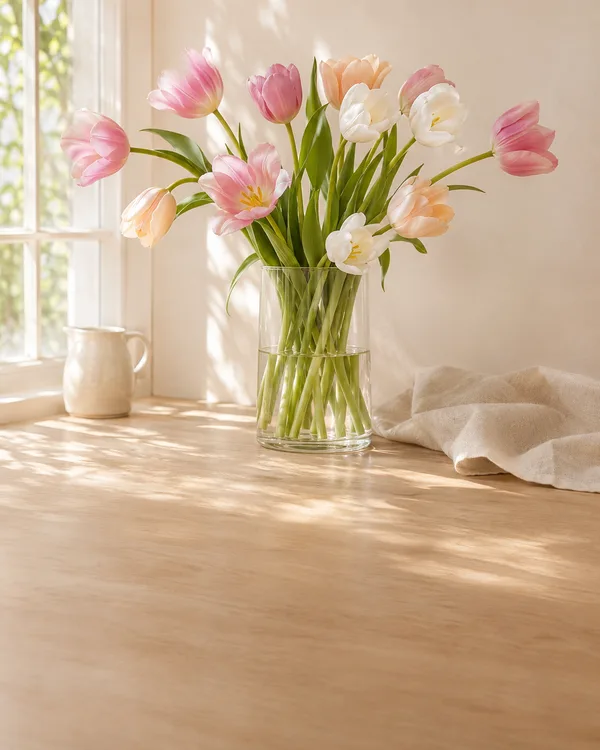
| Tulips | 5 to 7 days | Cold water, shallow fill |
| Hydrangeas | 4 to 7 days | Submerge heads in water if they wilt |
For a closer look at one short-lived favorite, our peony facts article explains the marshmallow test for picking buds that will open.
Flower-specific tricks
- Tulips keep growing after they are cut. They can stretch an inch or more in the vase and bend toward light. Turn the vase daily and use a taller vase if you want them upright.
- Daffodils release sap that harms other flowers. The slimy sap clogs other stems. Stand fresh daffodils alone in water for 6 to 12 hours, then add them to a mixed bouquet without recutting.
- Roses with a bent neck can often be saved. A drooping head usually means an air bubble. Recut the stem under water, wrap the bouquet in paper to hold the heads straight, and stand it in deep, lukewarm water for 1 to 2 hours.
- Lilies stain. Pull off the orange pollen anthers as each bloom opens. It keeps petals and tablecloths clean, and lilies are very toxic to cats, so keep them out of homes with cats.
- Hydrangeas drink through their petals. If the head wilts, submerge the whole flower in cool water for 30 to 60 minutes.
Problem, cause and fix
| Problem | Likely cause | Fix |
|---|---|---|
| Cloudy, smelly water | Bacteria from leaves in water | Wash vase, strip leaves, fresh water and flower food |
| Rose head drooping | Air bubble in the stem | Recut under water, deep water for 1 to 2 hours |
| Petals dropping early | Ethylene from fruit or old blooms | Move away from fruit, remove fading flowers |
| Flowers wilting in 2 days | Heat, sun or dry stems | Cooler spot, recut, top up water |
| Buds not opening | Cut too early or water too cold for them | Room-temperature water, add flower food |
| Tulips flopping over | Natural growth toward light | Turn daily, use a taller vase, trim stems |
Common mistakes and myths
A lot of popular advice does not help much, and some of it hurts.
- Adding a penny or aspirin. There is little evidence either one helps. Modern pennies are mostly zinc, and aspirin does very little against bacteria.
- Using plain sugar. Sugar feeds the flower, but it also feeds bacteria. Without a biocide, sugar alone can make the water cloudy faster.
- Too much bleach. A few drops of bleach per quart can slow bacteria if you have no flower food. More than that can burn stems. Flower food is the safer choice.
- Adding soda or vinegar. Clear soda has sugar and acid, so it can work in a pinch, but it is not as reliable as flower food.
- Topping up without changing the water. Adding fresh water to dirty water just dilutes the bacteria for a day.
- Leaving the bouquet in its wrap. Unwrap it as soon as it arrives, cut the stems and get them into water.
How long do flowers last without water?
Most cut flowers start to wilt within 1 to 2 hours out of water, faster in heat. Hardy flowers like chrysanthemums and carnations can handle a few hours. Delicate blooms like hydrangeas wilt quickly. If a bouquet has been out of water, recut the stems before placing it in the vase. The same rules apply to arrangements sent for a funeral, and our sympathy flowers guide covers how to choose ones that hold up well.
Flower care FAQ
How can I make flowers last longer naturally?
Change the water every 2 days, recut stems by half an inch and keep the vase cool and away from fruit. These steps alone can add 3 to 5 days to most bouquets.
Does sugar help cut flowers last longer?
Only a little, and only with something that kills bacteria. Plain sugar feeds microbes too, so use a flower food packet, which combines sugar, acid and a biocide.
Should I put flowers in the fridge overnight?
Yes, a few hours in the fridge can slow aging, as long as there is no fruit inside. Florists store flowers at 34 to 38 degrees for the same reason.
How often should I change the flower water?
Every 2 days, or the same day if it turns cloudy. Rinse the vase and recut the stems each time.
Why do my roses droop at the neck?
Usually an air bubble is blocking water just below the head. Recut the stem under water and stand it in deep water for 1 to 2 hours to revive it.
Can I make my own flower food?
Yes: 1 quart of water, 1 teaspoon of sugar, 2 teaspoons of lemon juice and a few drops of bleach is a common home mix. It works, but store packets are more balanced.
Which cut flowers last the longest?
Chrysanthemums last the longest, often 14 to 21 days. Alstroemeria, carnations and cut orchids follow at 10 to 14 days.
Why do tulips keep growing in the vase?
Tulip stems keep elongating after cutting, often by an inch or more. They also bend toward light, so turn the vase daily.
The short version
- Clean vase, sharp 45-degree cuts, no leaves under water.
- Use the flower food packet, it really works.
- Change the water and recut stems every 2 days.
- Keep flowers away from fruit, sun and heat.
- Skip the penny and the aspirin. Pull fading blooms early.
Fresh flowers are a small luxury, and a few minutes of care can double how long you enjoy them. FlowerEase is opening soon, with a photo of your bouquet sent before delivery, reminders for the dates that matter and a freshness guarantee on every order. Until then, find more flower care tips on the FlowerEase blog.