Peony Facts: The 100-Year Flower That Blooms for 10 Days
A peony bush can live for a hundred years. Every spring, after all that waiting, it blooms for roughly ten days. Then the petals drop, the leaves stay green through summer, and the plant goes quiet until next year.
That short window is the whole reason peonies feel like an event. Florists count down to peony season the way other people count down to a holiday, and brides plan wedding dates around it. Below is everything worth knowing about this flower: where the name comes from, why ants crawl over the buds, how long peonies really live, which varieties you will see most often, and how to make a cut peony last a full week in a vase.
How long does a peony plant live?
Herbaceous peonies, the garden type most people picture, are famous for living for decades with almost no care. Plants of 50 years are common, and gardeners regularly report bushes that have flowered in the same spot for 70, 80 and even 100 years. Old farmhouses across the country still have peonies that were planted by families who left generations ago.
The secret is underground. A peony stores energy in thick, fleshy roots that look a little like sweet potatoes. Each autumn the leaves die back, the roots rest through winter, and in spring new red shoots push up from buds called "eyes". The plant does not need to rebuild itself from scratch every year, so it can keep going for a very long time.
There is a catch. Peonies hate being moved. Dig one up and replant it, and it may sulk for two or three years without a single flower. That is why the old advice is to plant a peony once, in the right spot, and leave it alone. Plant one today and it could still be flowering when your grandchildren are grown.
Why does a peony bloom for only 10 days?
A single peony plant usually opens all its flowers within one to two weeks. Warm weather speeds that up, cool weather stretches it out a little. A blossom stays at its best for about a week, and then the large, heavy petals start to fall.
The season as a whole lasts longer than one plant, because growers stagger it. Early, mid and late varieties open at different times, and farms in different climates harvest at different points in the year. In most of the United States, garden peonies bloom from late April through June. Growers in Alaska, where summer arrives late, harvest in July and August, which is how florists can sometimes offer peonies when gardens elsewhere are long finished.
Commercial growers also cut peonies at the bud stage and hold them in cold storage, where a closed bud can rest for several weeks before it opens. That is the main reason you can find peonies outside their natural season at all. It is also the reason buying peonies takes a little knowledge, because a bud that was cut too early may never open. More on that test below.
Where does the name "peony" come from?
The name goes back to Greek mythology. Paeon was the physician of the gods, a student of Asclepius, the god of medicine. In one version of the myth, Paeon healed Hades with a root from Mount Olympus. His teacher grew jealous, and Zeus saved Paeon by turning him into the flower that now carries his name.
The myth is not random. For centuries peony roots and seeds were used in traditional medicine in Greece, China and medieval Europe, which is why the plant ended up linked to a healer. The botanical name of the genus is Paeonia.
The king of flowers in China
China has grown peonies for well over a thousand years, and there they carry the title "king of flowers". Tree peonies were treasured at the imperial court during the Tang dynasty, and the city of Luoyang became so famous for them that it still holds a peony festival every April.
In Chinese art and tradition, the peony stands for wealth, honor and good fortune. You will see it painted on porcelain, embroidered on silk, and printed on wedding decorations. Japan adopted the flower later and gave it a similar status, often pairing it with lions in paintings and tattoos.
In the United States the peony has its own official role: it has been the state flower of Indiana since 1957. It is also the traditional flower for a 12th wedding anniversary, a nice detail if you are trying to find a gift with meaning.
What do peonies mean?
Flower meanings shift between cultures, but most of them agree on the peony. It is the flower of good fortune, romance and a happy marriage, which is why it shows up in so many bridal bouquets. In the Victorian language of flowers, peonies could also stand for bashfulness, a nod to an old story about shy nymphs who hid among the petals.
Color adds a layer:
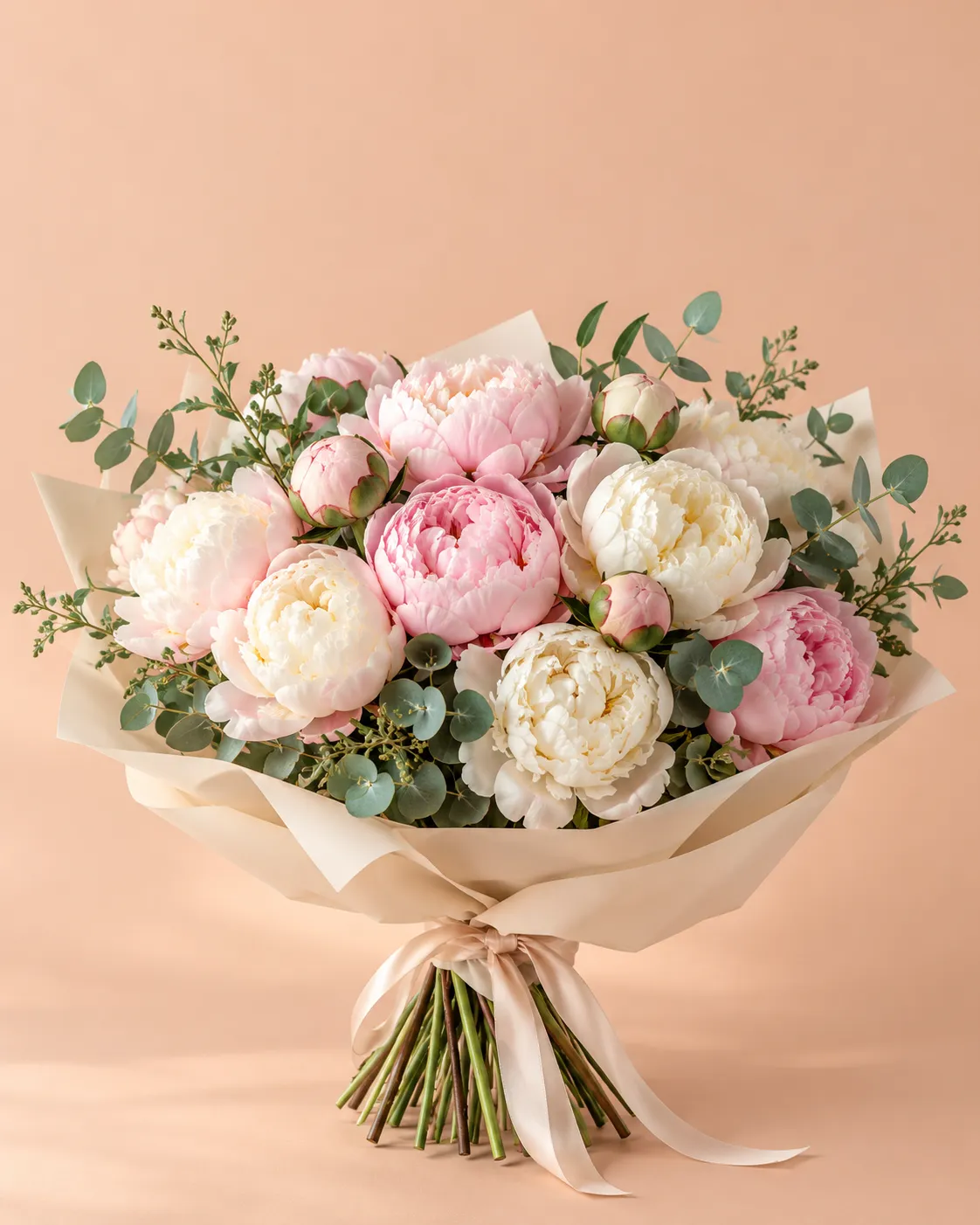
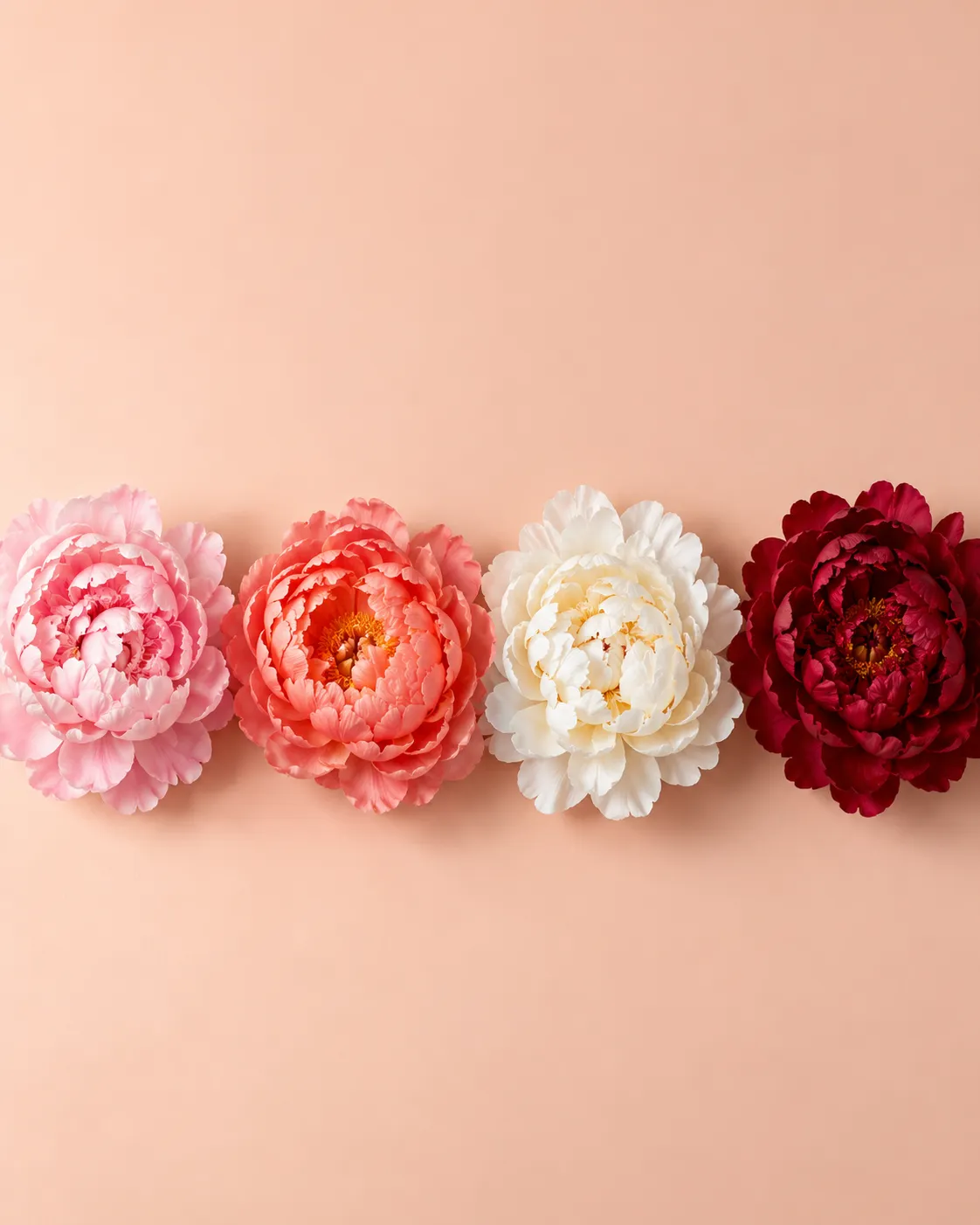
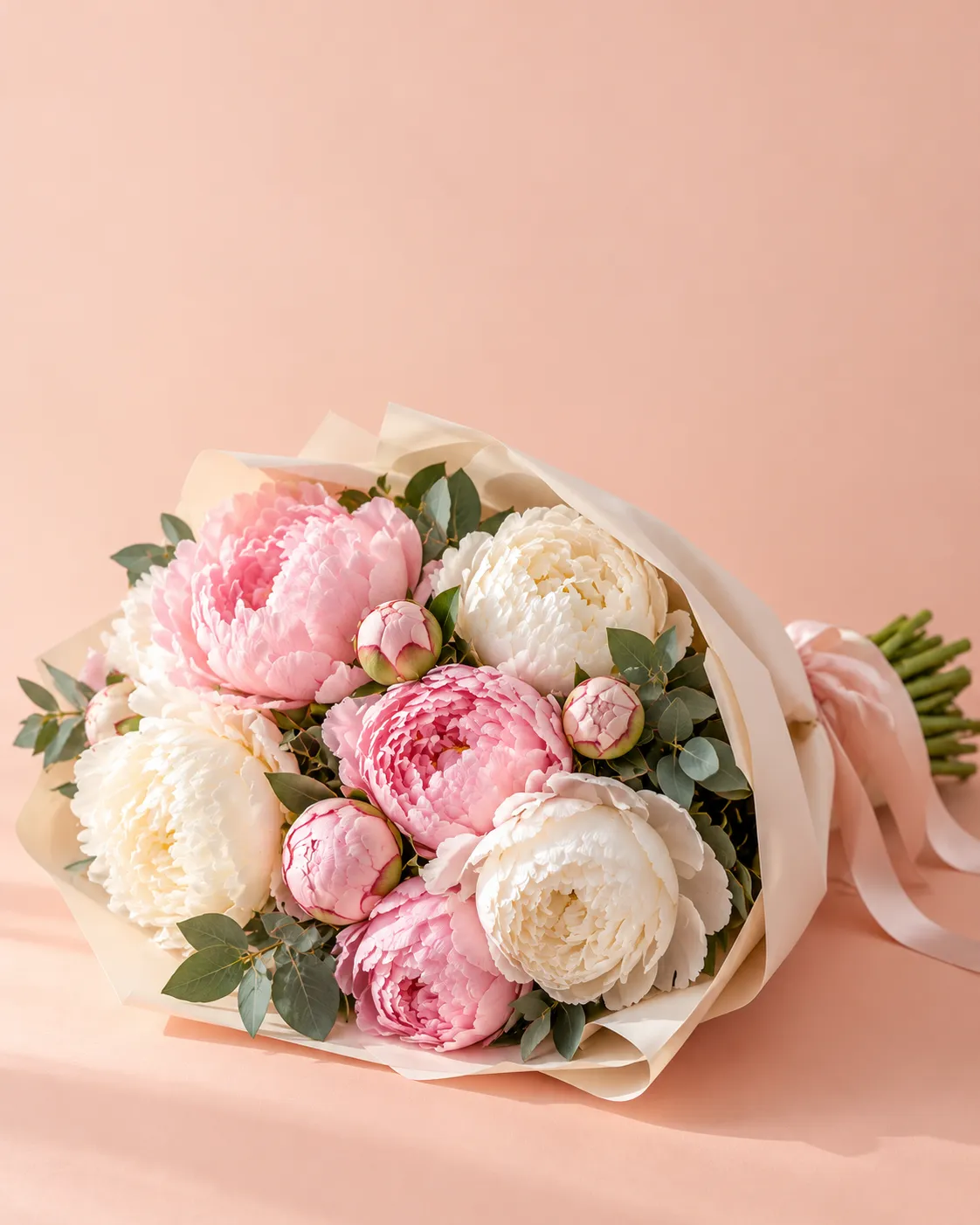
- Pink peonies are the classic choice for romance and weddings.
- White and cream peonies suggest a fresh start and are popular for new babies and anniversaries, and soft white peonies are also a gentle choice for sympathy flowers.
- Coral peonies feel warm and joyful, a good fit for birthdays and congratulations.
- Deep red peonies carry respect and strong love, and in China they are linked most closely with wealth.
Why are there ants on peony buds?
This is the question gardeners ask most. Peony buds release a sugary nectar from tiny glands on the outside of the sepals, and ants love it. For a few weeks in spring a bush can be covered with them.
The ants are harmless. They do not eat the flower and they do not damage the plant. The old belief that ants are needed to "open" peony buds is a myth too: peonies open perfectly well without them. Some researchers think the ants actually help a little by chasing away insects that would chew the buds, but the plant does fine either way.
If you cut peonies from a garden, simply give each stem a gentle shake, or dip the closed buds upside down in a bowl of cool water for a few seconds. The ants fall off and stay outside where they belong.
Types of peonies you will meet
There are three main groups, and it helps to know which one you are looking at.
- Herbaceous peonies. The classic garden peony. The stems die back to the ground every winter. Almost all cut peonies at florists come from this group.
- Tree peonies. Woody shrubs that keep their stems through winter. The flowers can be huge, up to ten inches across, but they are rarely sold as cut flowers.
- Intersectional, or Itoh, peonies. A cross between the two, first bred successfully by the Japanese grower Toichi Itoh in the mid 20th century. They bring tree peony colors, like strong yellows, to a plant that behaves like a garden peony.
Peony types at a glance
| Type | Stems in winter | Flower size | Sold as cut flowers? | Best known for |
|---|---|---|---|---|
| Herbaceous | Die back to the ground | 4 to 7 inches | Yes, almost all bouquets | Sarah Bernhardt, Festiva Maxima, Coral Charm |
| Tree | Woody, stay above ground | Up to 10 inches | Rarely | Huge blooms, Chinese imperial gardens |
| Intersectional (Itoh) | Die back, woody base | 5 to 8 inches | Sometimes | Yellow and apricot colors |
Within the herbaceous group, a few varieties appear again and again in bouquets:
- Sarah Bernhardt. Soft pink, fully double, bred in France in 1906 and named after the actress. Probably the best-known cut peony in the world.
- Festiva Maxima. White with small crimson flecks in the center, introduced in 1851 and still grown everywhere.
- Coral Charm. Opens deep coral and slowly fades to peach and cream as it ages, so one bouquet changes color over a week.
- Bowl of Beauty. Pink outer petals around a center of pale yellow, a look sometimes called "anemone form".
How to tell if a peony bud will open: the marshmallow test
This is the trick florists use, and once you know it you will never buy a dud bunch again.
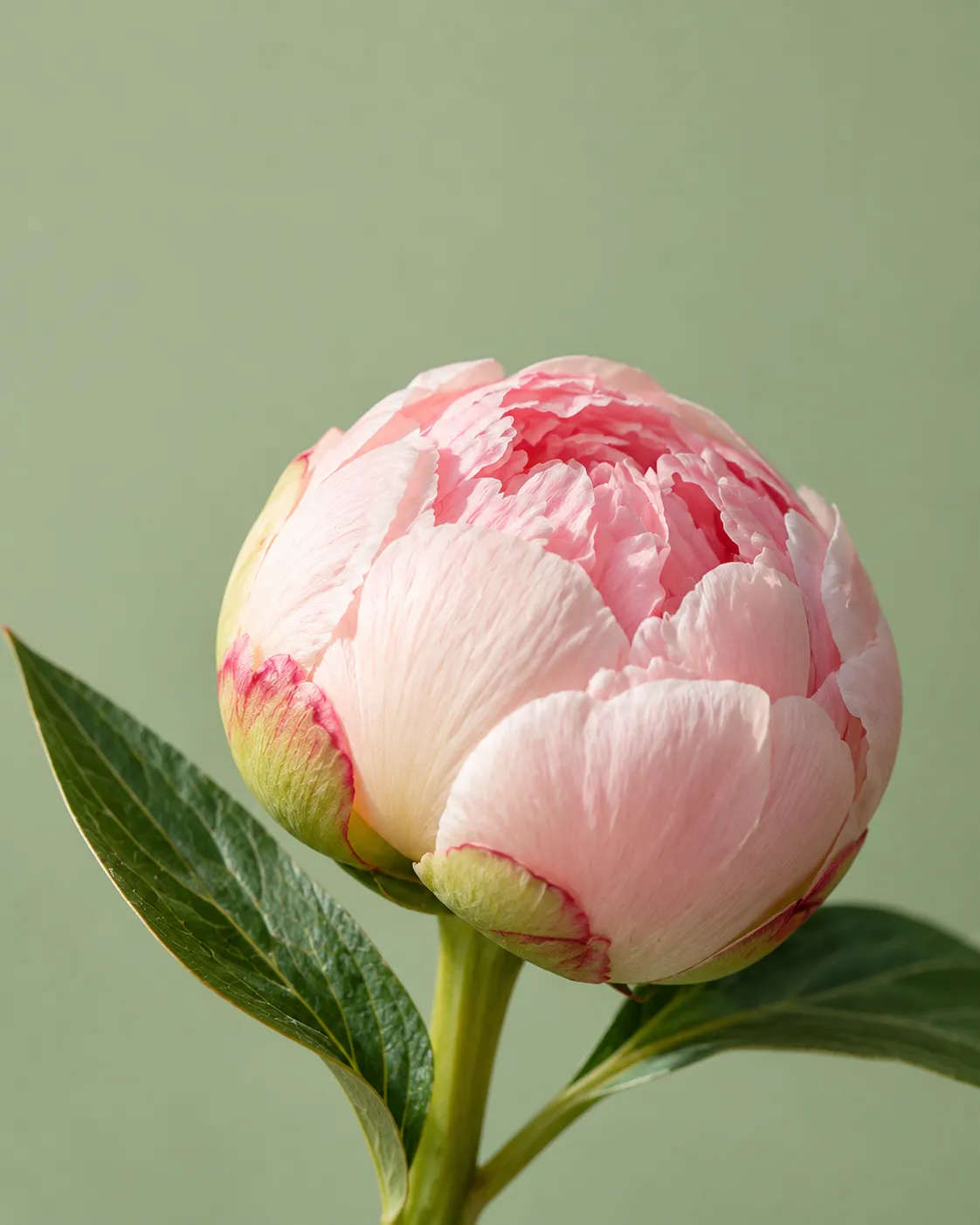
Gently squeeze a closed bud between your thumb and finger. If it feels soft and gives a little, like a marshmallow, and you can see a bit of petal color showing at the top, it will open. If it feels hard like a marble and is fully green, it was cut too early and may never bloom.
Buds in the marshmallow stage usually open in one to three days in a vase at room temperature. Hard green buds are a gamble. Fully open flowers look beautiful in the shop but have the shortest life ahead of them, so if you want your peonies to last, buy them as soft buds and enjoy watching them open at home.
How to keep cut peonies fresh
Peonies are not difficult, but they are thirsty and they like it cool. Follow these steps and a bouquet should give you five to seven good days.
- Start with a clean vase. Wash it with hot soapy water. Bacteria from old flowers clog stems faster than anything else.
- Cut the stems at an angle. Trim one to two inches off with a sharp knife or clean shears. An angled cut gives the stem more surface to drink through.
- Remove the lower leaves. No leaf should sit under the waterline, where it will rot and cloud the water.
- Use cool water and flower food. Fill the vase about two thirds full. If you have a packet of flower food, use it.
- Keep them out of the sun and away from fruit. Direct sunlight, heaters and the ethylene gas from ripening fruit all make petals drop sooner.
- Refresh every two days. Change the water and give the stems a fresh cut each time.
Want them to open faster for a party? Put the vase in a warm, bright room and use lukewarm water. Want to slow them down? Move the vase somewhere cool overnight. Florists use the same trick in reverse: a closed peony wrapped in paper and kept in the refrigerator can wait several days before it goes into water.
Are peonies safe for pets?
Peonies contain a compound called paeonol, mostly in the bark and roots, and the ASPCA lists them as toxic to cats, dogs and horses. Eating a petal or a leaf usually causes stomach upset rather than anything serious, but it is worth keeping a vase out of reach of curious pets and calling your vet if one starts chewing on the plant.
When to give peonies
Because they mean good fortune and a happy marriage, peonies are a natural choice for weddings, engagements and anniversaries, especially the 12th. Their soft colors suit Mother's Day, which conveniently falls right in the middle of the natural season. And because a bunch of buds opens slowly over several days, they make a lovely "thinking of you" gift: the person who receives them gets to watch something change and grow on their table all week.
Peony FAQ
How long do cut peonies last?
Cut peonies last 5 to 7 days in a vase if you buy them as soft buds, cut the stems at an angle, use cool water and change it every two days.
How long does a peony plant live?
A garden peony commonly lives 50 years or more, and many plants flower for 70 to 100 years in the same spot if they are not moved.
When is peony season in the US?
Garden peonies bloom from late April through June in most of the US. Alaska growers harvest in July and August, which extends the season.
How can I tell if a peony bud will open?
Squeeze it gently. A bud that feels soft like a marshmallow and shows some petal color will open in 1 to 3 days. A hard, fully green bud may never open.
Are ants on peonies harmful?
No. Ants drink the sugary nectar on the buds and do not damage the flower. Shake the stems or dip the buds in water to remove them.
Are peonies toxic to cats and dogs?
Yes, the ASPCA lists peonies as toxic to cats, dogs and horses. Eating them usually causes stomach upset, so keep vases out of reach.
What do peonies symbolize?
Peonies stand for good fortune, romance and a happy marriage. They are the traditional 12th wedding anniversary flower and the state flower of Indiana.
The short version
- A peony bush can live 100 years and still flower for only about 10 days each spring.
- The name comes from Paeon, the physician of the Greek gods. In China the peony is the king of flowers.
- Ants on the buds are harmless. They are after the nectar.
- Buy buds that feel soft like a marshmallow and show a little color.
- Clean vase, angled cuts, cool water, fresh water every two days.
Every flower has a story, and the peony's is one of patience: a hundred years of roots for ten days of bloom. FlowerEase is coming soon. Until then, follow along on Instagram and Pinterest for a new flower story every week.