Sympathy Flowers: What to Send, When to Send It and How Much to Spend
When someone you care about loses a person they love, flowers are one of the few things you can do right away. They do not fix anything, and nobody expects them to. They say "I am thinking of you" at a moment when words are hard to find.
The trouble is that sympathy flowers come with unwritten rules. Where do you send them? Is it too late after the funeral? Are lilies appropriate, or are they too much? How much is the right amount to spend? This guide answers those questions plainly, so you can choose quickly and get it right.
Sympathy flowers vs funeral flowers: what is the difference?
People use the two terms loosely, but florists separate them by where the flowers go.
- Funeral flowers go to the funeral home, church or service. They are usually larger pieces meant to be displayed: standing sprays, wreaths, casket sprays and big arrangements.
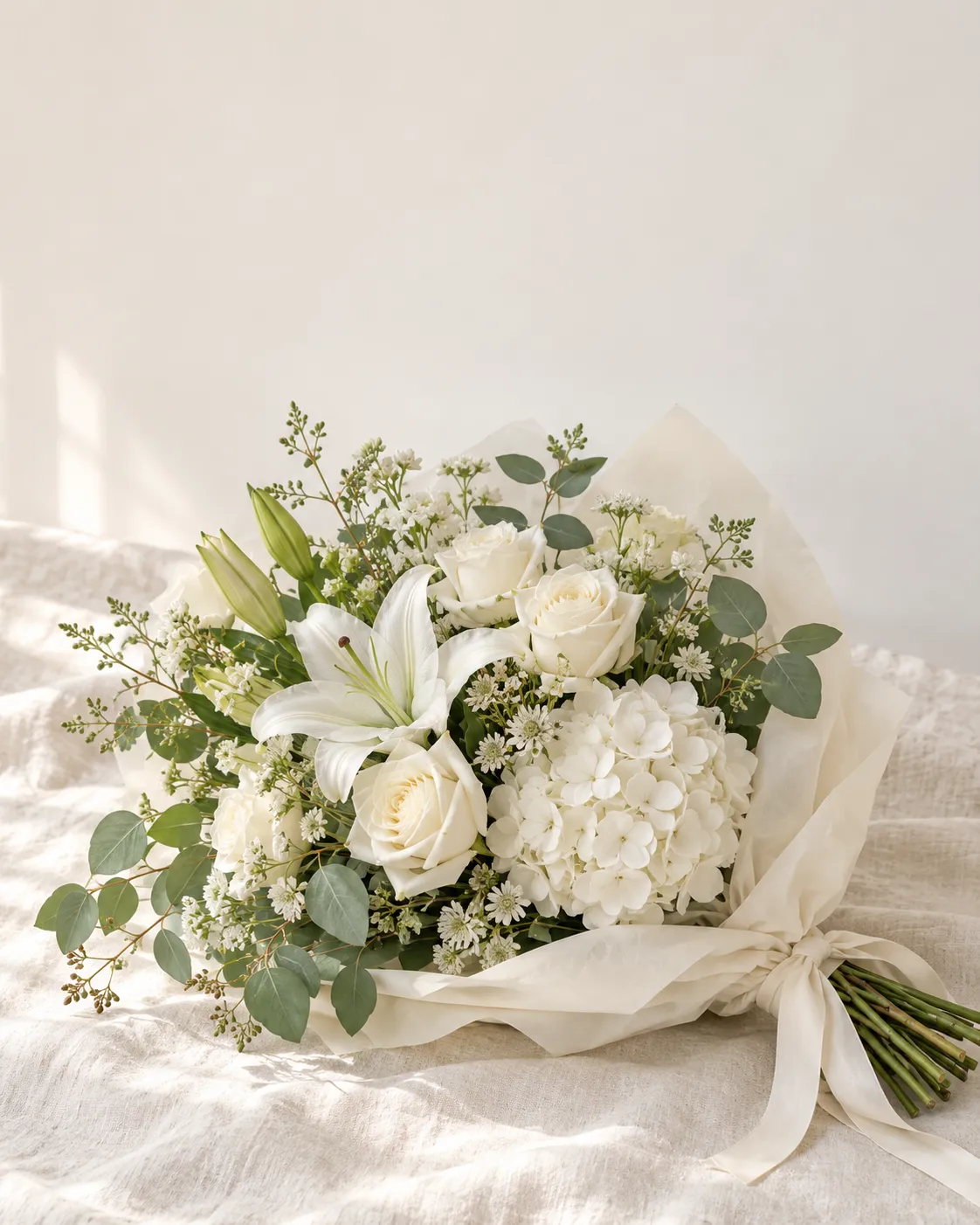
- Sympathy flowers go to the family's home. They are smaller and personal: a vase arrangement, a basket or a living plant the family can keep.
As a rule, close family and groups (coworkers, a team, a congregation) send funeral pieces. Friends, neighbors and colleagues of the family usually send sympathy flowers to the home. Both are welcome; they just do different jobs.
What to send: a quick guide by relationship
| Your relationship | What to send | Where | Typical 2026 price |
|---|---|---|---|
| Immediate family | Casket spray or large standing spray | Funeral service | $250 to $600+ |
| Extended family | Standing spray, wreath or large arrangement | Funeral service | $150 to $400 |
| Close friend | Arrangement for the service or the home | Either | $90 to $200 |
| Friend, neighbor, colleague | Vase arrangement, basket or plant | Family's home | $60 to $150 |
| Coworkers or group | One shared standing spray or arrangement | Funeral service | $150 to $350 |
| Business or client | Elegant arrangement or plant | Home or office | $75 to $175 |
Prices are typical ranges at US florists in 2026 and include the flowers and design, not always delivery. Large funeral pieces cost more because they use many more stems and need an easel or stand.
When to send sympathy flowers
There is no wrong week to show you care, but timing changes what you send.
- Right after the loss. A small arrangement or plant to the home is ideal. The family is receiving visitors and the house can feel heavy; something living and soft helps.
- For the service. Funeral pieces should arrive at the funeral home a few hours before the viewing or service. Check the time and address in the obituary, and include the name of the deceased and the service time in the delivery notes.
- After the funeral. This is the most overlooked moment, and often the most meaningful. Two to four weeks later, the visitors stop coming and the casseroles stop arriving. Flowers then tell the family that people still remember.
- Anniversaries and holidays. The first birthday, the first Mother's Day or the one-year anniversary of the loss are gentle times to send a small bouquet with a short note.
Sending flowers after the funeral is never "too late". Many families say the flowers that came a month later meant the most.
The best flowers for sympathy and what they mean
White and soft colors are always appropriate. Bright, celebratory mixes can feel out of place, unless you know the person loved bold color and the family would smile at it.
| Flower | What it says | Good to know |
|---|---|---|
| White lilies | Peace, the soul at rest | The classic funeral flower. Toxic to cats, so choose something else for a home with a cat. |
| White or pale roses | Love, respect, remembrance | Safe for any relationship. Red roses suit a spouse or partner. |
| Chrysanthemums | Grief and honor | In the US white mums are a gentle choice; in much of Europe and Asia they are used almost only for funerals. |
| Carnations | Remembrance, innocence | Long lasting and often used in sprays and wreaths. |
| Orchids (plant) | Everlasting love | A living plant can bloom for months and is easy to care for. |
| Hydrangeas | Heartfelt emotion | Soft and full, beautiful in blue, white or blush. |
| White peonies | Healing, a life well lived | Seasonal from late spring. More about peonies. |
| Peace lily (plant) | Calm and renewal | A popular living gift for the home, but toxic to pets if chewed. |
Plants or cut flowers?
Both are thoughtful. Cut flowers give a burst of beauty during the hardest week and last about five to ten days. A plant lasts much longer and becomes a living reminder of the person who was lost. Some families love that; others find caring for a plant one more task at a hard time.
A simple test: if you know the family well and they enjoy plants, send a plant. If you are not sure, a vase arrangement is the easier gift because it asks nothing of them.
Religious and cultural customs to check first
Not every tradition includes funeral flowers. A quick check avoids an awkward moment.
- Christian (Catholic and Protestant): flowers at the service and the home are common and welcome.
- Jewish: flowers are not traditional at the funeral or during shiva. A food basket or a donation in the person's memory is usually the better gesture.
- Muslim: customs vary by family. Many prefer simplicity and modest gestures; ask before sending a large arrangement.
- Buddhist: white flowers are appropriate; red is often avoided because it is linked with happiness.
- Hindu: garlands may be part of the ceremony, but sending arrangements is less common; check with the family.
And the most important rule of all: if the obituary says "in lieu of flowers, please donate to...", follow it. Families write that line for a reason, and a donation in the person's name honors their wish.
What to write on a sympathy card
Short and sincere is better than long and polished. You do not need to explain the loss or offer advice. Here are messages that work:
- "With deepest sympathy. We are thinking of you and your family."
- "Holding you close in our hearts during this difficult time."
- "[Name] was a wonderful person. We are so sorry for your loss."
- "Sending love and peaceful thoughts. With you always."
- For a coworker: "With sincere condolences from all of us at [team]."
- After the funeral: "Still thinking of you. No need to reply."
Avoid phrases that try to explain the loss, such as "everything happens for a reason". Sign with your full name so the family knows who sent the flowers; they often write thank-you notes later.
Common mistakes to avoid
- Ignoring "in lieu of flowers". Respect the family's request.
- Sending a huge piece to the home. Standing sprays and wreaths belong at the service, not in a living room.
- Missing the service time. Funeral flowers that arrive after the service end up unseen. Order at least a day ahead when you can.
- Lilies for a cat owner. Every part of a true lily is dangerous to cats, even the pollen.
- Forgetting your name on the card. The family wants to thank you.
- Bright party colors. Keep it soft unless you know a cheerful mix would truly honor the person.
How to order sympathy flowers without stress
- Read the obituary: service date, time, location and any "in lieu of flowers" note.
- Decide on home or service, using the table above.
- Choose soft colors and the size that fits your relationship.
- Write a short card message and sign your full name.
- For a service, add the name of the deceased and the service time to the delivery notes.
- Ask for a photo of the arrangement before it is delivered, so you know exactly what the family will receive.
Sympathy flowers FAQ
Is it OK to send flowers after the funeral?
Yes. Flowers sent two to four weeks after the funeral are often the most appreciated, because that is when visits and calls slow down.
How much should I spend on sympathy flowers?
Most people spend $60 to $150 on an arrangement for the home and $150 to $400 on a funeral spray or wreath. Close family pieces such as casket sprays often cost $250 to $600 or more.
Should sympathy flowers go to the home or the funeral home?
Send to the funeral home if you are close family or sending as a group. Friends, neighbors and colleagues usually send a smaller arrangement or plant to the family's home.
What color flowers are appropriate for a funeral?
White, cream, blush, lavender and soft blue are always appropriate. Red roses suit a spouse or partner. Bright mixed colors work only if they reflect the person's personality.
Are lilies appropriate for sympathy?
Yes, white lilies are the classic sympathy flower. Avoid them for a home with cats, because lilies are highly toxic to cats.
Do you send flowers to a Jewish funeral?
Usually not. Flowers are not traditional at Jewish funerals or during shiva. A food basket or a donation in the person's memory is the better choice.
What should I write on a sympathy card?
Keep it short and sincere, for example "With deepest sympathy, we are thinking of you", and sign your full name.
Is a plant better than cut flowers?
A plant lasts longer and becomes a keepsake; cut flowers ask nothing of the family. If you are unsure, choose a vase arrangement.
The short version
- Check the obituary for service details and "in lieu of flowers" first.
- Home: vase arrangement or plant, $60 to $150. Service: spray or wreath, $150 to $400.
- White and soft colors are always safe. No lilies for cat owners.
- Sending flowers weeks after the funeral is kind, not late.
- Short card, full name, and a photo of the arrangement before delivery.
FlowerEase is opening soon: flowers for every occasion, gentle reminders so you never miss an important date, and a photo of every arrangement before it goes out. Until then, read more flower stories on the FlowerEase blog.