Farm to Vase: How Far Your Roses Travel Before They Reach You
The roses on your table probably started their journey on a farm high in the Andes, more than 3,000 miles away. They were cut by hand, chilled within hours, packed in long cardboard boxes, flown north in the belly of a cargo plane, inspected at the border, trucked to a wholesaler and sorted again before a florist ever touched them.
That trip is one of the most carefully timed supply chains in food or farming, and it mostly works. But it also explains why some bouquets last two weeks and others start to droop on day three. This guide follows a rose from farm to vase, shows where freshness is gained and lost, and explains what you can do to get the freshest flowers possible.
Where do cut flowers come from?
The majority of cut flowers sold in the United States are imported. Roses, carnations, alstroemeria, chrysanthemums and many bouquet fillers come mostly from Colombia and Ecuador, where the high altitude, strong sunlight at the equator and steady temperatures make it possible to grow big, long-stemmed blooms all year. Holland supplies many tulips and specialty flowers. California, especially around Santa Barbara County, the Central Coast and Half Moon Bay, is the largest US producer, with local farms growing everything from sunflowers and ranunculus to snapdragons and lisianthus.
That mix means a bouquet might hold flowers from three or four different places, grown on different schedules and arriving on different trucks. A florist's job is to pull them into one arrangement while the stems are still fresh.
The journey of a rose, step by step
- Harvest. Roses are cut by hand when the buds are tight, with just a hint of color. A tight bud holds up better in transit and opens fully later in the vase.
- Cooling. Within hours, the stems are moved into a cold room and placed in clean water. Cooling slows the flower's aging, and it is the single most important step in the whole chain.
- Grading and packing. Workers sort the stems by length and bud size, bundle them, and pack them into boxes, usually tilted to protect the buds. The boxes are kept cold.
- Flight. Boxes travel by cargo plane, most often to Miami, which is the main entry point for flowers coming into the US. The flight from Bogota to Miami is around 1,500 miles.
- Inspection. Federal agricultural inspectors check shipments for pests and plant disease before they can be released.
- Distribution. Flowers move to wholesalers and then by refrigerated truck across the country. Miami to the West Coast is another 2,300 miles or so by air or longer by road.
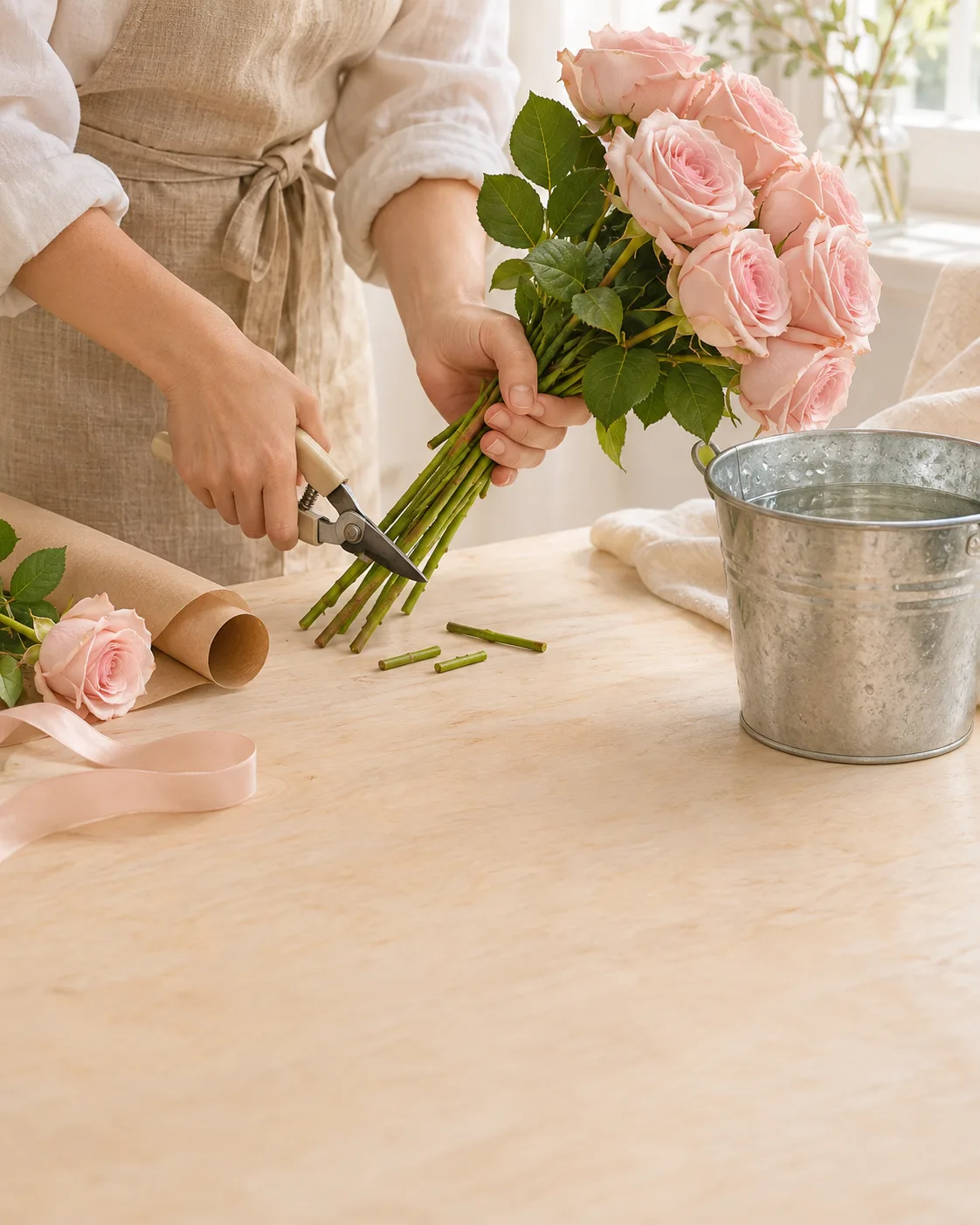
- The florist. The florist recuts the stems, hydrates them in fresh water and flower food, and builds the bouquet.
Add it up and a rose from Ecuador or Colombia can easily cover close to 4,000 miles to reach a vase in Southern California. Depending on the supplier and the season, it may be a week or more from the day it was cut.
Does a long trip mean old flowers?
Not necessarily. A rose in a good cold chain is basically in a state of pause. Cold slows its metabolism and its aging, so a rose packed and kept near 34 to 36 degrees Fahrenheit can stay in good condition for a long time. The risk is not the distance. It is the breaks in the cold chain: a box left on a warm loading dock, a truck that stalls, a delay at inspection, a store that keeps flowers in a warm room for display. Each warm hour spends some of the vase life the flower had saved.
This is also why two bouquets that look identical on day one can behave very differently. One had a smooth ride and the other had a few warm detours. You cannot see the difference at first, but you will by day four.
What same-day local delivery changes
Local delivery does not change where the flower was grown. It changes how many hands and how many hours sit between the florist's cooler and your door. When a florist near the recipient builds the bouquet and delivers it the same day, there is no shipping box, no overnight truck and no days spent in a carrier's warehouse. The bouquet goes from a cooler to a vehicle to a vase.
Compare that with flowers shipped in a box by a national carrier. Those bouquets are often cut and bundled at a distant farm, packed dry, and ride in the dark for one to three days before anyone opens the box. They can be fine, but they arrive with less vase life, and they usually need a day to open and recover.
Shipped box vs. local same-day: a quick comparison
| Shipped in a box | Local same-day delivery | |
|---|---|---|
| Who arranges it | Farm or fulfillment center | A florist near the recipient |
| Time in transit | 1 to 3 days in a dry box | Hours, in a cooled or shaded vehicle |
| How it arrives | Buds often closed, needs time to open | Arranged and ready to place in a vase |
| Typical vase life | Often shorter, depends on shipping | Often longer, fewer handoffs |
| Substitutions | Common with limited local control | Florist can pick the best stems of the day |
| Delivery fee | Often built into the price | Varies, charged separately in many shops |
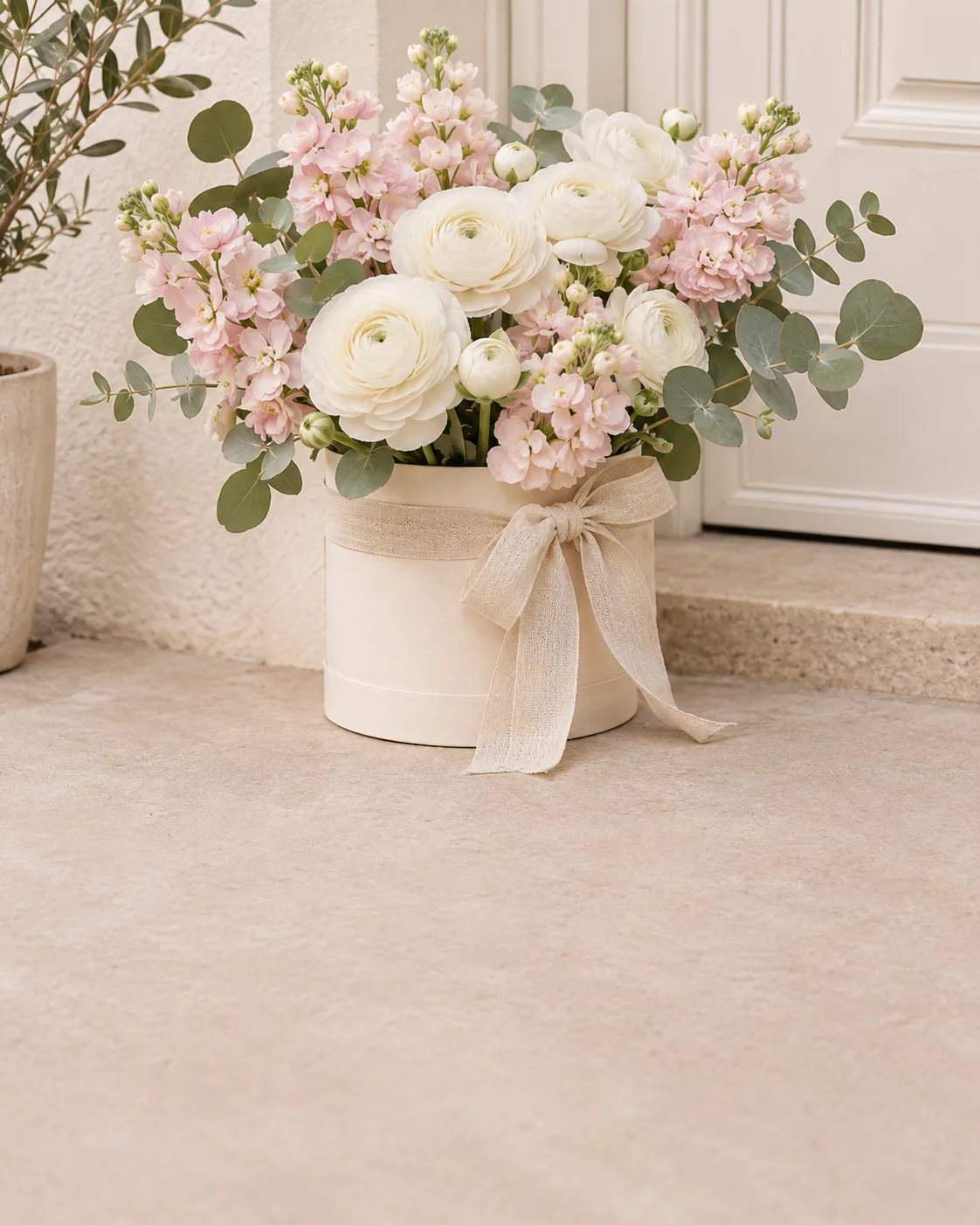
How to buy fresher flowers anywhere
- Look at the buds. Roses should be firm, with a bit of color showing and no brown edges on the outer petals. Fully open roses are already near the end.
- Check the stems and leaves. Stems should look green and firm, not slimy. Leaves should be crisp.
- Look in the water. Clear, clean water means a clean bucket. Cloudy water usually means bacteria.
- Ask when the flowers arrived. A good florist can tell you when the delivery came in and which flowers are the freshest.
- Ask about local blooms. In season, California-grown flowers such as ranunculus, snapdragons and sunflowers often shave days off the journey. Our November flowers in season guide shows what is at its best right now.
What to do when the bouquet arrives
However far the flowers traveled, the first hour at home counts. Recut each stem by an inch at an angle, strip any leaves below the waterline, and place the stems in a clean vase of room temperature water with flower food. Keep the vase away from sun, heat and fruit. Then change the water every two days and cut the stems again. We lay out the whole routine in how to make flowers last longer.
Is imported always worse?
No. Imported flowers are not a lower quality by default. Farms in Colombia and Ecuador are some of the most advanced flower growers in the world, and a rose from a good farm with a good cold chain can be excellent. Imports also provide year-round supply, which is why you can buy roses in February. The point is not to avoid imports, but to shorten the part of the trip you can control, and to buy from a florist who handles stems with care.
Farm to vase FAQ
Where do most roses in the US come from?
Most roses sold in the US are imported, mainly from Colombia and Ecuador. They arrive by air, usually through Miami.
How old are the flowers in a store bouquet?
It varies, but a bouquet is often a week or more from the day the flowers were cut. Good cold storage keeps them in good shape during that time.
Are locally grown flowers fresher?
Often yes, because they travel a shorter distance. In California, many farms supply local florists, especially in spring and summer.
Why does a florist cut the stems when the flowers arrive?
Stems seal at the end during travel and can pick up bacteria. A fresh cut opens the stem so it can drink again.
Does same-day delivery really make flowers last longer?
It can, because the bouquet skips shipping boxes and warehouses. The flowers go from a florist's cooler to the recipient within hours.
The short version
- Most cut flowers in the US are imported, mainly from Colombia and Ecuador.
- A rose can travel close to 4,000 miles and often takes a week or more from cut to vase.
- The cold chain is what keeps flowers fresh, and warm breaks cost vase life.
- Local same-day delivery removes the shipping box and shortens the last leg.
- Check buds, stems and water, and recut stems as soon as you get home.
Flowers are a small travel story that ends on your table. FlowerEase opens on November 21 with same-day delivery in 3-hour windows from a florist near the recipient, plus a photo of every bouquet before it leaves the shop. Until then, our hand-tied bouquet guide shows how florists build a bouquet that holds together for days.