How to Revive a Wilted Hydrangea: 3 Steps That Work
You come home and the hydrangea you bought on Saturday is bowing over the rim of the vase like it gave up. Do not throw it out yet. A droopy hydrangea is one of the most fixable problems in flowers, and a florist can often bring one back in an afternoon.
The reason is simple: hydrangeas drink through their petals as well as their stems. That is what makes them wilt fast, and it is also what makes the rescue work. This guide covers why hydrangeas droop, the three steps we use, how long the flowers should last, a few variations for stubborn heads and when it is time to let go. For general care that applies to every bouquet, see our guide to how to make flowers last longer.
Why hydrangeas wilt so fast
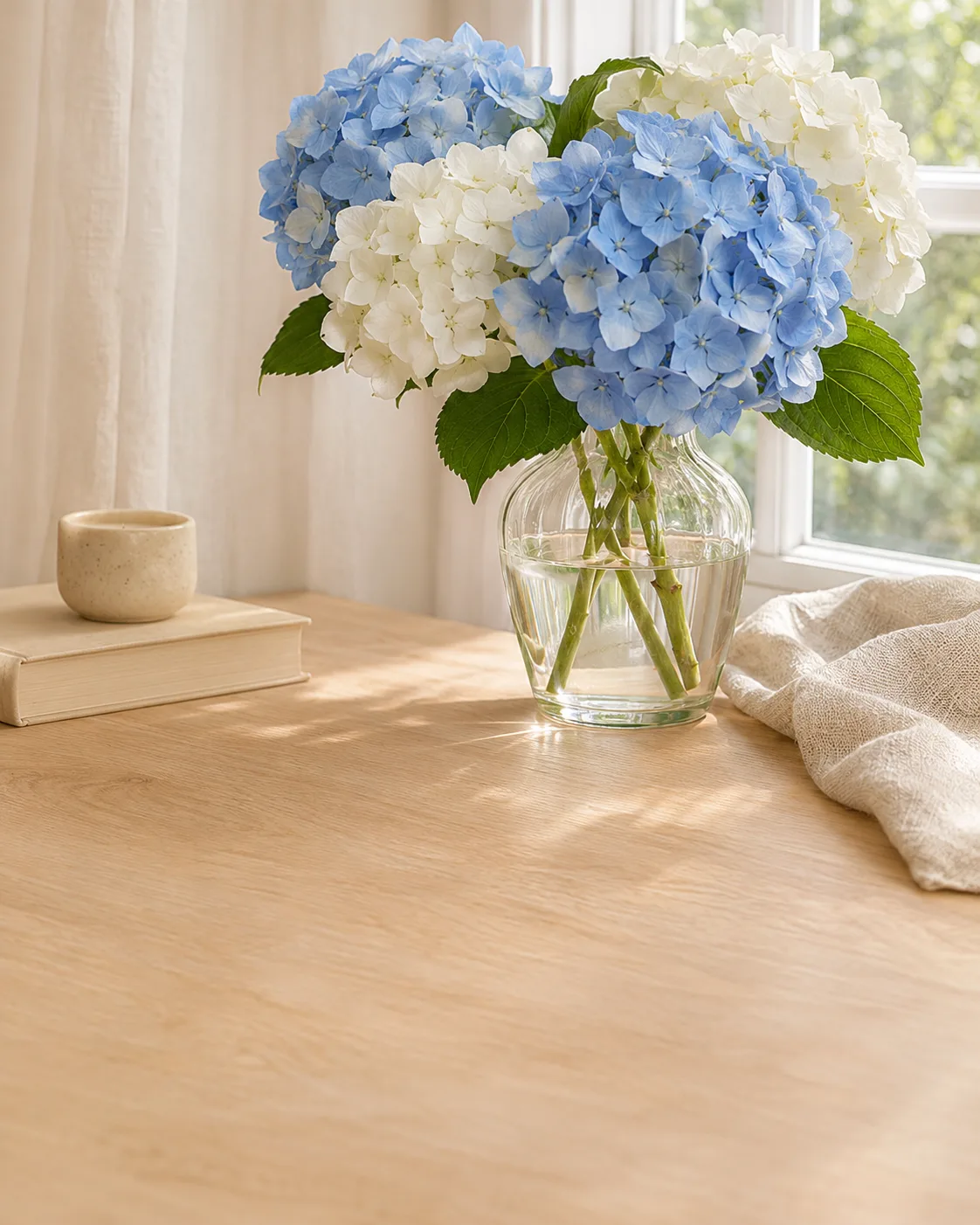
A hydrangea head is not one flower. It is dozens of small sepals packed into a ball, and each one loses water to the air. Add a thick, woody stem that does not move water quickly and you get a flower that can look fine at noon and collapsed by dinner.
Four things usually cause it:
- Air in the stem. If the stem was cut in open air, a small bubble can block the tiny tubes that carry water up. The head is surrounded by water but cannot drink.
- Sap sealing the cut. Hydrangea stems ooze a sticky sap that dries over the cut end and acts like a plug.
- Heat and sun. A warm room or a sunny windowsill pulls water out of the petals faster than the stem can replace it.
- Dirty water. Bacteria clog the stem, so even a freshly bought bunch can droop after two or three days in a vase that was not rinsed.
The good news is that none of these damage the flower itself. The cells are limp, not dead, and they refill when water gets back in.
Step 1: Recut the stem underwater
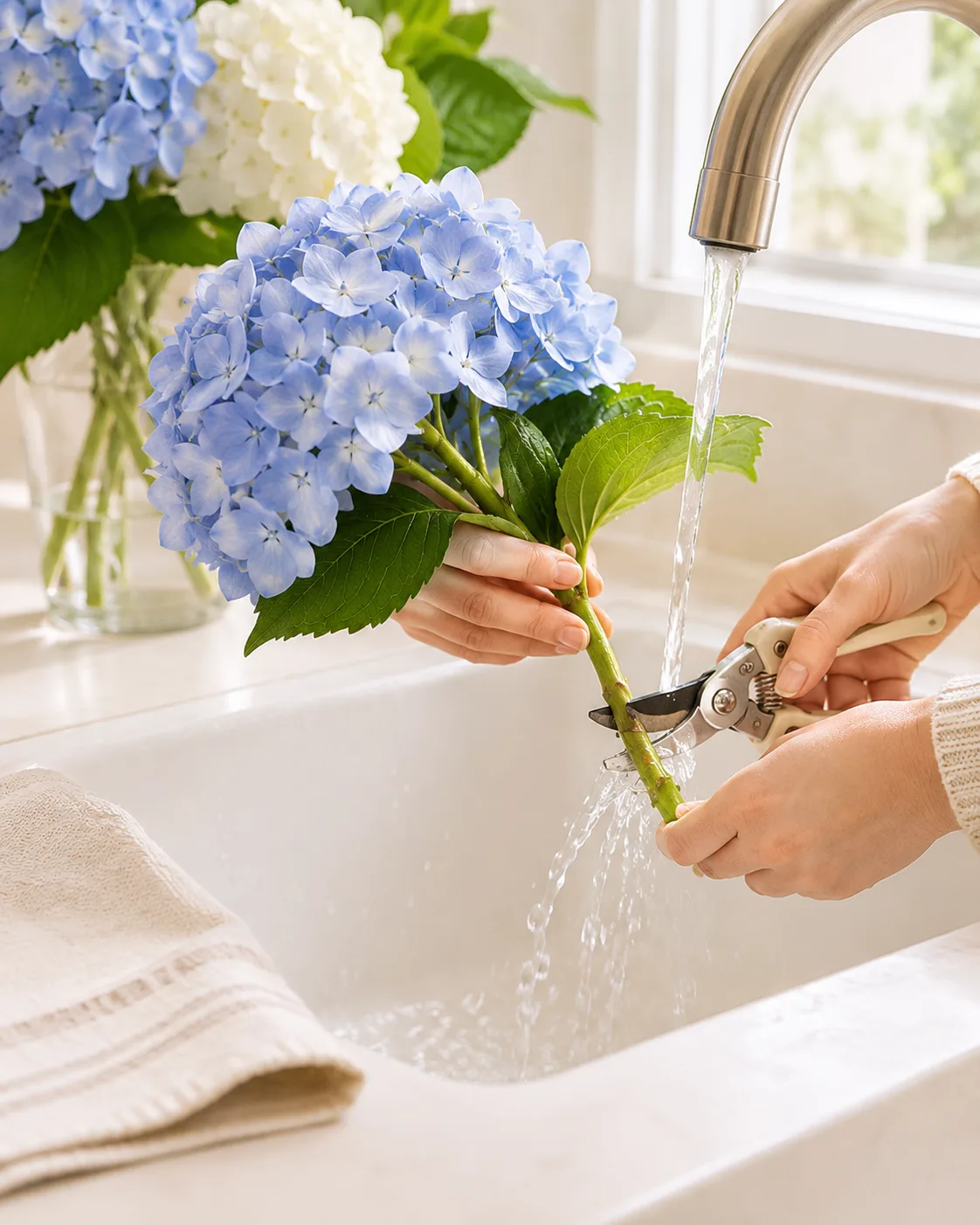
This is the step most people skip, and it matters most. Cutting underwater keeps air from entering the fresh cut and forming a bubble.
- Fill a sink or a wide bowl with cool water and hold the stem below the surface, or hold it under a gentle stream from the tap.
- Use sharp clean scissors or a florist knife. Dull blades crush the stem and close the tubes.
- Cut about 1 to 2 inches off the bottom at a steep angle. A slanted cut gives more surface for drinking and keeps the stem from sitting flat against the vase.
- Keep the cut end underwater for a few more seconds before moving it.
Strip any leaves that would sit below the water line. Leaves in the water rot quickly and feed the bacteria that cause the next round of wilting.
Step 2: Soak the whole head
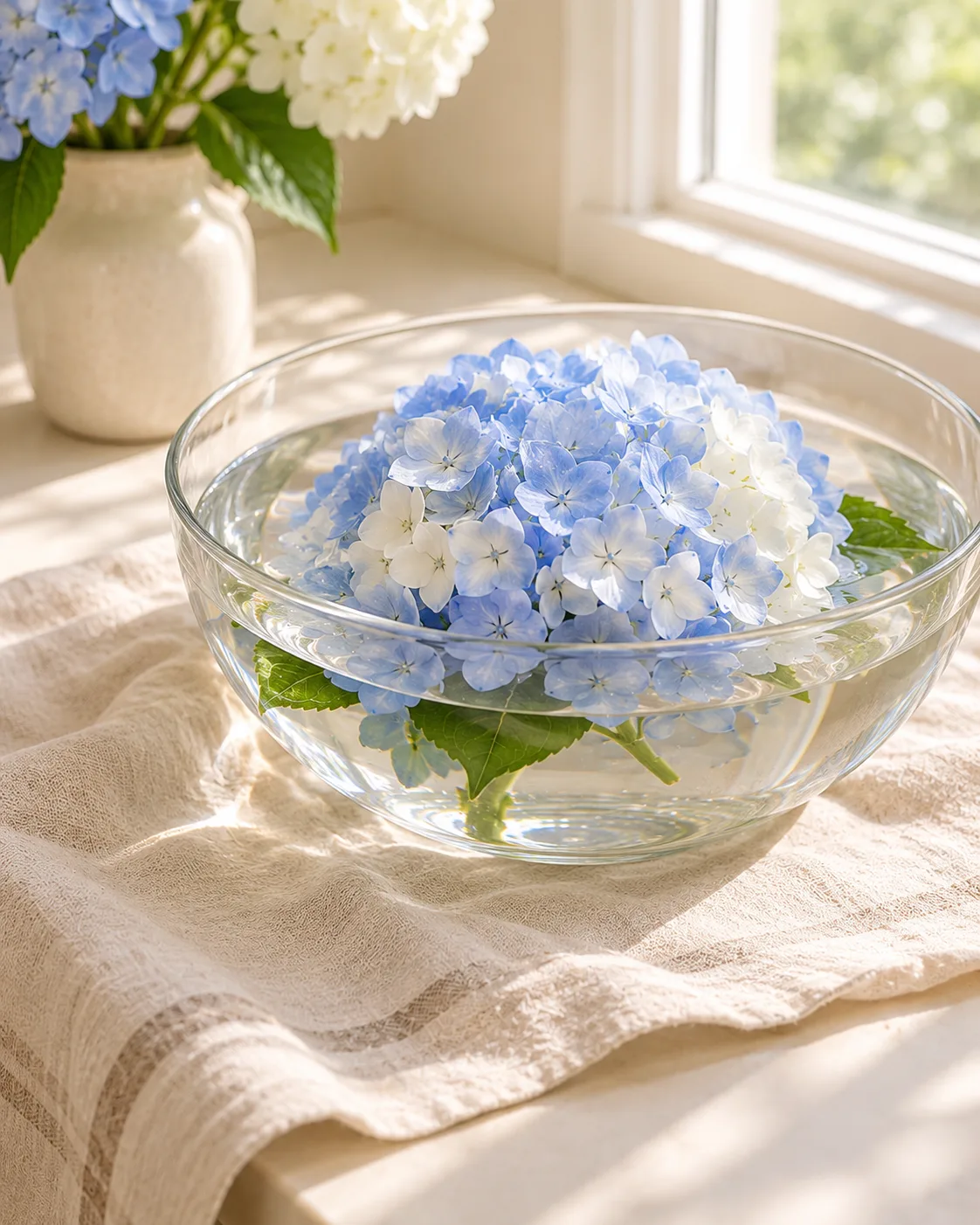
Now use the trick that makes hydrangeas special. Because the petals absorb water directly, you can rehydrate the bloom from the outside.
- Fill a large bowl, a clean sink or the bathtub with cool water. Not cold, not warm. Straight from the tap is fine.
- Lay the flower in so the whole head is submerged, stem included. A plate or a small towel on top keeps it from floating up.
- Leave it for 30 to 60 minutes. A badly wilted head may need up to two hours.
- Lift it out gently and let the extra water drip off. Do not shake it.
You will often see the head firm up while it is still in the water. The color also deepens as the sepals fill, which is a good sign the rescue is working.
Step 3: Back into fresh water and a cool spot
Once the head has recovered, give it the right home so it does not wilt again.
- Wash the vase with hot soapy water. Residue from the last bouquet is the most common reason a second wilt happens.
- Fill it with fresh cool water and add flower food if you have it. A packet is made for exactly this job.
- Place the vase in a cool room, out of direct sun, away from heaters, vents and the fruit bowl. Ripening fruit gives off ethylene gas, which ages flowers faster.
- Check the water every day and replace it fully every second day.
Most hydrangeas are standing upright again within a few hours. If a head looks only half recovered, leave it overnight in a cool room before you decide anything.
How long hydrangeas should last
Set your expectations by the type of hydrangea and how it was handled. Fresh cut hydrangeas from a good grower usually look their best for a week, and a well cared for stem can go longer.
| Situation | Typical vase life |
|---|---|
| Fresh cut, recut and changed water regularly | 5 to 7 days |
| Fresh cut, no care after the first day | 3 to 4 days |
| Cut late in the season, mature blooms | 7 to 10 days, often drying nicely |
| Revived after wilting | 2 to 4 more days |
| Dried on purpose | Months, up to a year |
Hydrangeas are one of the shorter lived flowers in a typical bouquet. Alstroemeria and chrysanthemums can last two weeks, while hydrangeas sit closer to a week. That is normal, not a sign you did something wrong.
If the first rescue does not work
Sometimes a head stays limp after one soak. Try these in order before giving up.
- Repeat the recut and soak. A second round often works when the first did not.
- Cut higher. If the bottom inch of the stem is dark or slimy, remove 2 to 3 inches until you reach clean pale green tissue.
- Try a hot water dip. Put the bottom inch of the stem in very hot water, about 150 degrees F, for 30 seconds, then move it straight to cool water. This clears air and softens the sap plug. Keep the head out of the steam.
- Dab alum on the cut. Old florists rub powdered alum, sold with spices in most grocery stores, on the fresh cut. It slows the sap and helps the stem take up water. Treat it as optional.
Avoid the old advice to put an aspirin or a penny in the vase. Neither has been shown to make cut flowers last longer.
When to let it go and dry it instead
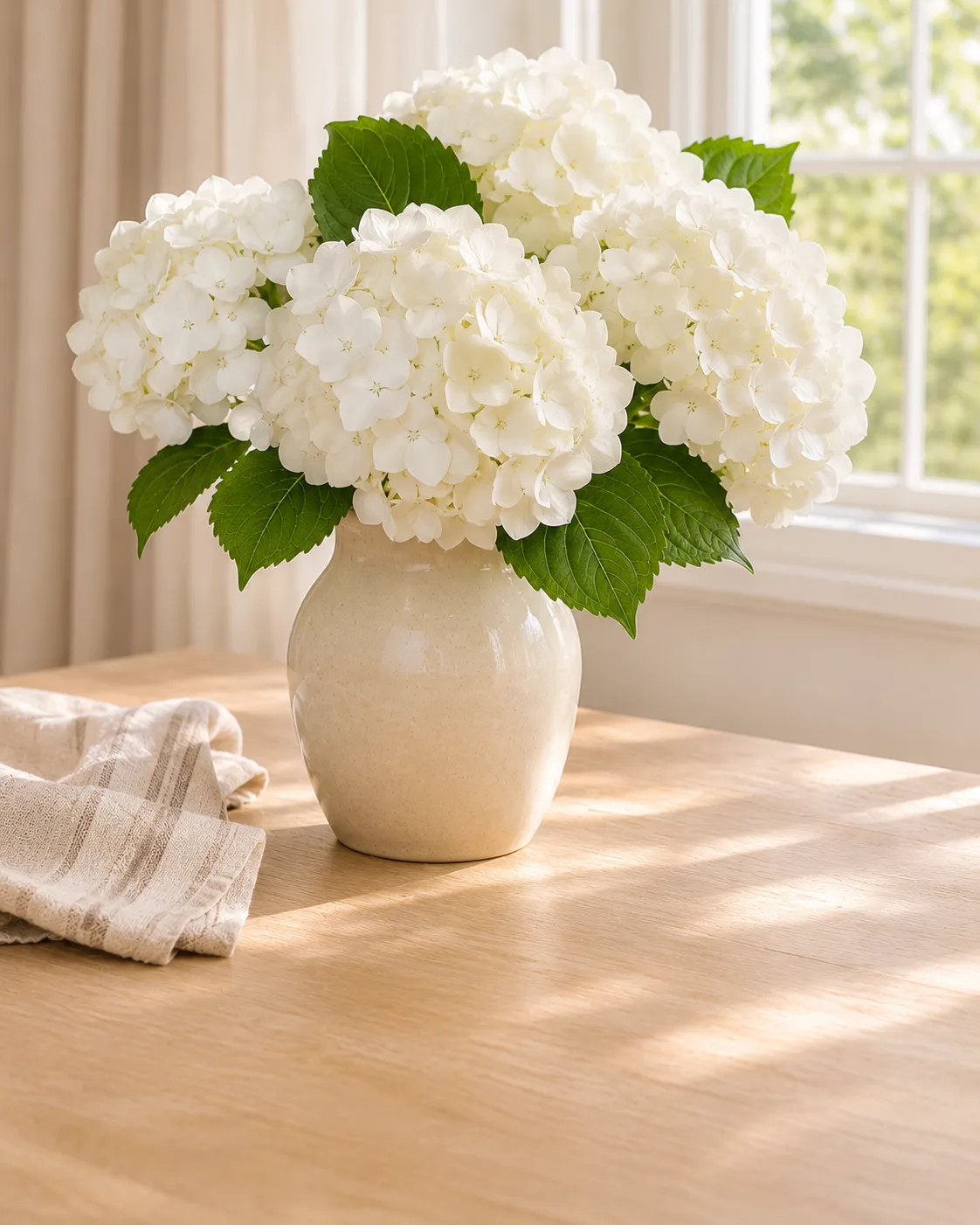
A hydrangea that will not come back is often just old. As the season goes on the sepals turn papery and the colors shift toward dusty green, mauve and antique pink. That is the stage when hydrangeas dry best.
To keep them, stand the stems in about two inches of water and let the water evaporate on its own in a cool, shaded room. Do not top it up. In one to two weeks the heads dry in place and keep their shape. Dried hydrangeas last for months in a vase with no water and make good winter decoration.
If the stem is slimy and smells sour, or the petals are brown and mushy rather than just limp, it is past rescue and it is time to compost it.
Common mistakes to avoid
- Recutting in the air. The bubble you introduce can undo the whole rescue.
- Using warm water for the soak. Warm water speeds up the head losing moisture. Keep it cool.
- Leaving the vase in the sun. A bright window is fine, a window the sun hits directly is not.
- Crowding the vase. Hydrangeas are thirsty. Give them a wide vase with plenty of water and not more than a few stems per container.
- Misting the head all day. A light spritz helps, constant wetting can invite mold.
Hydrangeas also show up in wedding bouquets and sympathy arrangements because they look generous and full. If you are choosing flowers for a milestone, see our list of anniversary flowers by year or the birthday flowers guide.
Buying hydrangeas that last
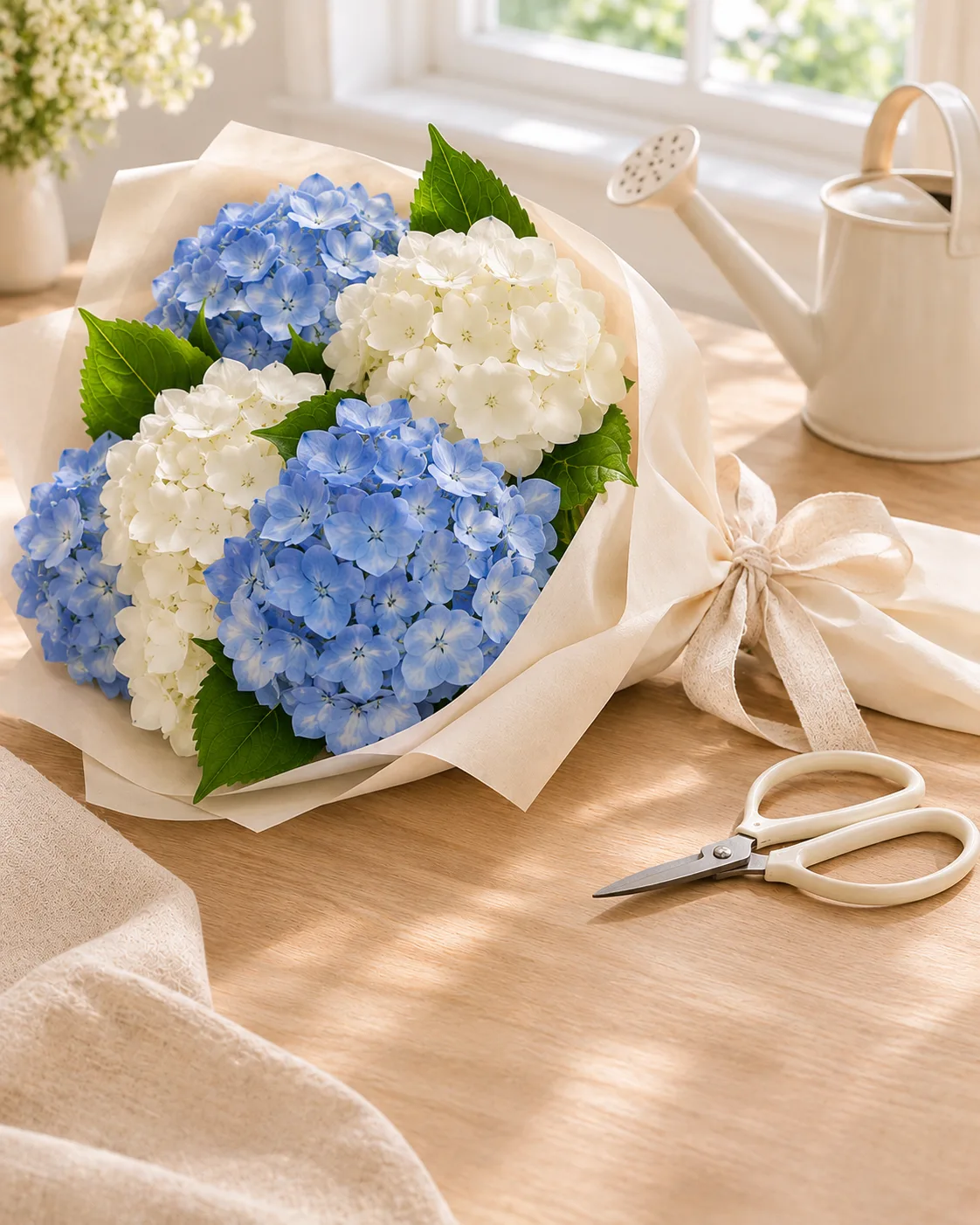
A little judgment at the shop saves a lot of rescuing later. Look for heads that feel full and a bit heavy, with petals that are firm rather than papery. Stems should be green at the cut, not brown or slimy. Ask when the flowers were cut, and ask the florist to recut the stems before wrapping.
In Orange County in 2026, expect a single fresh hydrangea stem to run about $6 to $12 and a hydrangea-focused hand-tied bouquet about $55 to $120, depending on size and the other flowers in it. For same-day orders, see our page on same-day flower delivery in Orange County. FlowerEase opens November 21, 2026.
Hydrangea revival FAQ
Can a completely wilted hydrangea come back to life?
Often yes, if it is only dehydrated. Recut the stem underwater and soak the whole head in cool water for 30 to 60 minutes. If the petals are brown, mushy or the stem smells sour, it is too far gone.
How long should I soak a hydrangea?
Thirty to sixty minutes is enough for most heads. A badly wilted one can take up to two hours. Check it every 20 minutes and take it out once it feels firm.
Should I use hot or cold water to revive hydrangeas?
Use cool water for the soak and for the vase. Hot water is only for a stubborn stem, and then only the bottom inch for about 30 seconds before it goes back into cool water.
Why does my hydrangea wilt again after I fix it?
Usually the vase water is dirty, the stem is blocked again or the vase sits in sun or near heat. Wash the vase, recut the stem underwater and move it to a cooler spot.
Does flower food help hydrangeas?
Yes. It feeds the stem and slows bacteria. Use the packet that came with the bouquet and replace the water every other day.
How long do cut hydrangeas last?
About 5 to 7 days with good care. A revived stem usually gives you 2 to 4 more days after the rescue.
The short version
Recut the stem at an angle under running water, soak the whole head in cool water for 30 to 60 minutes and return it to a clean vase of fresh water in a cool, shaded room. Replace the water every other day. If a head will not recover, let it dry on purpose and keep it for the winter.