Orchid Care Myths: Ice Cubes, Sun and Rebloom Debunked
Few plants have more bad advice attached to them than the orchid. Someone gave you one, it bloomed for two months, and then it dropped every flower and sat there with a few green leaves. The internet says to feed it ice cubes. A friend says to put it in the sun. Another says to throw it out.
Almost all of that is wrong, or at least incomplete. The most common houseplant orchid, the moth orchid (Phalaenopsis), is easier than its reputation, as long as you know what it is. This guide takes on the three myths that cause the most dead orchids and explains what to do instead.
What is a moth orchid, really?
Most orchids sold in grocery stores, hardware stores and florist shops are Phalaenopsis. In the wild these orchids are epiphytes, meaning they grow on tree trunks in warm, humid forests in Southeast Asia. Their roots cling to bark and soak up rain, then dry out quickly in the wind. They are not made for sitting in damp soil, and they are not made for blazing sun. Once you picture a tree in a shady tropical forest, most of the care rules make sense.
Myth 1: Ice cubes are the best way to water an orchid
The ice cube idea spread partly through a marketing campaign that suggested three ice cubes a week as an easy way to avoid overwatering. It is simple, and that is why it spread. But think about where a moth orchid comes from. It is a tropical plant, and its roots are used to warm rain, not freezing water. Ice cubes put cold directly on the roots in one spot, and a small amount of water cannot soak the whole root system evenly. Some growers have grown orchids on ice for a while without obvious harm, but it is not what the plant evolved for, and it is not the best way to water.
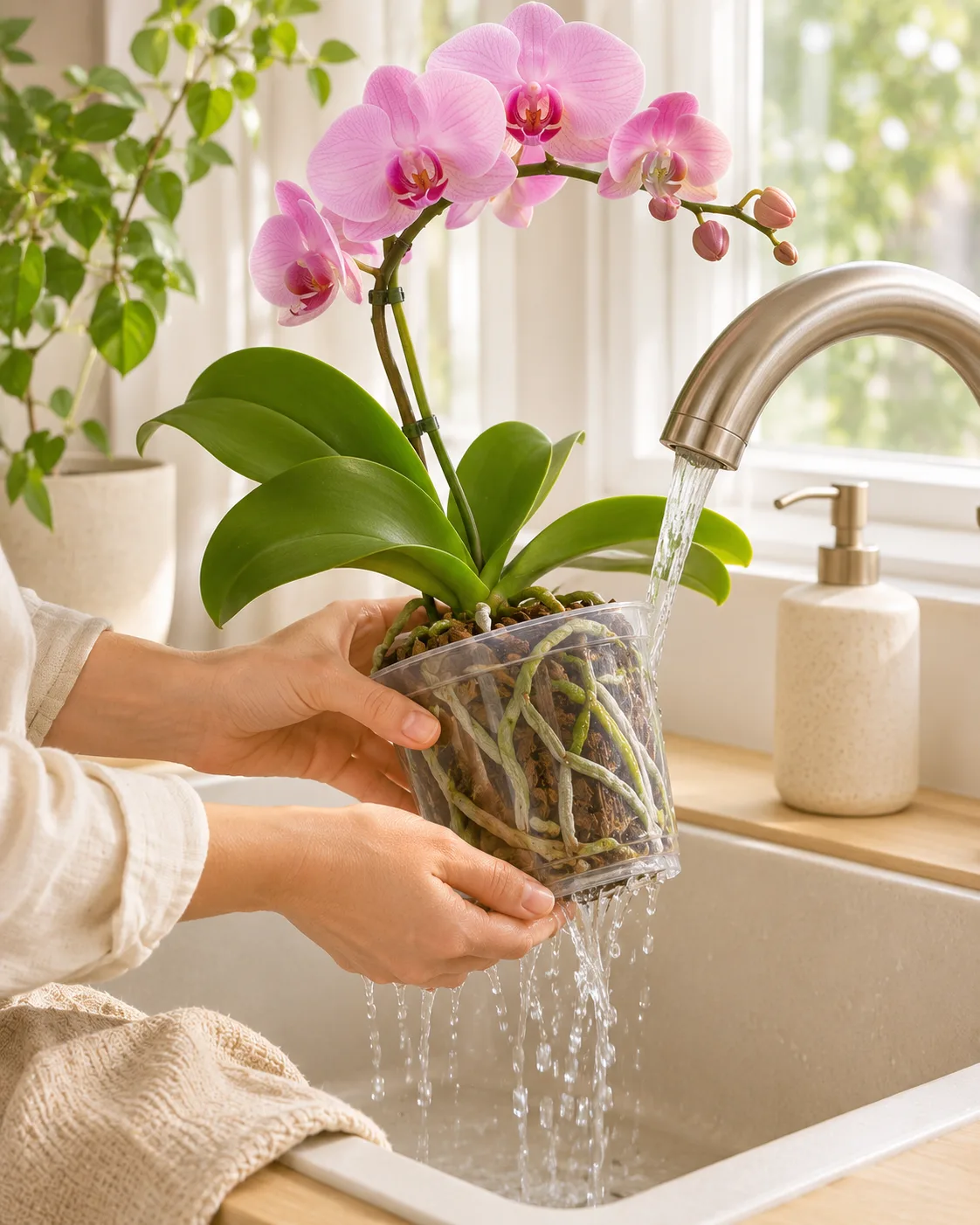
What to do instead. Once a week, or when the roots look silvery and the potting bark feels dry, take the plant to the sink. Run lukewarm water through the bark for about a minute, or soak the pot in a bowl of water for 10 to 15 minutes. Let it drain fully. Never let the pot sit in a saucer of water, because roots that stay wet will rot. In a dry home you may water a little more often, and in a humid one a little less.
A good clue is the roots themselves. Healthy roots are green when wet and silvery gray when dry. If you use a clear pot, you can see them without guessing.
Myth 2: Orchids need lots of direct sun
Orchids love light, so it is easy to assume they want a sunny window. But direct afternoon sun can burn the leaves, leaving pale, yellow or brown patches. A moth orchid wants bright, indirect light, similar to the dappled light under tree branches.
What to do instead. An east-facing window is ideal. A south or west window works if you hang a sheer curtain to soften the light. Check the leaves: they should be a medium, glossy green. Dark green leaves usually mean too little light, and yellowish or reddish leaves mean too much. Keep the plant away from heat vents, which dry the air and make the flowers drop sooner.
Myth 3: An orchid without flowers is dead
This one costs the most orchids. A moth orchid blooms for about two to three months, then the flowers fall. What remains is a plant with a few leaves, some roots and a bare spike. It looks sad, but it is just resting.
What to do instead. Look at the spike. If it is still green, you can cut it above the second or third node (the small bump on the stem) counting from the base, and the plant may send out a new branch with more flowers. If it turns brown or yellow, cut it near the base. Then keep watering, give bright indirect light, and feed every two weeks with a diluted orchid fertilizer. To trigger a new spike, many orchids need a drop in temperature at night, about 10 degrees cooler than the day, for a few weeks in the fall. A spot near a window often provides this naturally. With luck, you will see a new spike in about six to nine months.
Not every plant reblooms on schedule, and some skip a year. A healthy plant with firm green leaves and plump roots is alive and trying.
Myths and facts at a glance
| Myth | The better practice |
|---|---|
| Water with ice cubes | Soak or rinse the roots with lukewarm water about once a week and drain well |
| Put it in the sun | Bright, indirect light, such as an east window |
| No flowers means dead | Check the leaves and roots; trim the spike and wait 6 to 9 months |
| Orchids need soil | Use orchid bark, not regular potting soil |
| Mist the leaves every day | Water the roots; constant wet leaves can cause rot |
| Air roots must be buried | Roots growing above the pot are normal; leave them alone |
Other common orchid mistakes
- Using the wrong pot mix. Orchids grow in bark, sometimes mixed with moss or charcoal. Ordinary potting soil holds too much water and suffocates the roots. Repot every one to two years, after flowering, into fresh bark.
- Cutting aerial roots. The thick roots that reach out of the pot are normal. They absorb moisture from the air. Only trim roots that are brown, mushy or papery.
- Leaving water in the crown. If water collects where the leaves meet, it can cause crown rot. Blot it with a paper towel.
- Overfeeding. Less is more. Use a weak fertilizer solution, and flush the pot with plain water once a month to remove salt build-up.
Orchids as gifts
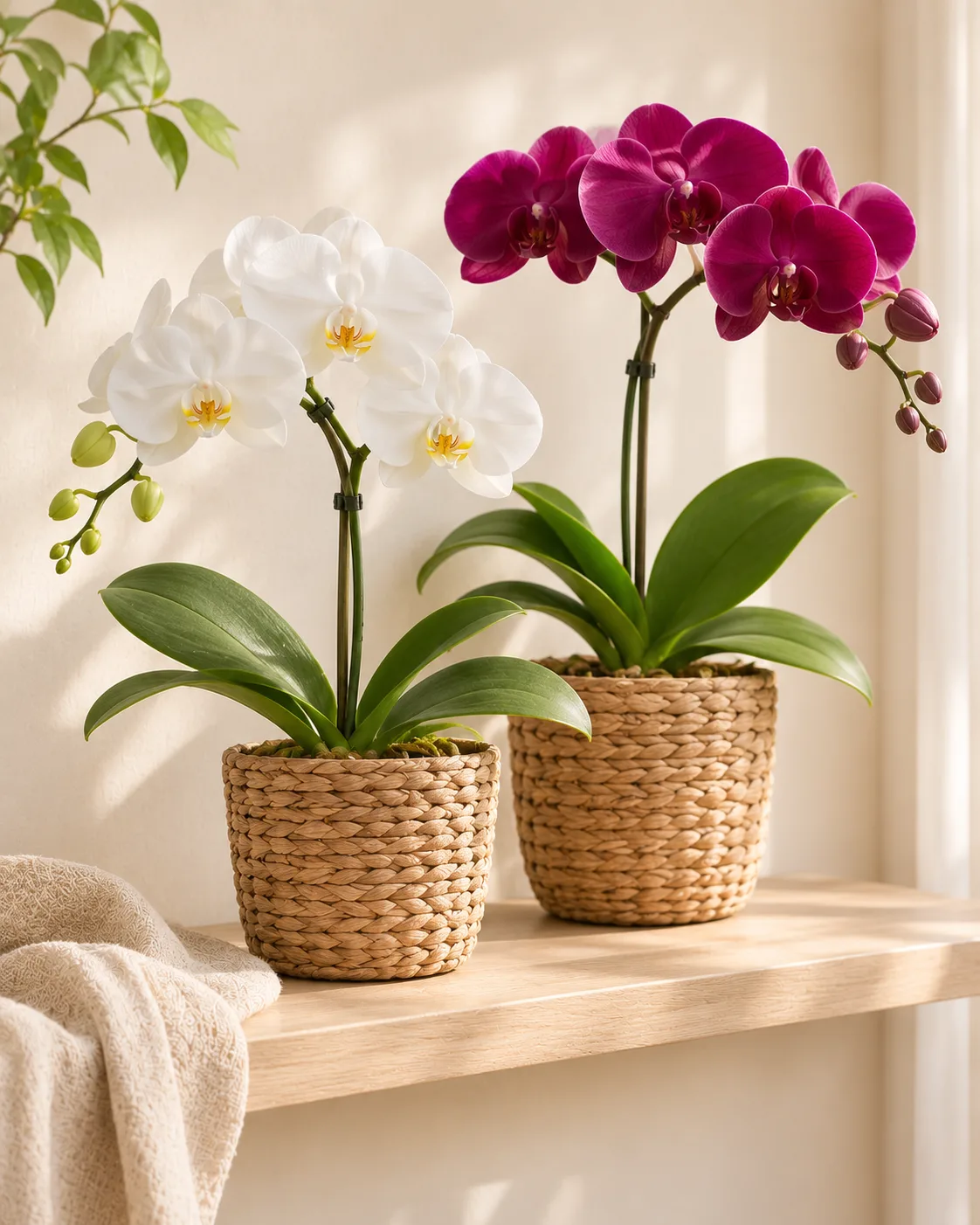
A blooming orchid is one of the longest-lasting gifts you can give. It stays in flower for weeks, it is neat and elegant, and the person can enjoy it again next year. White is the classic choice for a clean, modern look, and pink and purple are popular for birthdays and Mother's Day. Orchids also work well for those who do not want a bouquet to throw away. If you want to compare other lasting options, our guide to birthday flowers covers when a plant works better than cut flowers, and our sympathy flowers guide explains why a plant is often a thoughtful choice for a family.
Cut orchids vs. potted orchids
Do not confuse the potted plant with cut orchids sold in bouquets. Cut orchids, often cymbidium or dendrobium sprays, are grown for the vase and last about two to three weeks in clean water. They are among the longest-lasting cut flowers. Follow the usual routine in how to make flowers last longer: fresh water, fresh cuts, no fruit bowl nearby.
Are orchids safe for pets?
The ASPCA lists Phalaenopsis orchids as non-toxic to cats, dogs and horses. Even so, a cat chewing on the plant may get an upset stomach, and the bark can be a choking hazard for small pets.
Orchid care FAQ
Do ice cubes work for watering orchids?
Ice cubes are not the best choice because moth orchids are tropical and prefer lukewarm water. Soaking the roots once a week and draining fully works better.
How often should I water a moth orchid?
About once a week in most homes. Water when the roots turn silvery and the bark feels dry.
Why did my orchid drop its flowers?
Flowers fall naturally after two to three months. Drafts, heat vents, too little water or ethylene from ripening fruit can also make them drop early.
How do I make my orchid bloom again?
Give bright indirect light, regular water and a weak fertilizer. Trim the spike, and provide cooler nights for a few weeks to trigger a new one.
Where should I cut the orchid spike?
If the spike is green, cut just above a node a few inches from the base. If it is brown or dry, cut it near the base.
The short version
- Skip the ice cubes. Soak the roots in lukewarm water about once a week and drain well.
- Give bright, indirect light, not direct afternoon sun.
- A bare orchid is resting, not dead. Trim the spike and wait for the next bloom.
- Use orchid bark and leave healthy air roots alone.
- Cut orchids in a vase last two to three weeks.
Orchids reward patience more than effort. FlowerEase opens on November 21 with same-day delivery in 3-hour windows from a florist near the recipient, whether you want a bouquet or a blooming plant for someone who has everything.