Why Store Roses Don't Smell (and Which Fragrant Roses to Ask For)
You get a dozen red roses, put your nose into the bouquet, and smell... mostly green stems. It feels like something was lost. Your grandmother's garden rose could fill a room. The one from the store barely whispers.
You are not imagining it, and your nose is fine. Over many decades, rose breeders have made cut roses that stay beautiful far longer than old garden roses ever did, but in doing so they have often traded away fragrance. This guide explains how that happened, what the science says about rose scent, and how to buy roses that actually smell like roses.
Why do store roses have so little scent?
There are three main reasons, and they pile on top of each other.
1. Breeding for the trade. The roses sold in bulk are chosen for what a grower and a shipper need: tall straight stems, large heads, strong colors, few thorns and a long vase life. Breeders cross thousands of plants and keep the ones that tick those boxes. Scent is a trait that is hard to measure, and it often does not travel with long vase life. When scent is not part of the selection, it tends to fade over the generations.
2. Cold storage. Roses for the trade are cut as tight buds and kept cold, which is exactly what keeps them fresh. But cold also slows the flower's scent production, and a bud that has not opened yet has not released its fragrance. It can take a day or two in a warm room for the aroma to build.
3. Long travel and handling. A rose that has been picked tight, boxed, flown and stored for several days has used up some of the energy it would otherwise put into perfume. We follow that trip in detail in farm to vase.
How does a rose make its smell?
Rose scent comes from tiny amounts of oils made in the petals. The mix is complex, with dozens of aroma compounds such as geraniol, citronellol and 2-phenylethanol, which smells like rose itself. These oils evaporate easily, which is why a warm, fully open rose smells stronger than a cold bud. Different varieties blend them in different ratios, which is why one rose smells like tea, another like fruit, another like spice and another like classic rose.
Because the oils are volatile, scent is also sensitive to temperature and time of day. A rose smells strongest in warm, humid air, and often in the morning.
Which roses smell the best?
Scent is not tied to one color, but there are some patterns worth knowing.
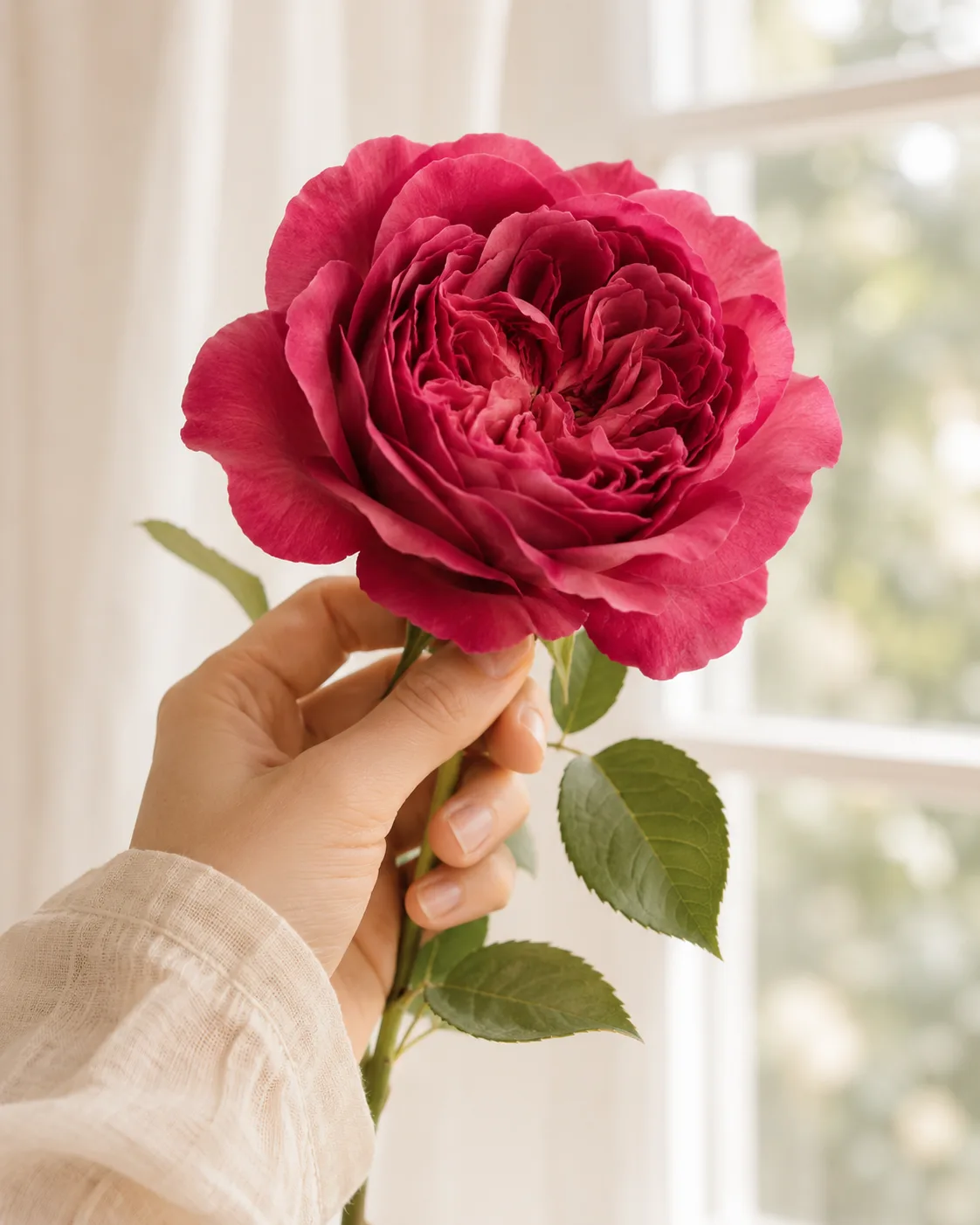
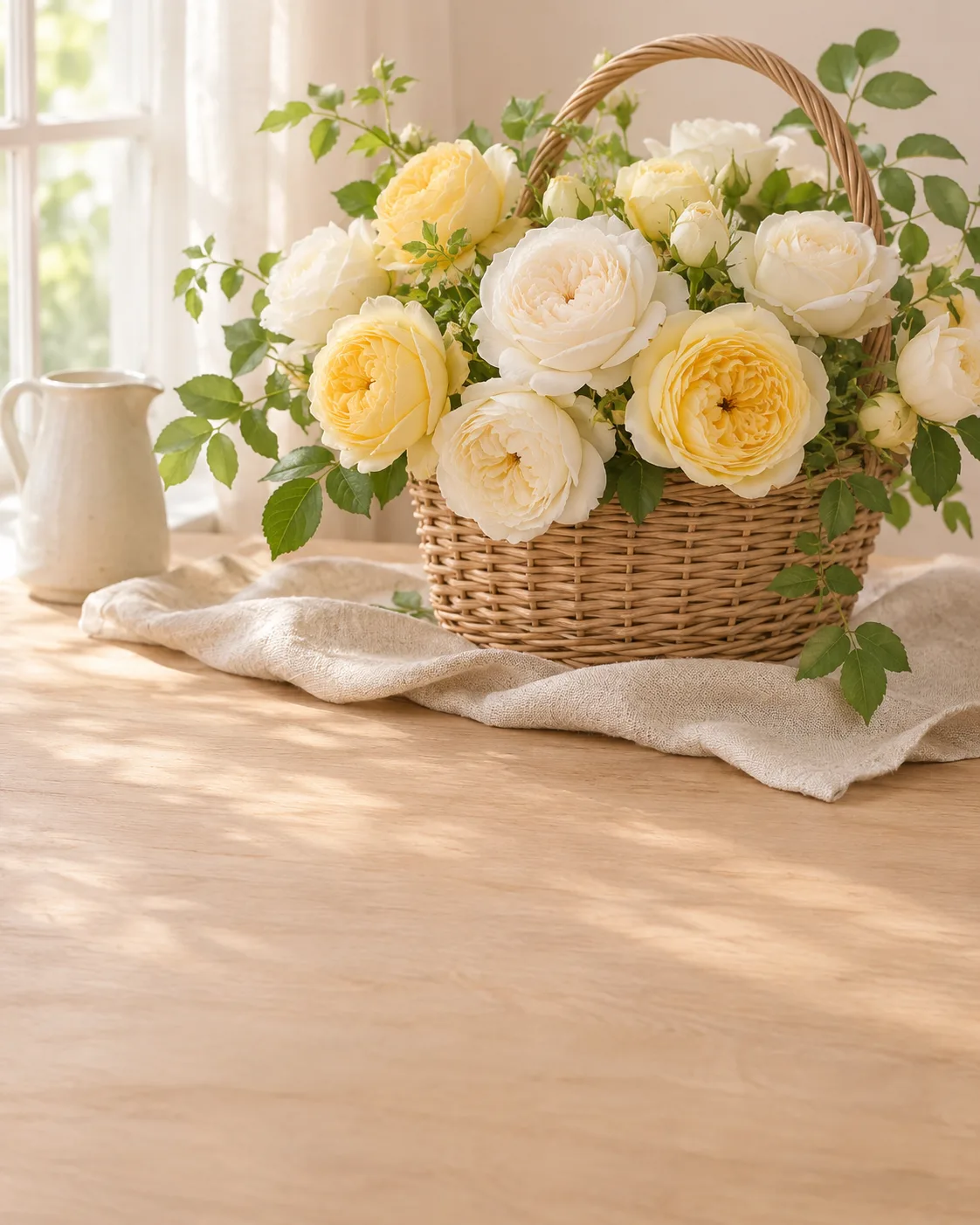
- Garden roses. These ruffled, many-petaled blooms are grown for flower and fragrance instead of shipping. They are what florists mean by "romantic" roses. Many garden roses smell strongly of old rose, fruit or tea, and they are the surest bet if you want a scented bouquet. They are also more delicate and more costly.
- David Austin cut roses. English breeder David Austin created a group of roses that combine the look of old garden roses with modern repeat blooming. Varieties often sold as cut roses include Juliet, Keira and Patience, and many are fragrant. Ask your florist what is available that week.
- Spray roses. Small blooms with several flowers on one stem. Some are lightly fragrant, but most are bred for looks and sturdiness.
- Classic red roses. The long-stemmed red roses sold at Valentine's Day are among the least fragrant, because they are bred for size, color depth and shipping. Some red varieties are scented, but you usually have to look for them.
- Pink, peach and yellow roses. These colors tend to carry more scent than the deep reds, although this is a tendency, not a rule.
Rose types compared
| Rose type | Typical scent | Vase life | Price level |
|---|---|---|---|
| Standard long-stem red | Light to none | 7 to 10 days | Moderate, higher near holidays |
| Standard pink, peach, white | Light to moderate | 6 to 9 days | Moderate |
| Spray roses | Light | 6 to 8 days | Lower per stem |
| Garden roses | Moderate to strong | 4 to 7 days | Higher |
| David Austin cut roses | Often strong | 4 to 7 days | Highest |
The pattern is clear: the roses with the most scent usually last a little less, and the ones that last the longest usually smell the least. It is a trade-off, not a trick.
A brief history of scented roses
For most of history, people grew roses for their perfume first. Rose oil and rose water were used in cooking, medicine and cosmetics for centuries, and the old garden roses of the 1800s were prized for fragrance. In the 20th century, hybrid tea roses brought the tall, pointed bud and stronger colors that we picture today, and with the rise of the global flower trade, breeders focused more and more on traits that survive shipping. The good news is that interest in fragrance has come back. Many growers now offer scented garden roses to customers who ask for them, which is exactly why asking matters.
How to find roses that smell
- Smell before you buy. In a shop, gently lean in and smell the open flower, not the bud. If the florist will not let you, ask what they would call their most fragrant roses.
- Ask for garden roses by name. Say "I would like fragrant roses" and ask for garden roses or David Austin varieties. A good florist knows what is in the cooler.
- Order a day ahead. Garden roses are not always in stock. Ordering ahead gives the florist time to bring them in.
- Choose open over tight. A rose that has started to open smells better than a tight bud. If you want the scent on day one, ask for flowers that are a little further along, and know they will have a shorter life.
- Check the season. Fragrant garden roses are at their best in late spring and summer, though some are available year round.
How to bring out the scent at home
- Keep them in a warm room. Roses release more fragrance at room temperature. A cold hallway keeps the perfume locked in.
- Recut and use flower food. A well-hydrated flower opens and releases scent better. Our care guide covers the routine.
- Do not crowd the vase. Air movement around the blooms helps the scent spread.
- Put the vase where you pass it. A nightstand, a desk or an entry table. You notice rose scent most when you lean in.
- Skip heavy air fresheners nearby. A strong competing smell can hide the rose.
Keep in mind that a rose that has not opened will not smell much. If your bouquet arrives in tight bud, give it a day or two before you judge.
Red roses without the scent: still worth it?
Yes. A long-stem red rose is bought for what it says, not for how it smells. It is a classic symbol of love, and its form and color are hard to beat. If you want both, mix a few fragrant garden roses into a red bouquet, or add a scented flower such as freesia, stock or lily next to the roses. For more on what each shade means, see what rose colors mean.
Store roses FAQ
Why don't my roses smell?
Most store roses are bred for long vase life and shipping, not for fragrance, and cold storage reduces scent further. Tight buds also smell less until they open.
Which roses smell the best?
Garden roses and David Austin cut roses usually smell the best. Pink, peach, white and yellow roses tend to be more fragrant than classic red.
Do red roses have a scent?
Some do, but many commercial red roses are only faintly scented. If you want a red rose with fragrance, ask your florist for a scented variety.
Can I make my roses smell stronger?
Keep them in a warm room, give them fresh water and let the buds open. Roses release more scent when they are warm and fully open.
Are fragrant roses more expensive?
Usually yes, because garden roses are more delicate and grown in smaller numbers. Expect to pay more per stem than for standard roses.
The short version
- Store roses are bred for stems, color and vase life, so scent was left behind.
- Cold storage and shipping dull what scent remains.
- Ask for garden roses or David Austin roses when you want fragrance.
- Pink, peach, white and yellow tend to smell more than deep red.
- Warm rooms and open blooms bring out the perfume.
The best rose is the one you can smell from across the room. FlowerEase opens on November 21 with same-day delivery in 3-hour windows from a florist near the recipient, so you can ask for fragrant roses and have them arrive fresh. Until then, explore more ideas in our birthday flowers guide.