Dahlia Facts: The Flower Aztecs Grew to Eat
The dahlia is the flower that looks like it was designed by an architect. Petals layered in perfect spirals, blooms the size of a dinner plate, colors from pale cream to near black. It seems impossible that anyone ever looked at one and thought of dinner.
But that is the real history. Long before dahlias filled florist buckets, people in Mexico grew them as a crop. This guide covers where dahlias come from, why one tuber turned into thousands of varieties, the flower shapes you will see in bouquets, why they are a fall favorite, and the care steps that keep a cut dahlia looking its best.
The Aztecs grew dahlias to eat
Dahlias are native to the highlands of Mexico and Central America. The Aztecs grew them centuries before Europeans arrived, and they used the plant in several ways. The roots, called tubers, were a food crop. The tall, hollow stems were reportedly used as pipes to carry water. And the flowers were valued as ornaments and for their beauty.
When dahlia plants and tubers reached Europe in the late 1700s, botanists tried to turn them into a vegetable, in the same spirit as the potato. The experiment did not go well. The tubers had a bitter, starchy flavor that Europeans did not like, and the idea faded. But the flowers caught on immediately. Within a few decades, gardeners in Spain, France and England were breeding dahlias for their blooms.
The plant was given its modern name in honor of Anders Dahl, a Swedish botanist and a student of Carl Linnaeus. Today the dahlia is the national flower of Mexico, a title it has held since 1963.
How one plant became thousands of varieties
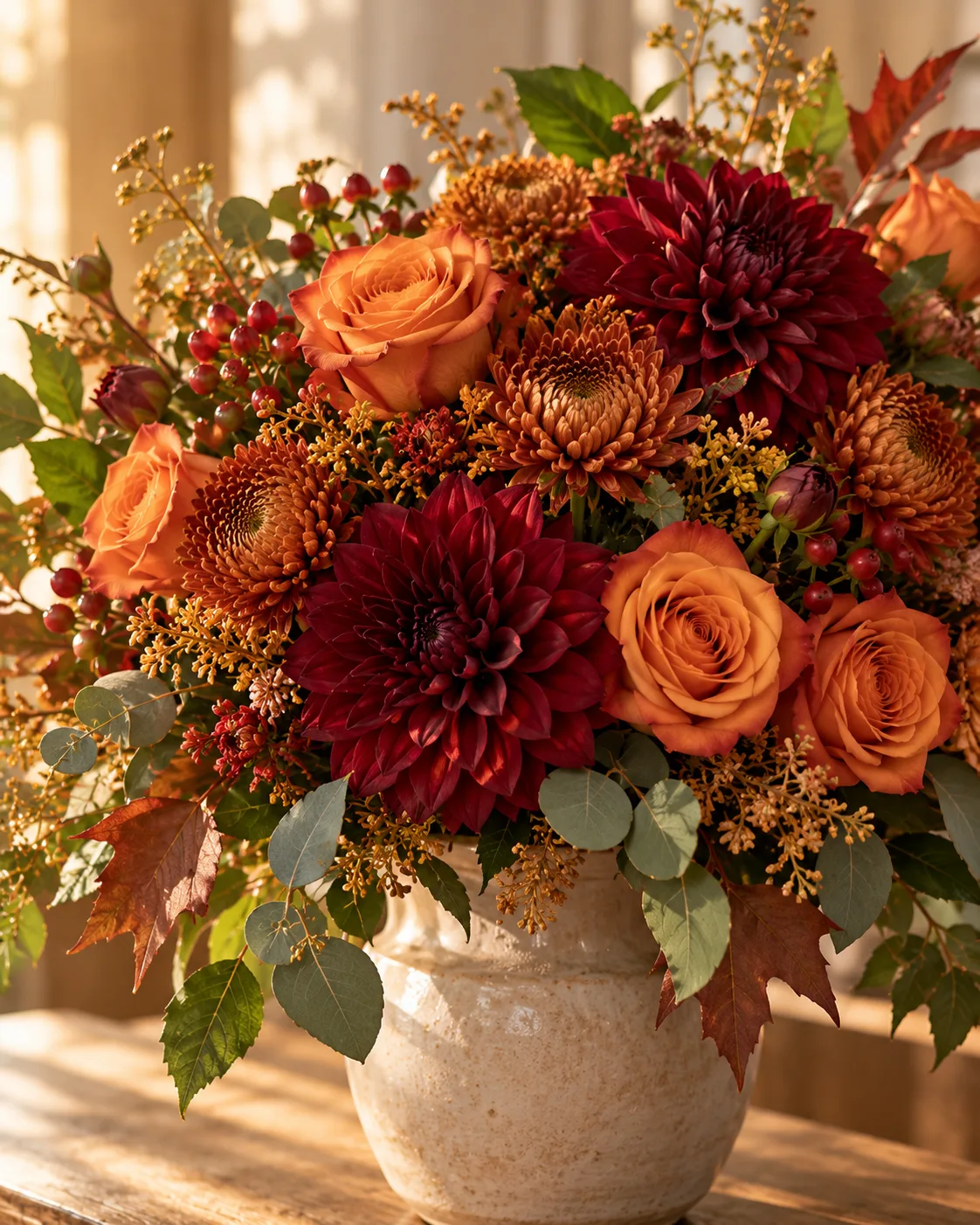
Here is the thing that makes dahlias special. Wild dahlias were fairly simple flowers with a ring of petals around a yellow center. But the dahlia has an unusual genetic makeup that makes it extremely flexible, and breeders discovered that they could change its size, shape and color dramatically within a few generations.
The result is a plant with an enormous range. There are about 40 wild species, but breeders have registered tens of thousands of named varieties. The flowers can be less than two inches wide or about ten inches, they can be single, double or spiky, and the colors cover almost the whole rainbow. The one color you will not find in a true dahlia is blue.
The dahlia shapes florists use
Dahlias are organized by the form of their petals. You do not need to memorize the list, but knowing the main ones helps when you are choosing a bouquet.
Common dahlia forms at a glance
| Form | Size | Look | Best for |
|---|---|---|---|
| Dinnerplate | Up to about 10 inches | Huge, flat and layered | One-stem statement vases, focal flowers |
| Decorative | 4 to 8 inches | Full, double, with flat petals | Classic bouquets and centerpieces |
| Ball | 2 to 4 inches | Round like a tight sphere | Tidy arrangements, tight posies |
| Pompon | Under 2 inches | Small, perfect globes | Boutonnieres, small bouquets |
| Cactus | 3 to 8 inches | Spiky, with rolled petals | Modern, textured arrangements |
| Anemone and collarette | 2 to 5 inches | Open center with a ring of petals | Garden-style, natural looks |
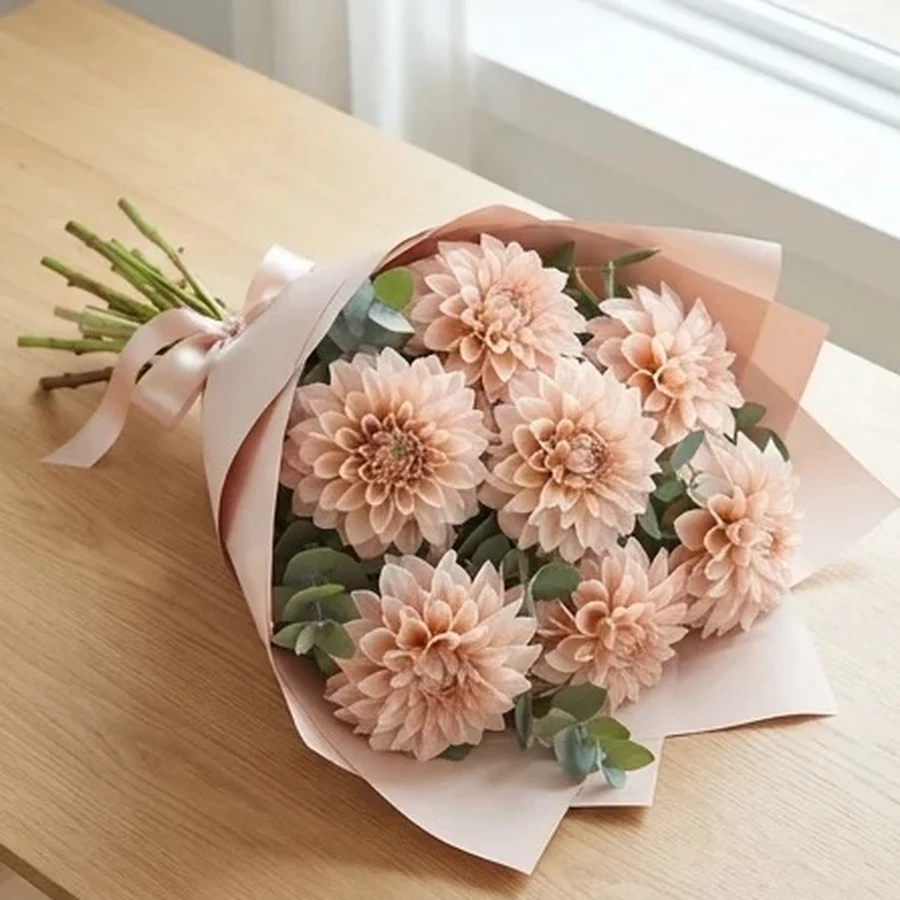
The dinnerplate and decorative types get most of the attention, and some of the most famous varieties are given pet names, such as the peachy "Café au Lait," which has become a wedding star. If you ever see a bouquet with large, soft, blush-colored blooms, there is a good chance it is a dahlia of that kind.
Why dahlias are a fall flower
Most flowers are tied to spring, but the dahlia blooms from midsummer into fall. The plant grows from a tuber, loves warm days and cool nights and keeps flowering until the first frost. In most of the United States, that means peak season from late summer to October. Along the California coast, where frost rarely comes, the season runs longer, and fresh dahlias can still be found in November.
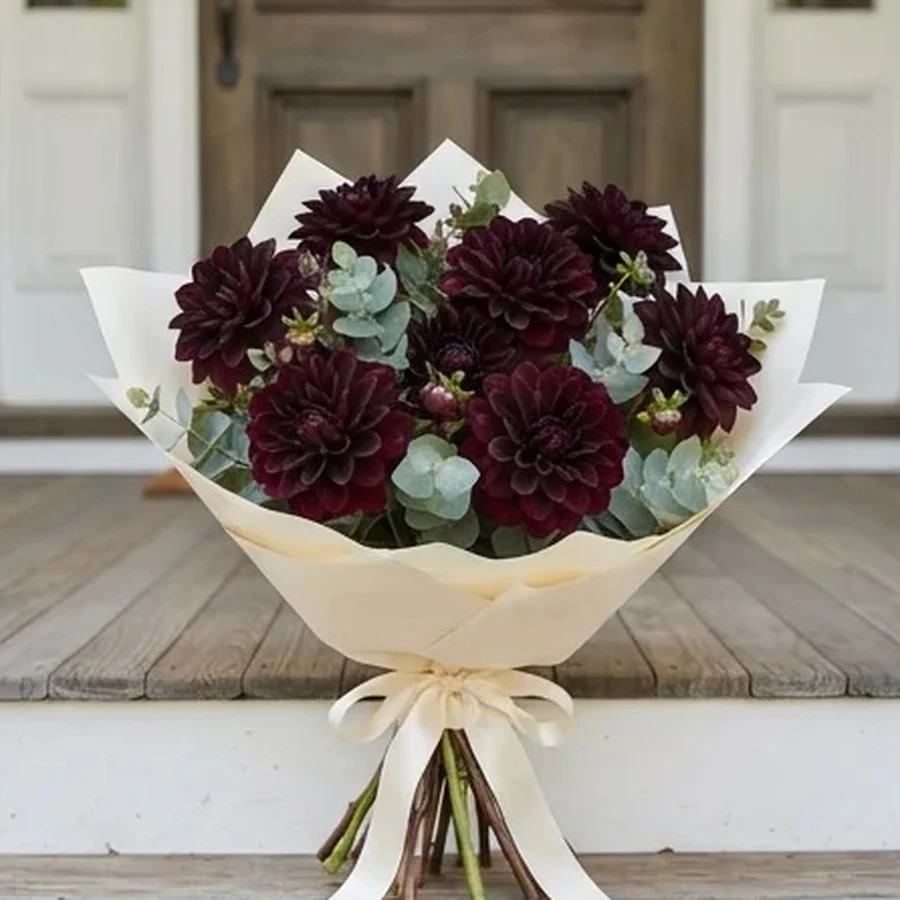
The color range of fall is the other reason they work so well this time of year. Dahlias come in rust, burgundy, terracotta, coral, golden yellow and plum, the exact colors people want on a table in autumn. We used plum dahlias in one of our Halloween pumpkin flower arrangements, and the same flowers look at home next to cream chrysanthemums in the fall mix from our November flowers in season guide.
The season ends quickly. After a hard frost the plant blackens and dies back, and dahlia tubers are dug up for winter in cold climates, so cut dahlias become hard to find by December. If you love them, November is a good month to enjoy the last of the season.
What dahlias mean
In the Victorian language of flowers, dahlias stood for dignity, elegance and a lasting bond between two people. The meaning comes from the way the flower is built, with layer after layer of tightly packed petals. Today the dahlia is often given to celebrate commitment, from a long marriage to a milestone friendship. It is also a popular choice for fall weddings and anniversaries, and a good alternative to roses for someone who already receives plenty of them.
How to keep cut dahlias fresh
Dahlias are beautiful, but they are not the longest-lasting flower. A cut stem usually gives you 5 to 7 days, and a few varieties fade sooner. The good news is that small habits add up.
- Buy them in the right stage. Pick flowers that are mostly open with a firm, bright center. A dahlia does not keep opening much after it is cut, so a tight green bud will often stay closed.
- Cut the stems at an angle. Use clean shears or a sharp knife and take off one to two inches. The stems are hollow, so a clean cut matters.
- Remove leaves below the waterline. Submerged leaves rot quickly and cloud the water.
- Use cool, clean water and flower food. Fill the vase about two thirds full.
- Change the water every two days. Dahlias are heavy drinkers, and dirty water is the main cause of early wilting.
- Keep them cool. Away from direct sun, warm windows, heaters and bowls of fruit. A cool room can add a day or two.
The same rules appear in our complete guide on how to make flowers last longer. Because dahlia petals drop when they are old, pull out any tired blooms so the rest of the bouquet stays fresh.
One more point for pet owners: the ASPCA lists dahlias as mildly toxic to cats and dogs, with the most common sign being a stomach upset, so keep the vase where your pets cannot reach it.
Dahlias as a gift
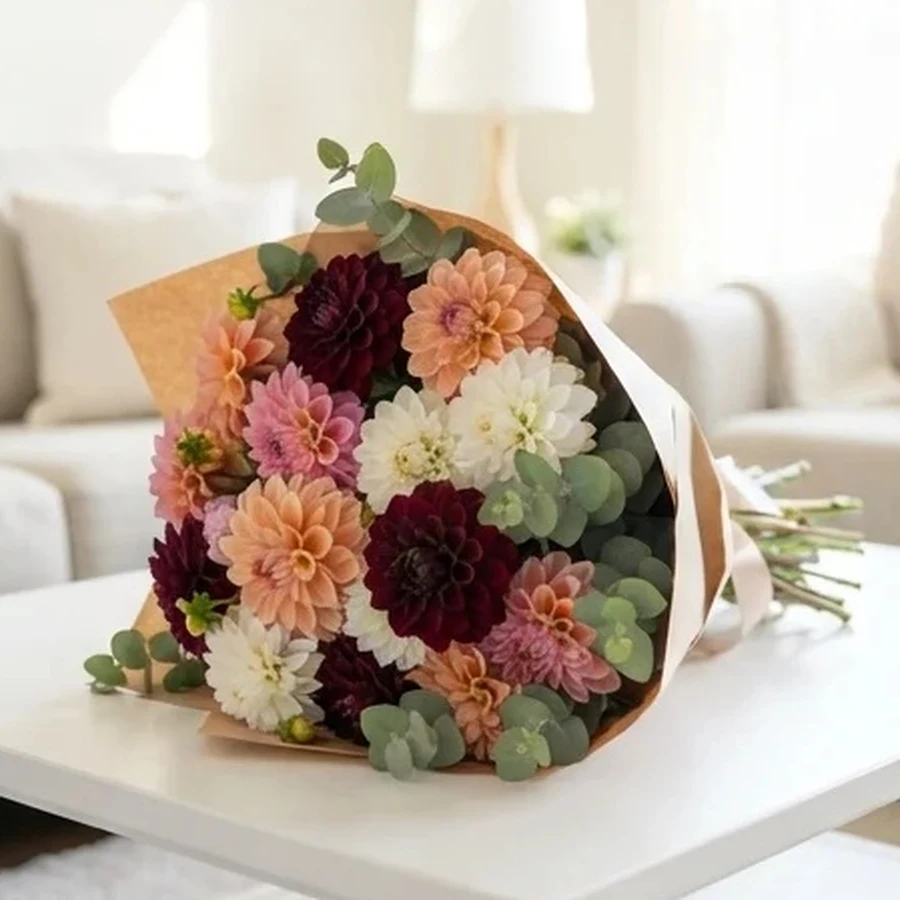
Because a dahlia looks so substantial, even a small bunch feels generous. Three stems of dinnerplate dahlias in a plain vase make a full arrangement all by themselves. They are a lovely thank-you for a host, a birthday gift for someone born in late summer or fall, and a way to bring color to a table when the garden has gone quiet. Pair them with a few sprigs of greenery and you are done.
Dahlia FAQ
Are dahlias edible?
Dahlia tubers were eaten by the Aztecs and are still used in some Mexican dishes, but florist dahlias are not grown for eating, so do not eat them unless you know how they were grown.
How long do cut dahlias last?
A cut dahlia lasts about 5 to 7 days in a vase with a fresh cut, clean water and a cool spot.
When is dahlia season?
Dahlias bloom from midsummer to the first frost, with peak season from late summer to October in most of the US. Coastal California can have them into November.
Where do dahlias come from?
Dahlias are native to Mexico and Central America, and they are the national flower of Mexico, an honor they have held since 1963.
What do dahlias symbolize?
Dahlias stand for dignity, elegance and a lasting bond, which makes them a good fit for anniversaries and commitment.
The short version
- Dahlias come from Mexico, where the Aztecs grew them as a food crop.
- The name honors Swedish botanist Anders Dahl, and the flower is Mexico's national flower.
- Forms range from tiny pompons to dinnerplates about 10 inches wide.
- Season runs from late summer to the first frost, and coastal California can stretch it into November.
- A cut dahlia lasts 5 to 7 days with clean water and a cool spot.
It is not every flower that began as dinner and ended up at the center of the table. FlowerEase opens on November 21 with same-day delivery from a florist near you. Until then, follow along on Instagram and Pinterest for a new flower story every week.
Read next
Birthday Flowers: What to Send by Age, Relationship and Birth Month
Which flowers to send for a birthday, how much to spend for a mom, partner or coworker, and the birth month flower for every month of the year.
Read the article
Best Fall Flowers for Thanksgiving and What They Mean
Sunflowers for gratitude, mums for loyalty, dahlias for lasting bonds: the best Thanksgiving flowers, what they mean and how long they last.
Read the article
How Much Do Flowers Cost in 2026: A Florist's Price Guide
A clear 2026 price guide from a florist: what bouquets, roses, arrangements and plants really cost, what drives the price and how to get the most for your budget.
Read the article