How to Make a Low Flower Centerpiece for a Dinner Table (Under 12 Inches)
Most people have sat at a table where the flowers were gorgeous and the conversation was dead. The arrangement was a foot and a half tall, and everyone spent dinner leaning left or right to see the person across from them. The fix is not better flowers. It is a lower arrangement.
A low centerpiece is also the easiest kind to make. There is no tall vase to balance, no wiring, and no florist skills required. Here is how to do it with ordinary stems, one container and about five minutes.
Why low beats tall at a dinner table
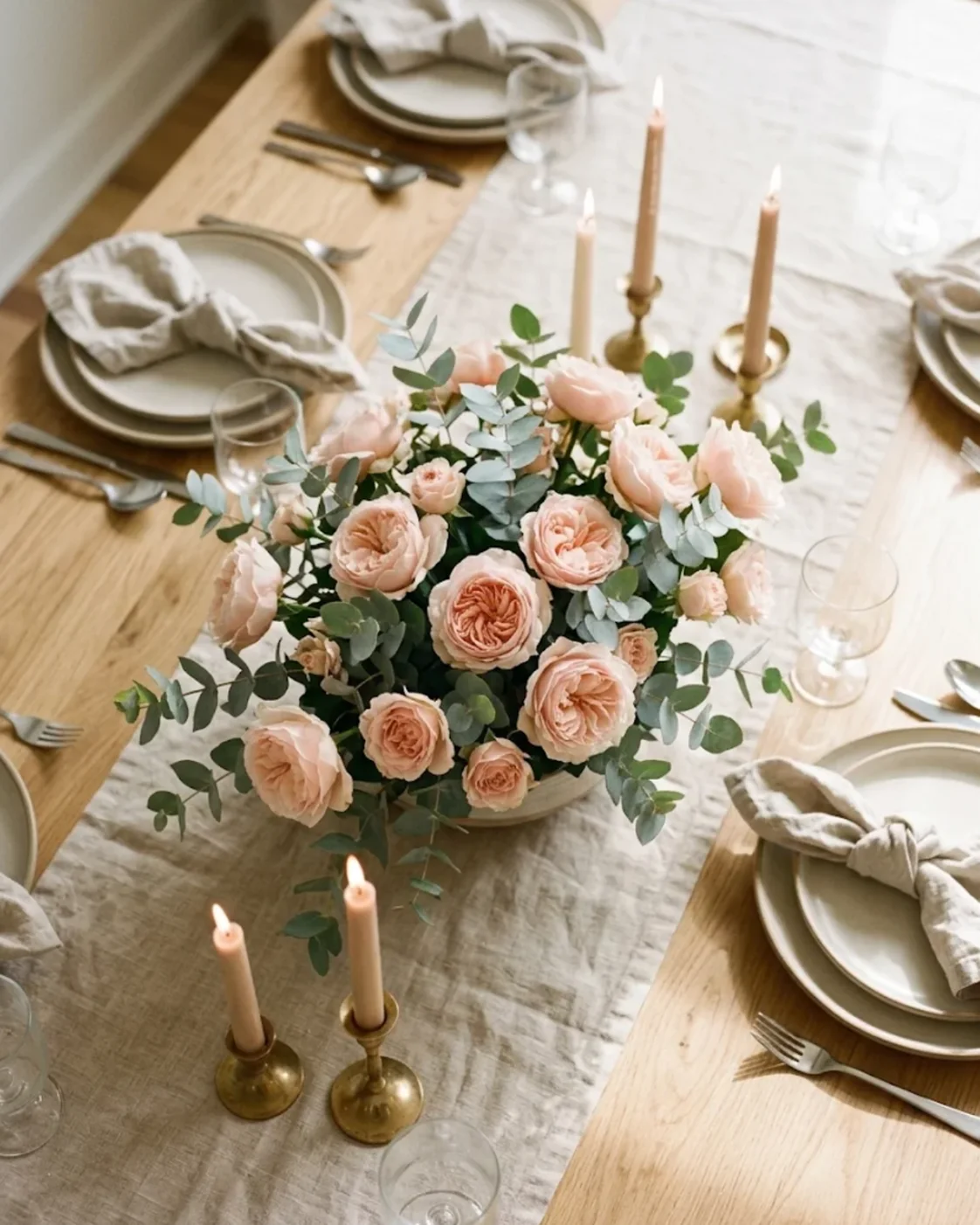
A seated adult has their eyes at about 40 to 42 inches from the floor. A standard dining table is 29 to 30 inches high. That leaves roughly 11 to 12 inches before an arrangement starts cutting into sight lines. That is where the 12 inch rule comes from, and it is the reason florists who design for tables rarely go above it.
There are three practical reasons to stay low:
- Conversation. Eye contact across the table matters more than drama.
- Space. Low arrangements leave room for plates, serving dishes and candles.
- Stability. A wide, short arrangement is hard to knock over and easy to move to the sideboard when the food arrives.
The rule is about the highest point of the arrangement, not the vase. A tall bud vase with a single stem that reaches 20 inches is fine, as long as it is slim, because people can look around one stem. It is the wide, dense, tall mass of blooms that blocks the view.
Pick the container first
With a low centerpiece, the container does half the work. It sets the size, holds the shape and hides the mechanics. Choose it before you buy flowers, because the opening decides how many stems you need.
| Container | Typical size | Stems needed | Best for |
|---|---|---|---|
| Low ceramic bowl | 6 to 8 in. wide, 3 to 4 in. tall | 9 to 12 | Round or square tables |
| Mason or canning jar | 4 to 5 in. tall | 7 to 9 | Casual dinners |
| Row of bud vases | 3 to 6 in. tall, 5 to 7 vases | 5 to 7 single stems | Long rectangular tables |
| Loaf pan or trough | 10 to 12 in. long | 12 to 16 | Rustic runners |
A few notes on each. A bowl needs a way to hold stems in place, so use a flower frog, a crumpled ball of chicken wire or a grid of clear tape across the top. Skip floral foam. It is single-use, it crumbles, and stems last longer in plain water. A jar is forgiving and has a wide enough neck for loose stems. A loaf pan or trough should have a liner or a smaller dish inside, because most are not watertight.
The row of bud vases is the easiest win if you are nervous. There is no arranging at all. Each vase holds one stem and any flower looks intentional in a small glass.
The formula: one focal, one filler, one green
Almost every professional low centerpiece follows the same pattern. Think of it as a three-part recipe:
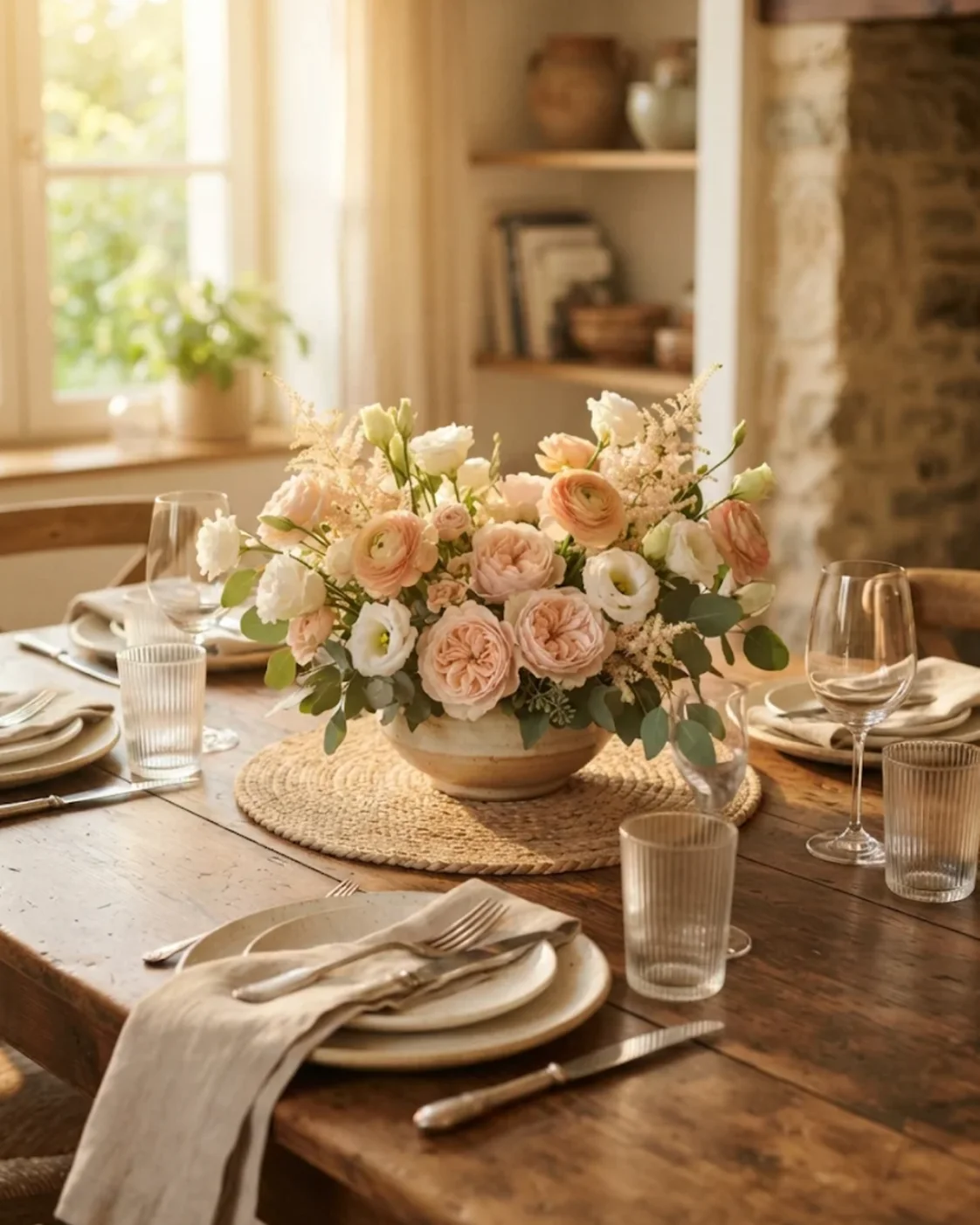
- Focal flower. The star. Garden roses, spray roses, ranunculus, peonies in season, dahlias in late summer, or ordinary roses if that is what you can find.
- Filler. Small blooms that add texture and fill gaps: waxflower, stock, lisianthus, astilbe, baby's breath or small mums.
- Green. Eucalyptus, ruscus, olive branches or even herbs such as rosemary and mint. Greens give the arrangement its outline.
A reliable ratio is 3 focal stems, 3 filler stems and 3 greens for a small bowl, which gives you a nine stem base that you can scale up. For a loaf pan, double it. Odd numbers of focal flowers look more natural than even ones, so go with 3, 5 or 7.
Three easy recipes
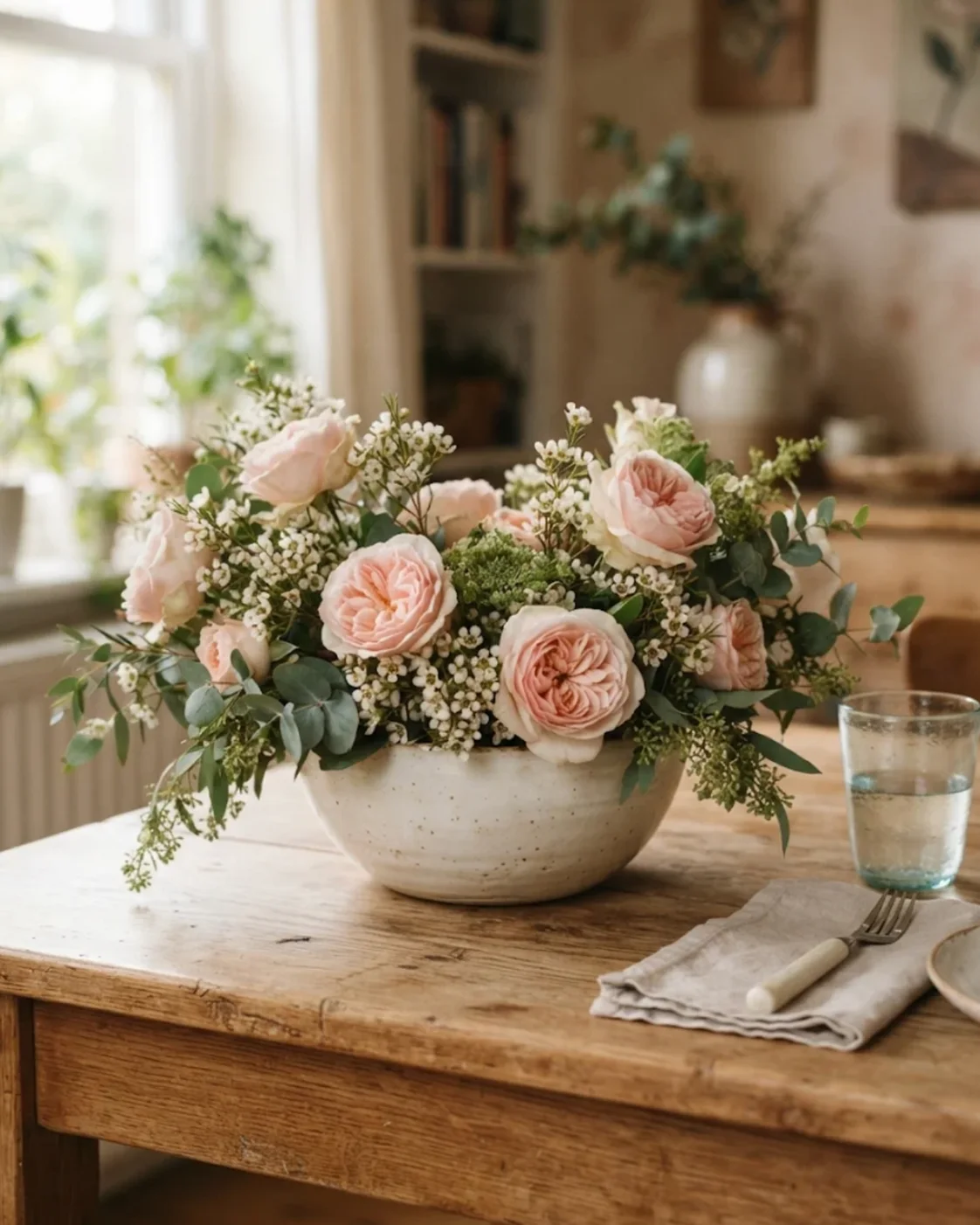
- Soft and romantic: 5 blush garden roses, 3 stems of waxflower, 4 stems of silver dollar eucalyptus. Works in a cream bowl.
- Fresh and green: 5 white ranunculus, 3 stems of stock, 4 stems of ruscus. Works in a glass jar.
- Warm and fall: 5 peach spray roses, 3 rust chrysanthemums, 3 stems of seeded eucalyptus. Works in a low brass or wooden dish.
If you want ideas for seasonal color, our guide to November flowers in season lists what is at its best and cheapest right now.
How to make it in five minutes
This is the method most florists use for a quick bowl arrangement. Have your stems, shears and container within reach before you start.
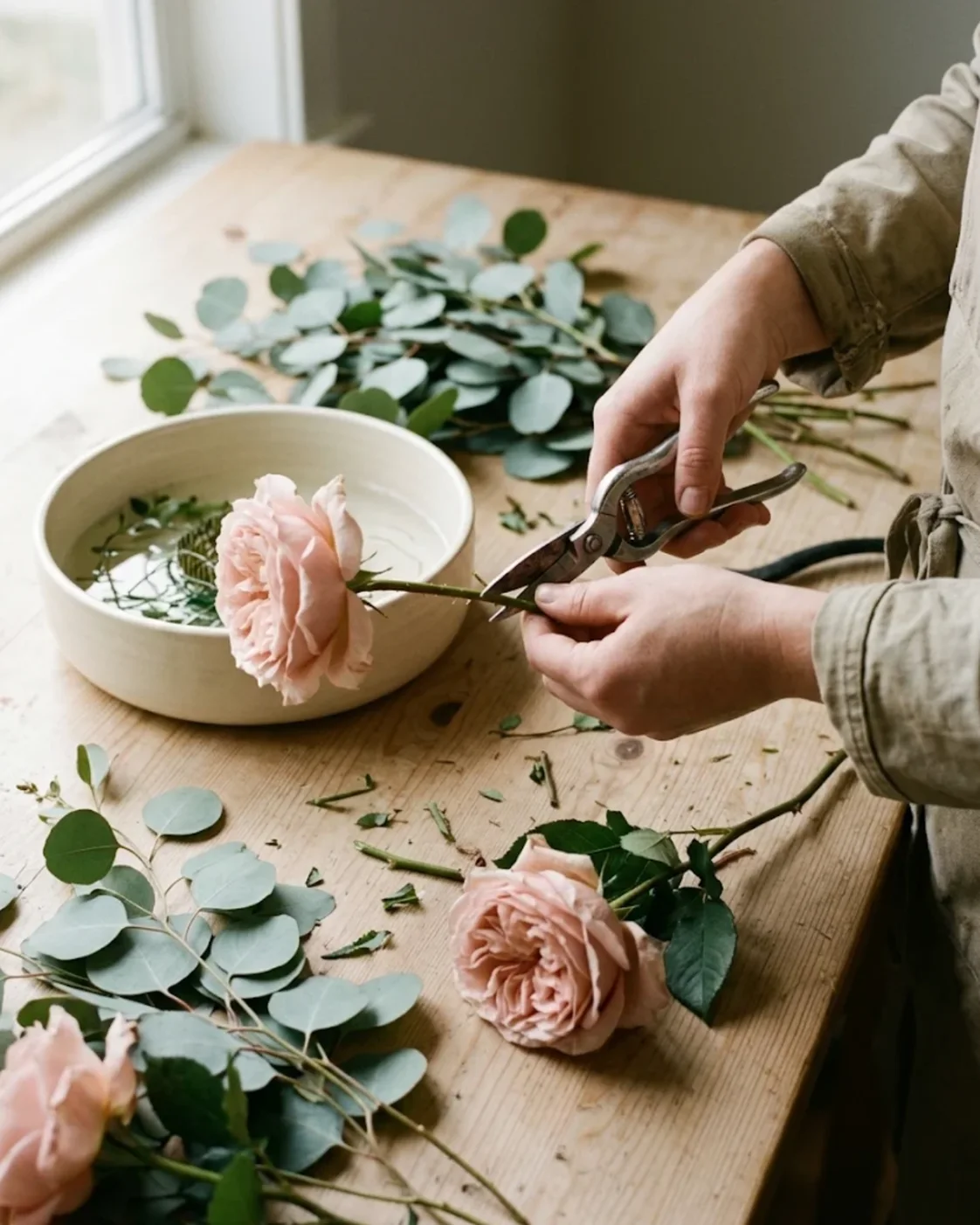
- Prep the water. Fill the container with cool water and add the flower food packet if you have one. Fresh water is the single biggest factor in vase life.
- Set the grid. Add a flower frog, chicken wire or a tape grid so stems cannot slide.
- Strip the leaves. Remove every leaf that would sit below the water line. Leaves in water rot and make the water cloudy within a day.
- Cut at an angle. Trim 1 inch off each stem at a 45 degree angle with sharp shears. Cut the stems short enough that the blooms sit just above the rim, no more than 2 to 3 inches over it for a bowl.
- Greens first. Place eucalyptus around the edge so it spills over the rim slightly. This builds the outline.
- Add the focal flowers. Put the largest bloom a little off center, then place the others in a loose triangle at different heights, so some sit higher and some tuck lower.
- Fill the gaps. Slip in the filler stems wherever you can see the grid or the water.
- Turn it and check. Rotate the bowl. A table centerpiece is seen from every side, so fix any bare spots now.
The bud vase row
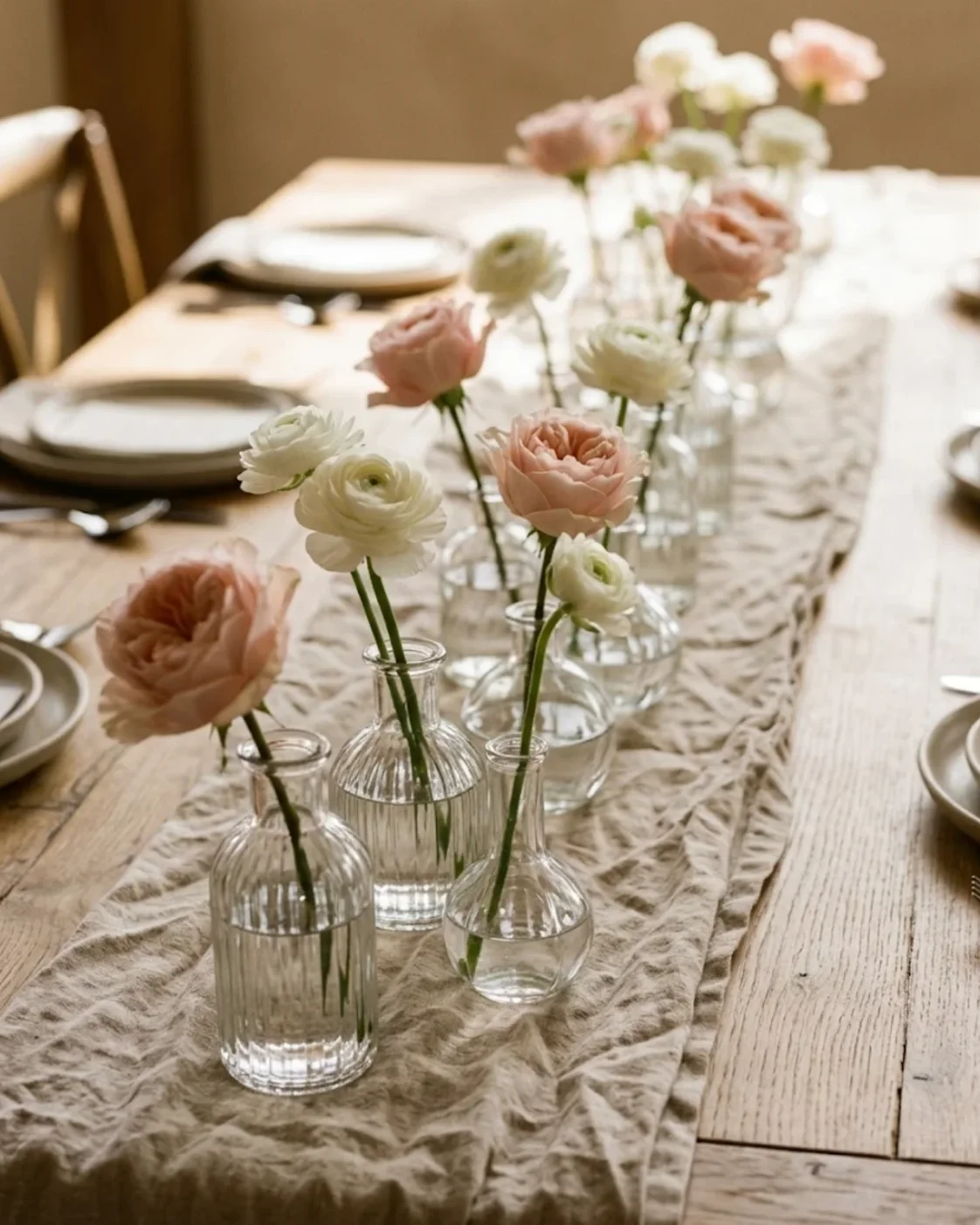
If a bowl feels like too much, line up small glass vases down the center of the table. A row of five to seven vases, spaced 6 to 10 inches apart, reads as designed even when each one holds just a single bloom.
A few rules keep it looking considered rather than random:
- Vary the heights slightly by using vases of 3, 4 and 6 inches, or by cutting stems to different lengths.
- Keep the palette tight. Two or three colors, repeated, look calmer than a dozen.
- Repeat a flower. The same bloom in every vase, or a pattern such as rose, ranunculus, rose, creates rhythm.
- Use mismatched glass, not mismatched color. Thrift store bottles and jars work well if they are all clear or all one tint.
This approach is also the cheapest way to cover a long table. One bunch of ten ranunculus stretches across seven vases.
How many stems and what it costs in 2026
Prices vary by season, and Valentine's Day and Mother's Day push everything up, but these are realistic ranges for Orange County florists and grocery stores in fall 2026.
| Item | Typical price |
|---|---|
| Garden roses, per stem | $3.50 to $6 |
| Standard roses, per stem | $1.50 to $3 |
| Ranunculus, per stem | $2 to $4 |
| Waxflower, per bunch | $5 to $9 |
| Eucalyptus, per bunch | $5 to $10 |
| Grocery store mixed bouquet | $12 to $25 |
| Pre-made table centerpiece from a florist | from $55 to $120 |
A rose and eucalyptus bowl made from loose stems usually comes in at about $30 to $60. The grocery store shortcut also works: buy a mixed bouquet, pull it apart, and sort the stems into focal, filler and green. One $20 bouquet often makes a bowl and two bud vases.
If you would rather skip the work, an arranged centerpiece from a local florist costs more but arrives ready. Our same-day flower delivery guide for Orange County explains how ordering and delivery windows work.
Common mistakes to avoid
- Too tall. If you are not sure, cut the stems one more inch.
- Strong scent. Lilies, hyacinths and stargazer lilies compete with food. Choose lightly scented or unscented flowers for a table.
- Leaves in the water. They turn the water cloudy and shorten the life of the arrangement.
- Crowding the table. Leave at least 12 inches between the centerpiece and each place setting so plates and glasses have room.
- Pollen on the tablecloth. Lilies drop orange pollen that stains linen. Pull the anthers off or skip lilies altogether.
- Too many colors. Stay with two or three colors plus green.
Keeping it fresh through the meal and after
A well-made low arrangement lasts 5 to 7 days with roses and up to 10 with ranunculus and waxflower. Keep it away from direct sun, heaters and fruit bowls (ripening fruit gives off ethylene gas that ages flowers faster). Top up the water daily, and if the water looks cloudy after three days, swap it for fresh. Our guide to how to make flowers last longer has the full routine.
When the first blooms start to droop, pull them out and move the survivors into a bud vase. A table that looked full on day one can still look elegant on day six with just three stems.
Low centerpiece FAQ
How tall should a dinner table centerpiece be?
Under 12 inches, measured from the tabletop to the highest bloom. That keeps it below the sight line of seated guests so people can talk across it.
What flowers work best in a low centerpiece?
Garden roses, spray roses, ranunculus, lisianthus and dahlias make good focal flowers. Pair them with waxflower, stock or small mums for filler and eucalyptus or ruscus for greenery.
How many stems do I need for a small bowl?
About nine to twelve: roughly three focal stems, three filler stems and three to four greens. Scale up by a third for a loaf pan or a long trough.
Do I need floral foam?
No. A flower frog, chicken wire or a tape grid holds stems just as well, and stems drink better from plain water than from foam.
Can I make a centerpiece with grocery store flowers?
Yes. Buy a mixed bouquet, take it apart, recut every stem and sort it into focal, filler and green. Most supermarket bouquets make one bowl plus a couple of bud vases.
How far ahead can I make it?
You can build it the morning of your dinner, or the night before if you keep it in a cool room. Flowers bought two days ahead and kept in water in a cool spot will be at their best on the day.
The short version
- Keep it under 12 inches so guests can see each other.
- Choose a low bowl, a jar or a row of bud vases first.
- Use one focal flower, one filler and one green, in odd numbers.
- Strip leaves below the water line and cut stems at an angle.
- Expect to spend $30 to $60 on stems, or $55 to $120 for a florist-made piece.
A low centerpiece is the quickest way to make an ordinary dinner feel planned. FlowerEase is opening November 21 with same-day delivery from a local florist, a photo of every bouquet before it leaves the shop, and reminders for the dates you do not want to miss. For more ideas, browse the FlowerEase blog, including our Thanksgiving centerpiece guide.
Read next
Birthday Flowers: What to Send by Age, Relationship and Birth Month
Which flowers to send for a birthday, how much to spend for a mom, partner or coworker, and the birth month flower for every month of the year.
Read the article
Thanksgiving Flowers 2026: Centerpiece Ideas, Best Fall Blooms and Hostess Gifts
How tall the centerpiece should be, which fall flowers last, what a hostess bouquet costs and when to order for November 26, 2026.
Read the article
Winter Flowers in Season: What Florists Have in December and January
Which flowers are actually in season in December and January, what they cost, how long they last and how to choose a winter bouquet that looks its best.
Read the article