Christmas Flowers Safe for Cats and Dogs
December brings more plants into the house than any other month: a tree, wreaths, a poinsettia from the office, flowers from family and an amaryllis from a neighbor. For curious cats and dogs, every new pot is something to sniff, chew and knock over. Some holiday plants are harmless. A few are genuinely dangerous.
As florists, we get this question every December: "My sister has two cats, what can I send?" This guide gives you a clear answer, organized by risk. If you want to skip the research, we mark pet-friendly choices in our Christmas flowers collection and you can always ask us before ordering.
A note on sources: the safety information below follows the ASPCA's toxic and non-toxic plant lists, which are the standard reference used by veterinarians in the US. This article is general guidance, not veterinary advice.
The quick list
| Plant or flower | Cats | Dogs | Notes |
|---|---|---|---|
| Roses | Safe | Safe | Thorns can scratch; florists usually remove them |
| Moth orchid (Phalaenopsis) | Safe | Safe | Great long-lasting gift |
| Sunflowers | Safe | Safe | Bright alternative to red |
| Gerbera daisies | Safe | Safe | Many colors |
| Christmas cactus | Safe | Safe | Blooms in December |
| Money tree (Pachira) | Safe | Safe | Easy indoor plant |
| Poinsettia | Mild | Mild | Sap irritates mouth and stomach |
| Christmas tree (pine, fir) | Mild | Mild | Needles and oils can upset the stomach |
| Holly | Toxic | Toxic | Berries and leaves cause vomiting |
| Mistletoe | Toxic | Toxic | Can affect heart rate in large amounts |
| Amaryllis | Toxic | Toxic | Bulb is the most toxic part |
| Hyacinth, tulip, daffodil | Toxic | Toxic | Bulbs especially |
| Peace lily, calla lily | Toxic | Toxic | Mouth irritation, not true lilies |
| True lilies (Lilium, daylily) | Severe | Mild | Can cause kidney failure in cats |
Lilies and cats: the one rule to remember
If you remember one thing from this article, make it this: never send true lilies to a home with a cat. Easter lilies, Asiatic lilies, stargazers, Oriental lilies, tiger lilies and daylilies are all extremely toxic to cats. A cat can be poisoned by chewing a leaf, licking pollen off its fur or drinking the vase water. Without fast treatment, it can lead to kidney failure within days.
White lilies are common in Christmas and winter arrangements, so check the stems before sending. Our article pet-safe flowers for cats explains the difference between true lilies and lookalikes in more detail.
Safe Christmas flowers, one by one
Roses
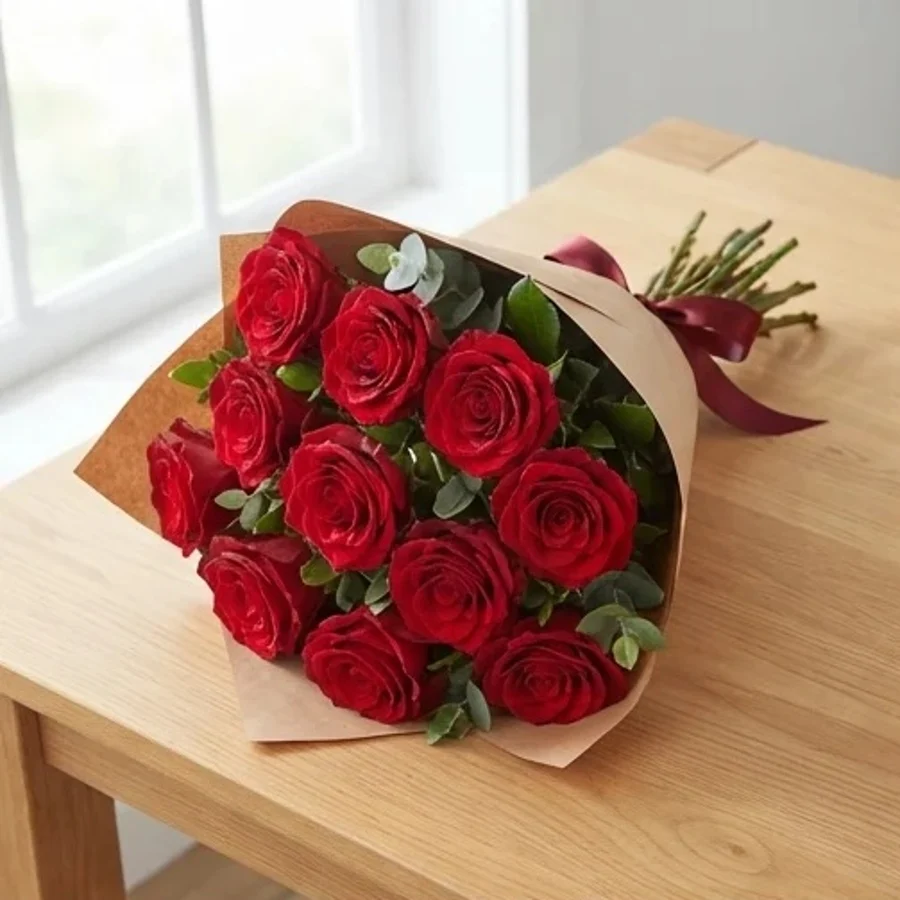
Roses are non-toxic to cats and dogs, and they are the backbone of most Christmas bouquets. Red for classic Christmas, white for a winter look. The only risk is thorns, and florists usually strip them. Our 12 Red Rose Bouquet starts at $89, and the 12 White Rose Bouquet also starts at $89.
Moth orchids
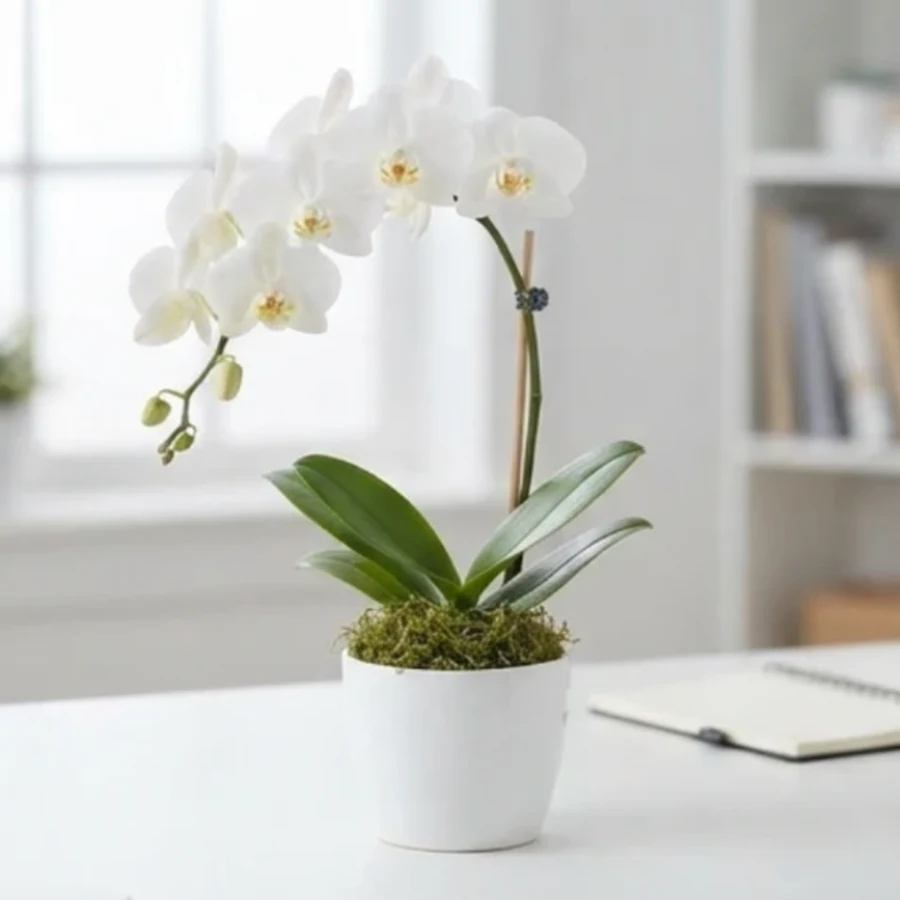
Phalaenopsis orchids are on the ASPCA non-toxic list, look elegant and bloom for weeks. They are one of the best holiday gifts for pet owners. The White Orchid Plant, 1 Stem starts at $79, and the two-stem version starts at $119.
Sunflowers and gerbera daisies
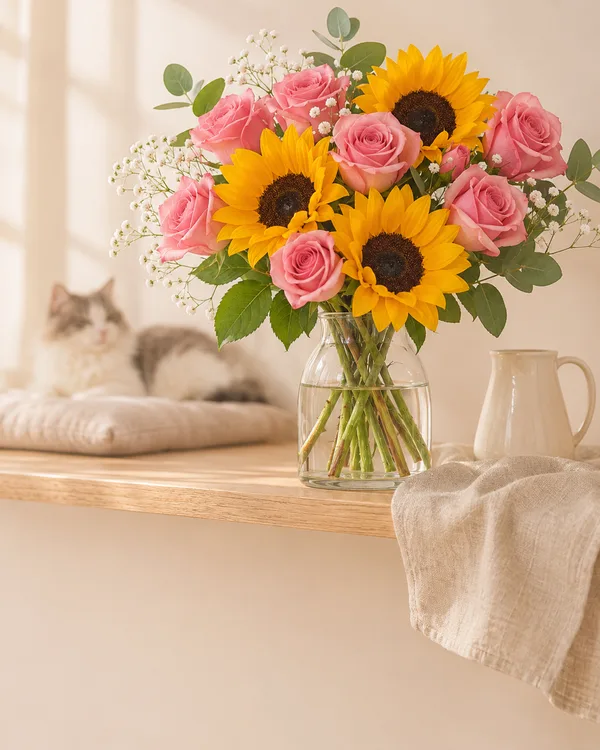
Both are non-toxic. Sunflowers are not traditional at Christmas, but they bring warmth to a winter room and suit anyone who is tired of red and green. A 12 Sunflower Bouquet starts at $69.
Christmas cactus
The Christmas cactus blooms in pink, red or white right around the holidays and is safe for pets. If a cat chews it, the worst result is usually a mild upset stomach from the fiber.
Money tree
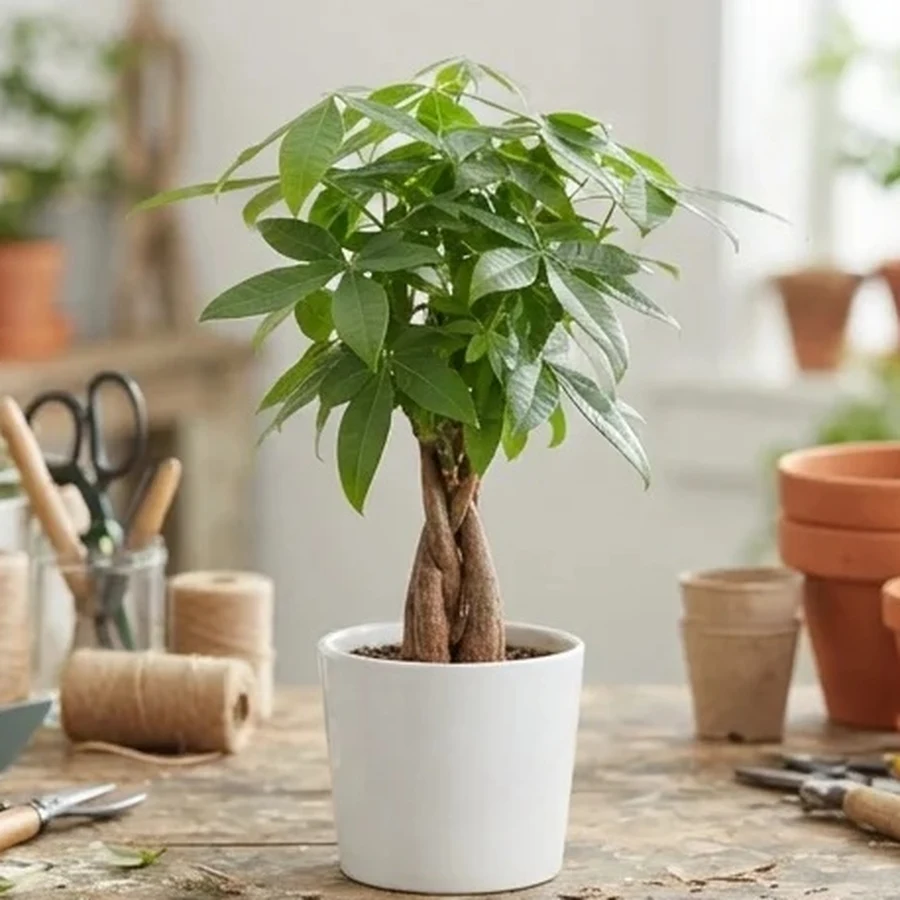
Pachira, the braided money tree, is non-toxic and popular as a new year or office gift. Our Money Tree Plant starts at $89.
Holiday plants to keep out of reach
These plants are not deadly in most cases, but they can make a pet sick:
- Poinsettia. Its reputation is worse than reality. The sap irritates the mouth and stomach and may cause drooling or vomiting. Keep it high up. Our poinsettia care guide covers the rest.
- Holly. The berries and spiky leaves can cause vomiting, diarrhea and drooling.
- Mistletoe. Especially the European kind. Large amounts can cause serious stomach problems and changes in heart rate. Hang it well out of reach, or use artificial mistletoe.
- Amaryllis. The bulb is the most toxic part, but leaves and stems also cause vomiting and drooling. Popular as a holiday gift, so think twice for pet homes.
- Hyacinths, paperwhites and tulips. Winter forced bulbs are very common in December. Dogs that dig up and chew bulbs are most at risk.
- Peace lilies and calla lilies. Not true lilies, so they do not cause kidney failure, but they contain crystals that irritate the mouth.
- Eucalyptus. A favorite filler in winter bouquets, but it is toxic to cats and dogs if eaten.
- Christmas tree water. Often contains preservatives, fertilizer or bacteria. Cover the stand.
How to order pet-safe Christmas flowers
Many bouquets mix safe and unsafe stems. A rose bouquet with a few lilies or a sprig of eucalyptus is no longer pet safe. When you order for a pet home:
- Choose an arrangement built on safe flowers. Roses, orchids, sunflowers and gerberas are the easiest base.
- Add a note at checkout. Write "Recipient has cats, please no lilies or eucalyptus." Good florists will swap stems.
- Look at the photo. FlowerEase sends a photo of every arrangement before delivery, so you can see exactly which stems are inside.
- Tell the recipient. A line on the card, "All pet safe, Whiskers approved," gives peace of mind.
- Choose a stable vase. A heavy, wide vase is harder for a cat to tip over.
Safe display tips for pet homes
- Place flowers on a high shelf or a room the pet cannot enter.
- Change the vase water every two days and keep flower food packets away from pets.
- Pick up fallen leaves and petals daily.
- Avoid tinsel, ribbon and floral wire near arrangements, since cats love to chew them.
- Put a little citrus peel near the base. Many cats dislike the smell.
What to do if your pet eats a holiday plant
- Stay calm and remove any plant material from the mouth.
- Identify the plant. Take a photo or save the card or label.
- Call your vet or an emergency animal clinic. You can also call the ASPCA Animal Poison Control Center at (888) 426-4435. A consultation fee may apply.
- Do not induce vomiting unless a vet tells you to.
- For any lily exposure in a cat, go to the vet right away, even if the cat seems fine.
Pet-safe Christmas picks from our menu
| Pick | Why it works | Price from |
|---|---|---|
| 12 Red Rose Bouquet | Classic Christmas red, non-toxic | $89 |
| 24 Red and White Rose Bouquet | Festive candy cane colors | $189 |
| White Orchid Plant, 1 Stem | Blooms for weeks, non-toxic | $79 |
| 12 Sunflower Bouquet | Warm and bright, non-toxic | $69 |
| Money Tree Plant | Good luck for the new year, non-toxic | $89 |
Note that some of our Christmas designs include pine, eucalyptus or amaryllis. They are beautiful, but for pet homes we recommend one of the options above. See all designs on the Christmas flowers page.
Why pets chew holiday plants
Understanding the reason helps you prevent it. Cats chew plants out of curiosity, boredom or because they like grassy textures. Pine needles, long leaves and dangling stems are especially tempting. Dogs are more likely to dig into pots, chew bulbs or eat fallen berries and leaves on the floor. Puppies and young cats are the most at risk, and holidays are busy, so pets get less attention than usual.
A few habits help a lot:
- Give cats a pot of cat grass of their own. Many will ignore other plants once they have a safe one.
- Keep new plants in a closed room for the first day or two while the novelty wears off.
- Sweep up needles and fallen petals every day.
- Tell guests not to feed pets from the table or leave plant gifts on the floor.
- When you receive flowers you are not sure about, put them out of reach until you have checked each stem.
Sending to someone whose pets you do not know about
When you are not sure whether the recipient has pets, the simplest approach is to choose a design built on roses, orchids or sunflowers and add "no lilies please" in the order notes. You lose nothing in beauty, and you remove the biggest risk entirely. Many of the red and white rose designs in our Christmas flowers collection are a good starting point.
Timing a pet-safe delivery
Deliveries during the holidays often arrive while the family is out. A box left on the porch, or a vase set on a low table by a neighbor, can be found by the dog before anyone else. A few small steps help:
- Choose a delivery window when someone will be home, so the flowers go straight to a safe spot.
- Add a note such as "please hand to a person, do not leave at the door" at checkout.
- Ask the recipient to remove any flower food packet and keep it away from pets.
FlowerEase delivers every day from 8 AM to 8 PM, and orders placed by 2 PM can go out the same day. Delivery is $14.99 and free on orders from $149. Our article on how same-day flower delivery works explains how windows and handoffs work.
Pet-safe Christmas flowers FAQ
Are poinsettias deadly to cats?
No. Poinsettias are mildly toxic. They can cause drooling and vomiting, but serious poisoning is rare. Keep them out of reach anyway.
Are Christmas roses safe for cats?
Garden roses are safe. But the plant called "Christmas rose" (Helleborus) is a different plant and is toxic to pets.
Is amaryllis safe for dogs?
No. Amaryllis is toxic to dogs and cats, especially the bulb. It can cause vomiting, drooling and stomach pain.
What is the safest Christmas plant gift for a pet owner?
A moth orchid, a Christmas cactus or a money tree. All three are non-toxic and last much longer than cut flowers.
The short version
- Safe: roses, moth orchids, sunflowers, gerberas, Christmas cactus, money tree.
- Mild: poinsettia and Christmas tree needles.
- Keep away: holly, mistletoe, amaryllis, bulbs, peace lily, eucalyptus.
- Never with cats: true lilies.
- Write "pet safe, please" in the order notes.
Sending flowers to a home with pets this Christmas? Choose a safe design from our Christmas flowers collection, add a note at checkout and check the photo before it leaves the studio.
Read next
Are Lilies Toxic to Cats? Pet-Safe Flowers to Choose Instead
One lily petal can put a cat in the emergency room. Here is which flowers are truly pet-safe, which common ones are not, what to watch for and what a safe bouquet costs in 2026.
Read the article
Are Lilies Toxic to Cats? What Every Pet Owner Should Know
Lilies are one of the most dangerous flowers for cats. Which lilies are toxic, the warning signs, what to do right away and safer flowers to send instead.
Read the article
Winter Flowers in Season: What Florists Have in December and January
Which flowers are actually in season in December and January, what they cost, how long they last and how to choose a winter bouquet that looks its best.
Read the article