Ranunculus Flower Guide: Colors, Vase Life, Care and Prices
A single ranunculus bloom can hold more than 100 petals, each one thinner than tissue paper. That is why florists reach for it when a bouquet needs to look soft, rich and expensive without the peony price tag.
It is also a flower people misname at the counter. They point at the picture and say "the rose-looking one" or "the little peony." This guide gives you the word, plus what you actually need to know: what ranunculus is, which colors to pick, how long it lasts, how to make the tight buds open, what goes well with it and what it costs this year.
What is ranunculus?
Ranunculus is a genus of more than 600 species, but the flower in bouquets is almost always the Persian buttercup, Ranunculus asiaticus. It grows from a small claw-shaped tuber, and fields of it bloom in stripes of color along the California coast from late winter into spring.
The name comes from the Latin for "little frog," because wild relatives grow near streams and ponds. Garden ranunculus has been bred for centuries, which is why the modern bloom is so full. The same family includes the common yellow buttercup you may remember from childhood lawns.
A few traits make it easy to recognize:
- Layered petals. Tight, ruffled and crepe-like, often with a slightly darker center that opens to a green-gold eye.
- Hollow, bendy stems. Stems are thin and sometimes curve on their own, which gives a bouquet a loose, garden feel.
- Heads about 2 to 4 inches wide. Smaller than a garden rose, larger than a spray rose.
- Almost no scent. That makes it a good choice for dinner tables and for people who are sensitive to fragrance.
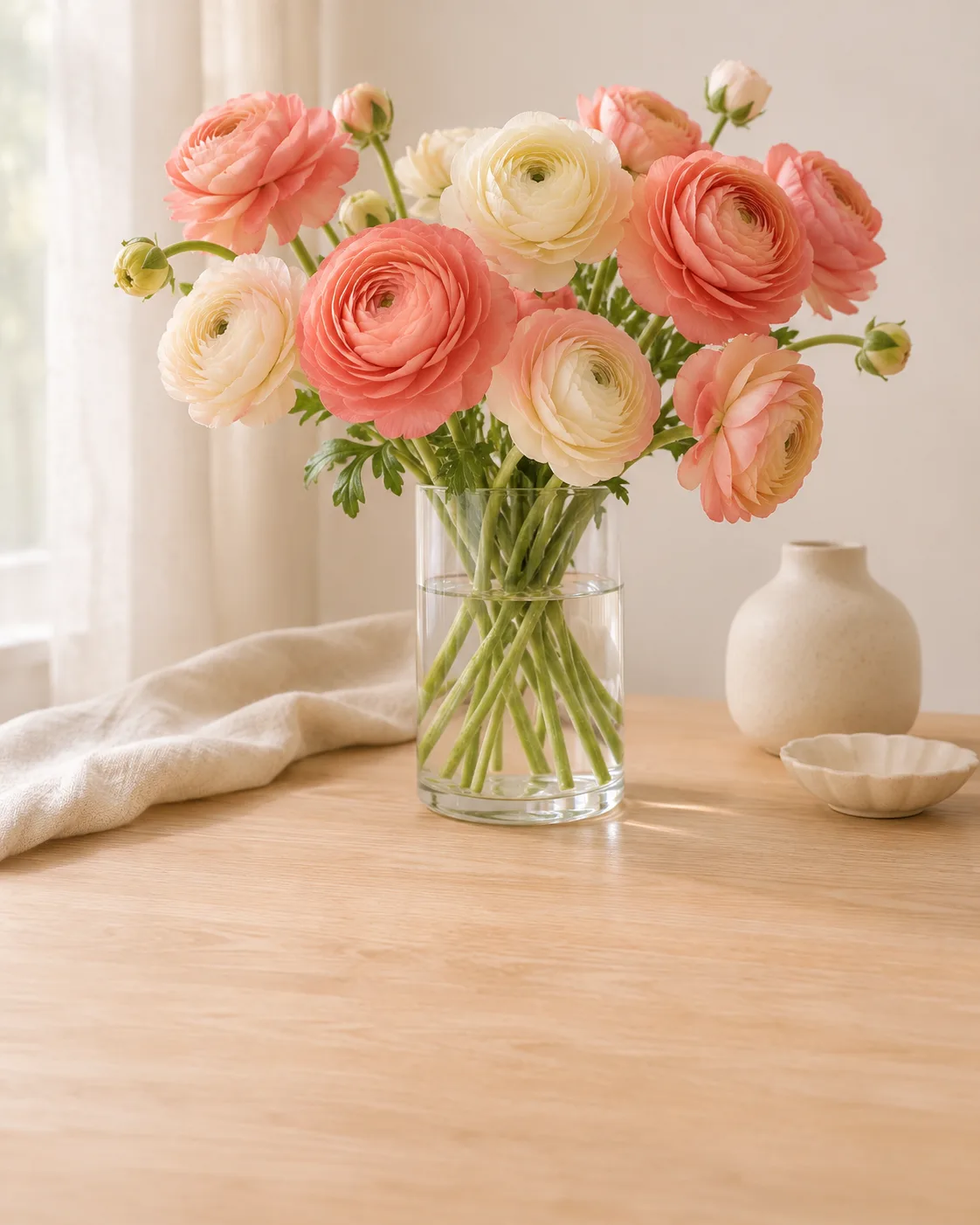
Ranunculus vs rose vs peony
All three have a full, layered look, which is why they are often swapped. The differences matter when you are choosing for a budget, a season or a person.
| Flower | Look | Vase life | Typical 2026 price per stem | Scent |
|---|---|---|---|---|
| Ranunculus | Paper-thin, crepe-like layers, flat open face | 7 to 10 days | $2 to $5 | Very light |
| Garden rose | Cupped, many petals, romantic | 7 to 10 days | $4 to $9 | Light to strong |
| Peony | Large, ruffled, fluffy | 5 to 7 days open | $6 to $14 in season | Sweet |
| Standard rose | Classic pointed bud | 7 to 12 days | $1.50 to $4 | Light |
If you love peonies but they are out of season, ranunculus is the closest substitute you can find in winter and early spring. Our guide to peony facts explains why peonies are so seasonal, and why florists often swap in ranunculus the rest of the year.
Colors and what they say
Ranunculus comes in nearly every shade except true blue. Florists group the colors by mood, and a bouquet usually uses two or three of them.
- Blush and soft pink. Gentle and romantic. A safe pick for a birthday, a new baby or a thank you.
- Cream and white. Clean and calm. Often used for weddings, sympathy and minimal arrangements.
- Coral and peach. Warm and cheerful. Looks great in autumn and early spring.
- Yellow and orange. Bright and sunny, good for a get-well bouquet.
- Burgundy and mauve. Moody and rich. Pairs well with dahlias and dark roses in fall.
- Picotee types. White or cream petals edged in pink or red, like a hand-painted rim.
In the Victorian language of flowers, ranunculus stood for charm and radiant attraction, a way of telling someone they were dazzling. It is a nice meaning for a gift, even if you never mention it. For how colors carry meaning in other flowers, see what rose colors mean.
When is ranunculus in season?
Peak season in California runs from about February to May, with the most color in March and April. You can still find it much of the year because growers in other regions and countries fill the gaps, but quality and price shift.
| Time of year | Availability | What to expect |
|---|---|---|
| February to May | Peak | Best color range, lowest prices, large heads |
| June to September | Limited | Fewer colors, heat shortens vase life |
| October to December | Good | Growing supply, popular for fall and holiday work |
| January | Rising | Early crops, prices start to drop |
Ask your florist what is freshest this week. A good one will tell you honestly if ranunculus is at its best or if another flower will look better for your date.
How long does ranunculus last?
With good care, expect 7 to 10 days. Some stems hold up to two weeks in a cool room. The flower will slowly open from a tight round bud to a flat, full bloom over several days, and that opening is part of the charm. When the petals start dropping, the flower is finished.
What shortens vase life:
- Warm rooms, direct sun or a spot above a heater.
- Bacteria in dirty water. Ranunculus stems are hollow and rot quickly.
- Ripe fruit nearby, which gives off ethylene gas.
- Deep water, which softens the thin stems.
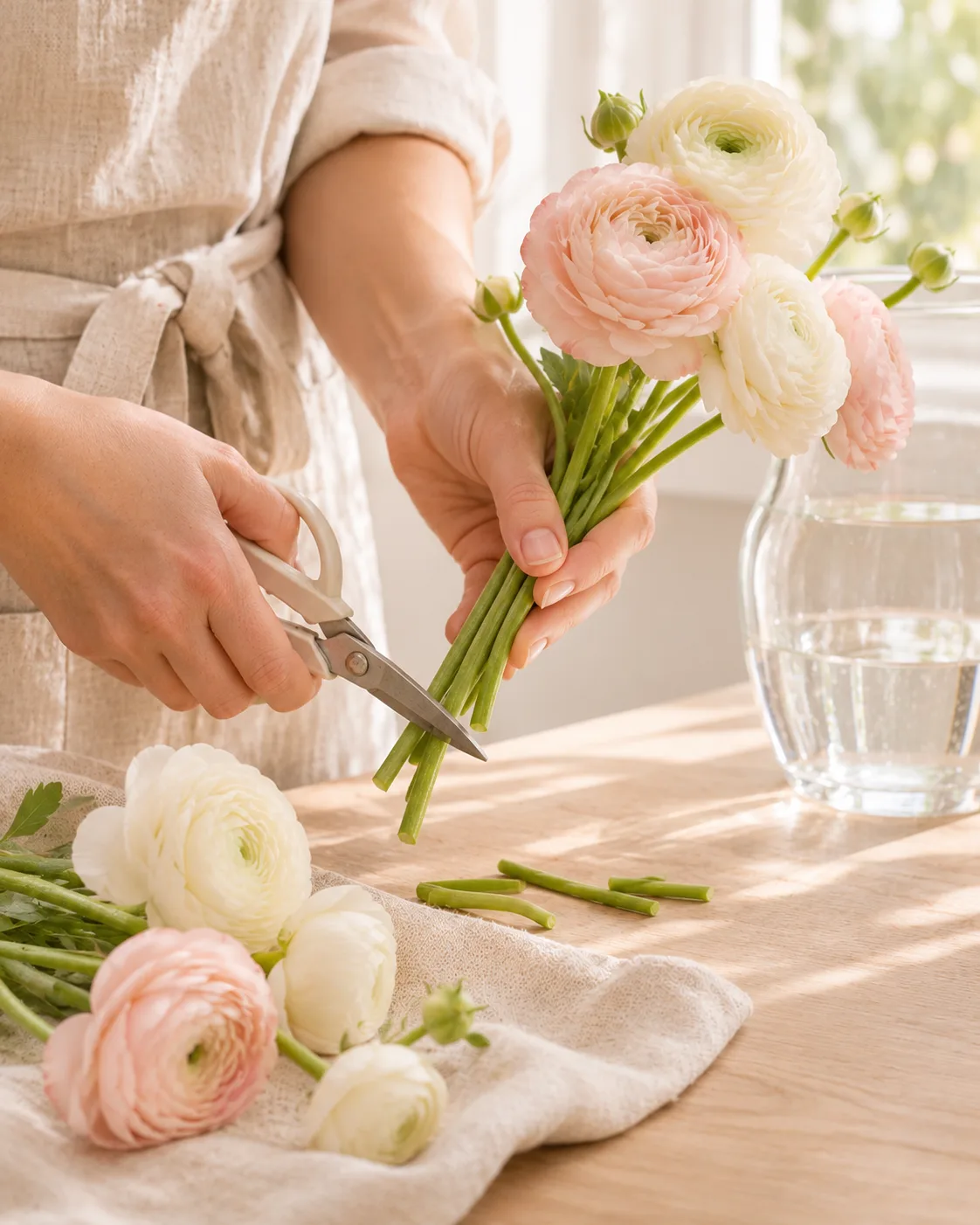
How to care for ranunculus step by step
The care is simple, but the details are different from roses. The stems are soft and hollow, so deep water works against you.
- Unwrap right away. Remove the paper and any leaves that would sit under water.
- Recut the stems. Cut about one inch off at an angle with clean, sharp shears. Do not crush the stem.
- Use a clean vase. Rinse it with warm soapy water first.
- Keep the water shallow. About 2 to 3 inches is plenty. Cool water is better than warm.
- Add flower food. Use the packet that came with the bouquet, mixed as the label says.
- Pick a cool spot. Away from sun, heaters and the fruit bowl. A cooler room can add days.
- Change the water every 2 days. Recut the stems each time by about half an inch.
How to make tight buds open
If the blooms arrive closed, move the vase to a slightly warmer room for a few hours and keep the water fresh. Opening takes 1 to 3 days. Do not pull the petals apart by hand. You can bruise them, and you lose the layered look.
What about drooping heads?
Ranunculus can go limp because air gets into the hollow stem. Recut the stem under running water and let it drink for an hour. Most droopy heads perk back up. If the neck is bent and the stem is slimy, it is past saving.
What to pair with ranunculus
Ranunculus carries a bouquet on its own, but a few partners make it look finished. The rule is to add contrast in texture and shape, not another round flower of the same size.
- Eucalyptus. Silver dollar or seeded eucalyptus gives a cool, soft backdrop and a light scent.
- Garden roses. Larger and cupped, they sit lower and anchor the bouquet.
- Anemones. Same season, with a dark center that adds drama against cream and blush.
- Sweet pea and stock. Add fragrance, which ranunculus lacks.
- Tulips. A natural spring match. See tulips vs roses for how tulips behave in a vase.
- Lisianthus and spray roses. Fill space and stay long on the stem.
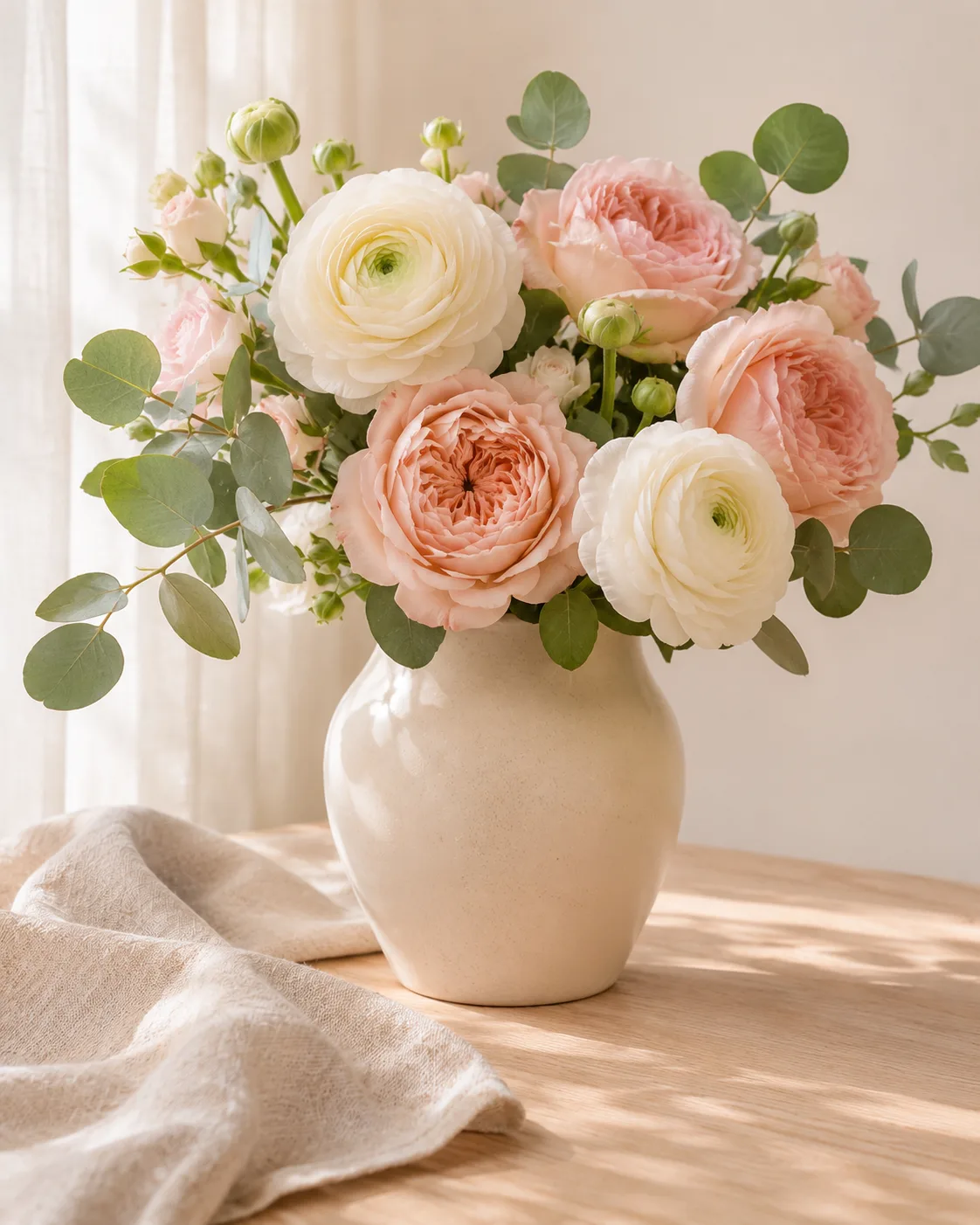
What does ranunculus cost in 2026?
Prices change with season and color, but these are typical ranges for Orange County florists this year. Rare colors, picotee types and extra-large heads sit at the top of each range.
| What you buy | Typical price | Notes |
|---|---|---|
| Single stem | $2 to $5 | Higher outside peak season |
| Hand-tied bunch of 10 | $25 to $50 | One or two colors, wrapped |
| Mixed bouquet with ranunculus | $60 to $120 | Roses, greenery, filler |
| Bud vase with 3 stems | $25 to $45 | Vase included |
| Large arrangement in a vase | $110 to $190 | Mix of 20 or more stems |
For a birthday, a thank you or a table that needs one soft touch, a small bunch of ranunculus often looks more generous than the same budget spent on roses. If you want help choosing, our guide to hand-tied bouquets explains what goes into a good one.
Ideas for using ranunculus at home
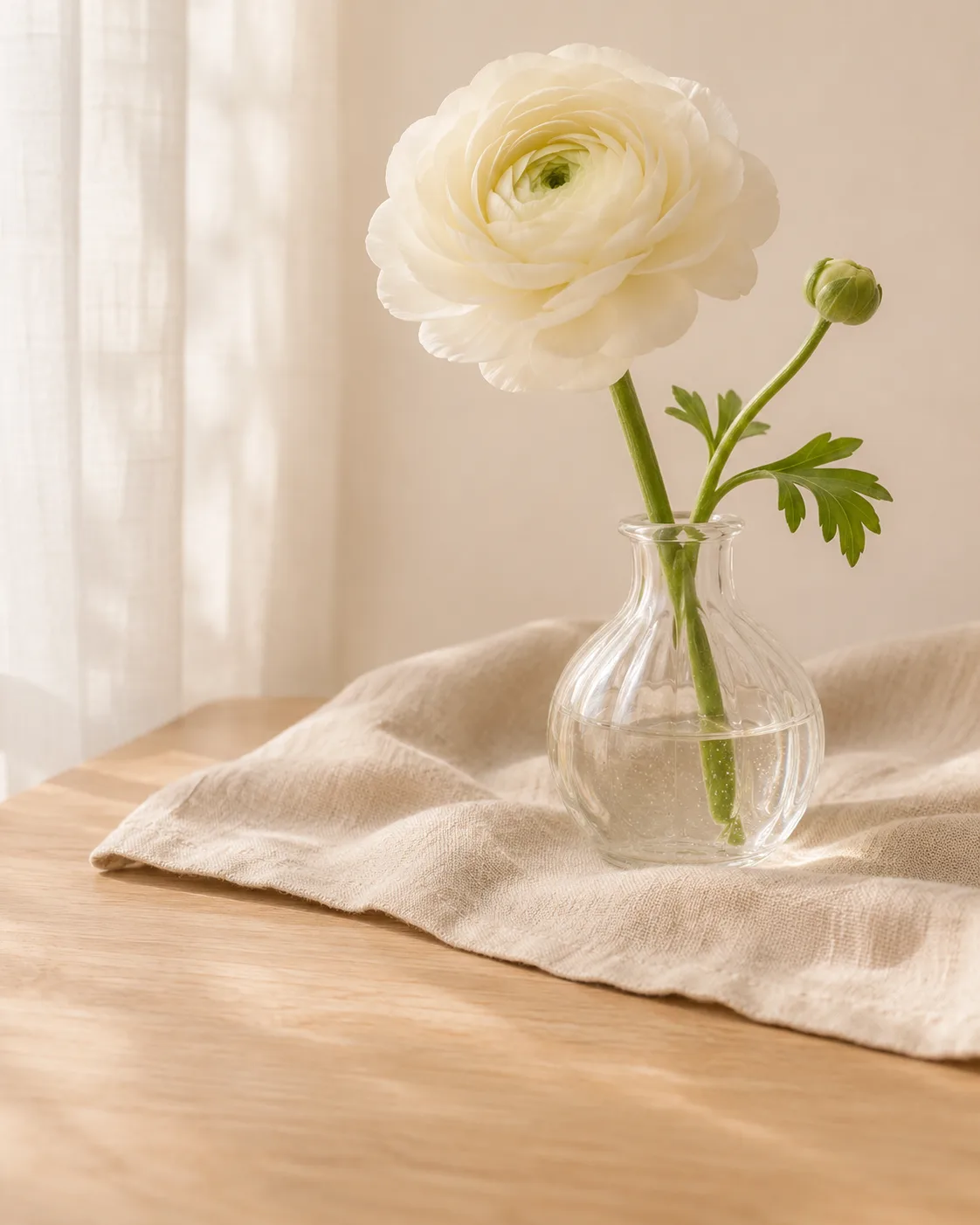
- A single stem in a bud vase. Put it on a nightstand or a desk. It reads as a small, calm gesture.
- A low bowl for the dinner table. Use florist foam alternatives like a chicken-wire ball or a flower frog, and keep the height under 10 inches so guests can talk across it.
- A mixed bunch in one color family. Three shades of pink in one vase look more designed than a rainbow.
- A small wrapped bunch as a host gift. Ranunculus has almost no scent, which suits a dinner party.
- Pressed or dried petals. The thin petals dry quickly and keep their color if you press them in a heavy book.
It also works well as a gift for someone who says they do not like strong smells. If you are choosing for an office, see office flowers for a reception desk.
Is ranunculus safe for pets?
Not completely. Ranunculus contains a compound called ranunculin that turns into an irritant when the plant is crushed or chewed. In cats and dogs it can cause drooling, mouth irritation and an upset stomach. Most pets avoid it because it tastes bitter, but keep the vase out of reach, and call your vet if your pet chews on it. The sap can also irritate sensitive skin, so rinse your hands after trimming the stems.
Ranunculus FAQ
What is ranunculus?
Ranunculus is a flower with many thin, layered petals that looks like a small rose or peony. The kind in bouquets is usually the Persian buttercup, grown from a tuber.
How long does ranunculus last in a vase?
Seven to ten days with good care, and sometimes up to two weeks in a cool room. Recut the stems and change the water every two days.
Why is my ranunculus drooping?
An air bubble in the hollow stem is the most common cause. Recut the stem under running water, give it fresh shallow water and let it rest for an hour.
Does ranunculus smell?
Very little. That makes it a good choice for a dinner table, an office or someone sensitive to fragrance.
How much does ranunculus cost?
About $2 to $5 per stem in 2026. A bunch of 10 runs roughly $25 to $50, and a mixed bouquet with roses costs $60 to $120.
Is ranunculus the same as a peony?
No, though they look alike. Ranunculus is smaller, flatter and has thinner petals. It lasts longer in the vase and costs less, and it is easier to find outside peony season.
The short version
- Ranunculus has dozens of paper-thin petals and looks like a soft cousin of the rose and peony.
- It lasts 7 to 10 days. Keep the water shallow, recut the stems and keep it cool.
- Peak season is February to May, but good stems are available much of the year.
- Blush, cream and coral with eucalyptus and garden roses is the easiest combination.
- Budget $2 to $5 a stem, or $25 to $50 for a bunch of 10.
- Keep it away from curious pets.
Ask for it by name, and a florist will know exactly what you mean. FlowerEase opens November 21 with same-day delivery in 3-hour windows from a florist near the recipient, a photo of every bouquet before it leaves the shop and reminders for the dates you care about. Read about our same-day flower delivery in Orange County, or browse more guides on the FlowerEase blog.
Read next
Cheap Flowers That Still Look Expensive: A Florist's Tricks
How florists make budget flowers look high-end: the best inexpensive blooms, the one-color trick, smart vase choices and the mistakes that make bouquets look cheap.
Read the article
Birthday Flowers: What to Send by Age, Relationship and Birth Month
Which flowers to send for a birthday, how much to spend for a mom, partner or coworker, and the birth month flower for every month of the year.
Read the article
How Much Do Flowers Cost in 2026: A Florist's Price Guide
A clear 2026 price guide from a florist: what bouquets, roses, arrangements and plants really cost, what drives the price and how to get the most for your budget.
Read the article