Carnations Are Back: Why Florists Secretly Love Them
Say the word "carnation" to a group of people and watch the faces. Someone will picture a prom boutonniere. Someone else will think of a gas-station bouquet with baby's breath and a plastic wrapper. It is one of the most underrated flowers in the shop.
Yet ask a working florist which flower gives the best value, and carnations come up fast. They are sturdy, they are inexpensive, they come in lovely colors and they last for weeks. This is the story of how they lost their image, why they deserve a second look, and how to pick and care for the good ones.
Why carnations got a bad name
There are three reasons, and none of them is the flower's fault.
- They were everywhere. Carnations are easy to grow in huge numbers, so for decades they filled supermarket buckets, school fundraisers and mass-produced corsages. A flower that is everywhere stops feeling special.
- They were dyed. Neon blue, bright green and hot pink carnations come from dye, which is fun for a party but not for a romantic gift. Natural carnation colors are soft and beautiful.
- They were used as filler. Many old-style bouquets used short, stiff carnations packed with stiff greens and a sprinkle of baby's breath. The flower was never shown at its best.
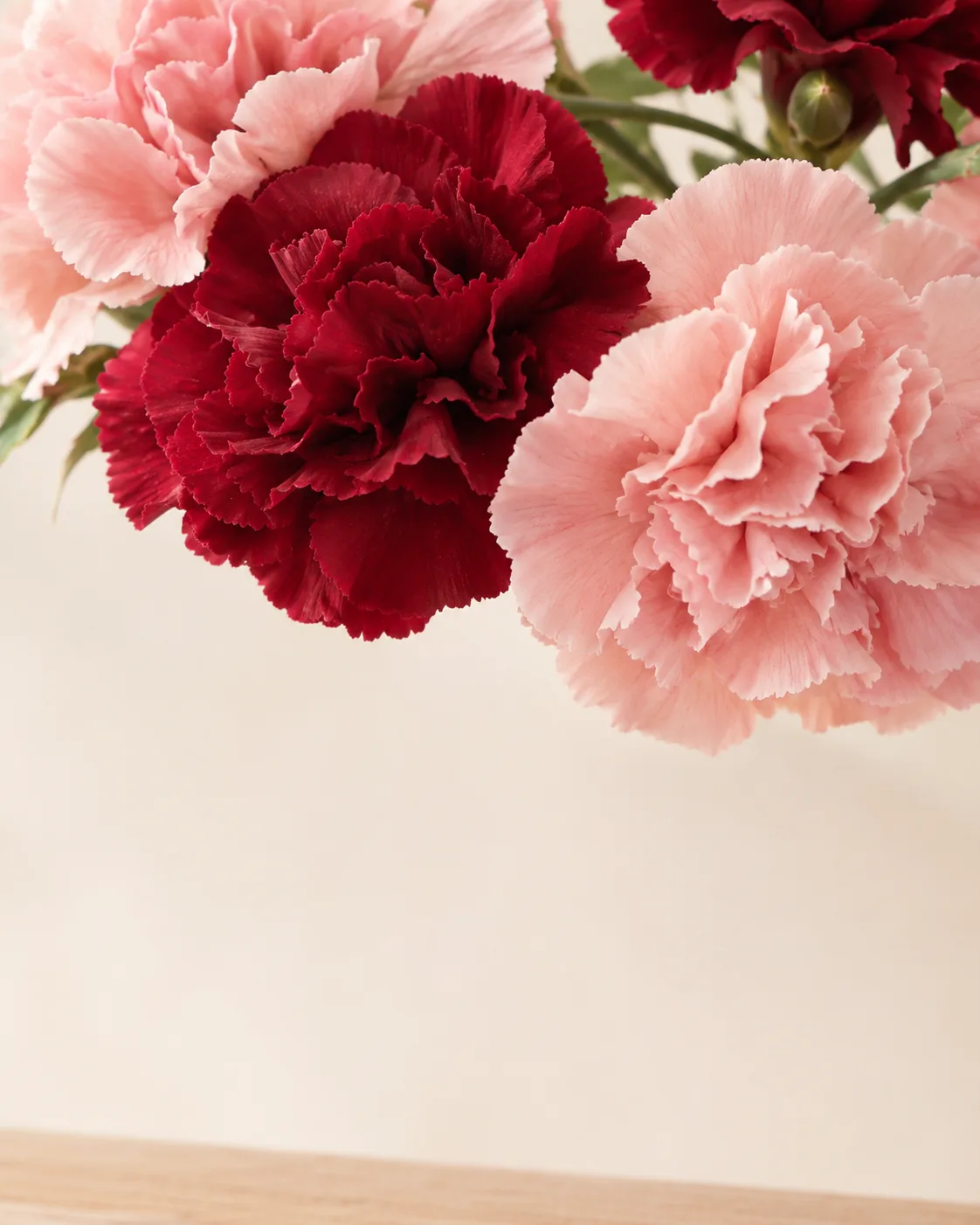
The flower itself never changed. What changed is how florists use it. Instead of a stiff dyed bunch, you now see long-stemmed carnations in muted, grown-up shades, grouped in a single color and arranged like a garden bloom.
A flower with a long history
The carnation is called Dianthus caryophyllus. The genus name comes from Greek words that mean "divine flower," and carnations have been grown in the Mediterranean region for more than two thousand years. The scent has a spicy, clove-like note, which is why the old English name for the flower was "clove pink." Chances are you have smelled it without knowing what it was.
In the United States, the carnation has a special job. In 1908, Anna Jarvis held a memorial for her mother in West Virginia and handed out white carnations, her mother's favorite flower. That event led to the creation of Mother's Day, and the carnation became its flower. Wearing a red one meant your mother was living, and a white one meant she had passed. The scarlet carnation has also been the state flower of Ohio since 1904. And in January, it is the birth flower, shared with the snowdrop.
The three kinds of carnations florists use
Not every carnation is the same, and picking the right one changes how the bouquet looks.
Carnation types at a glance
| Type | Stems and blooms | Vase life | Best for |
|---|---|---|---|
| Standard carnation | One large ruffled bloom per stem, about 2 to 3 inches across | 2 to 3 weeks | Single-color bunches, bold centerpieces |
| Spray carnation | Several small blooms on each branching stem | 2 to 3 weeks | Filler in mixed bouquets, small posies |
| Mini carnation | Small, tidy blooms about 1 inch across | 2 weeks or more | Boutonnieres, wreaths, tiny gift bouquets |
For a bouquet that looks fresh and modern, ask for standard carnations in a single color. A tight bunch of twenty or so in deep burgundy looks like a pile of ruffled velvet, and it costs far less than the same volume of roses.
The new colors to ask for
This is where the comeback happens. Growers have been breeding carnations in quieter shades for years, and the palette now looks like a paint chart from a boutique hotel.
- Burgundy and deep plum. Rich and moody, a natural for fall.
- Antique peach, dusty rose and tea. Soft, muted tones that look aged in the best way.
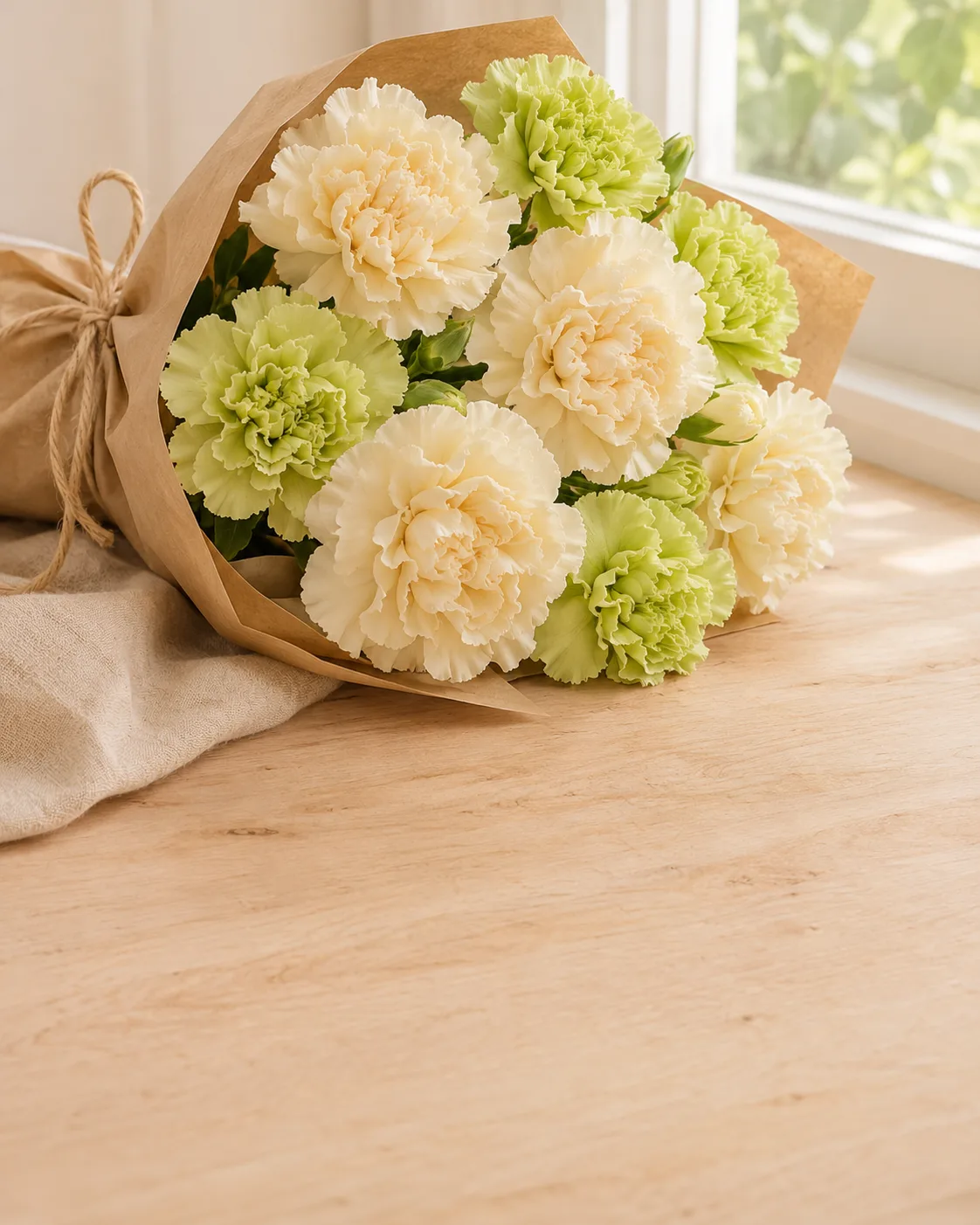
- Cream and ivory. A pure white carnation looks crisp, and a cream one looks warm.
- Soft green. A natural pale green, sometimes called "lime" or "mint," not the dyed shamrock kind.
- Picotee and bicolor. White petals edged with pink or red, which give the ruffles a hand-painted look.
If you like the look of ruffled garden flowers, a single color of carnations gets you close to the feel of garden roses or ranunculus at a fraction of the price. Try them in a clear vase with a few stems of eucalyptus.
What carnations mean
Carnation meanings depend on color, and most of them are friendly and warm.
- Red: admiration and deep affection.
- Pink: gratitude and a mother's love. Legend says pink carnations first grew where the Virgin Mary's tears fell, a story that is folklore, not history.
- White: pure love and good luck.
- Striped: in the Victorian language of flowers, a striped carnation could say "no" or "I cannot be with you," which is a reminder to check the meaning before sending a picotee to a crush.
- Yellow: historically disappointment, though most people today read it as cheerful.
If you want to compare these with the meanings of another popular flower, see our guide to what rose colors mean.
Why carnations last so long
A carnation has a firm, jointed stem and a dense, ruffled head made of many layers of petals. That structure holds moisture well, and a carnation that is kept in clean water and away from ripening fruit holds its shape and color for two to three weeks, sometimes longer.
Compare that with tulips, which can droop in four or five days, or peonies, which last about a week. When you want something that looks good for a long time, carnations are hard to beat. They are a smart choice for an office desk, a hospital stay, or for anyone who will not be home to enjoy a bouquet for a few days.
How to care for cut carnations
- Cut between the nodes. The knobby joints on the stem are the nodes. Make an angled cut in the smooth section between two nodes, about an inch from the bottom. A cut right at a node can seal the stem and slow the drinking.
- Use a clean vase and flower food. Carnations like fresh, clean water with a little flower food.
- Remove leaves below the water line. They rot quickly and turn the water cloudy.
- Change the water every two or three days. Trim a little off the stems each time.
- Keep them away from ripening fruit. Fruit gives off ethylene gas, and carnations are among the flowers most sensitive to it, so fruit can make them fade fast.
- Remove spent blooms. On spray carnations, pinch off faded flowers and the others will keep opening.
For the full routine that applies to every bouquet, see our guide on how to make flowers last longer.
When to give carnations
Carnations are a good choice for a long list of moments:
- Mother's Day, where they have an official history.
- January birthdays, since carnations are the birth flower.
- Get well and long hospital stays, because they hold up.
- Thank-you gifts and teacher gifts, where a big, colorful bunch feels generous without costing too much.
- Weddings and showers, where a florist needs a lot of ruffled blooms for tables and a small budget.
One more thing to know: the ASPCA lists carnations as mildly toxic to dogs and cats, so keep a vase out of reach if your pet likes to chew on flowers.
Carnation FAQ
How long do carnations last in a vase?
Carnations last 2 to 3 weeks in a vase with clean water, a fresh cut and flower food, and sometimes longer.
Why are carnations so cheap?
They are easy to grow in large numbers and ship well, so growers can sell them at low prices. The low price says nothing about the flower's quality.
What do carnations symbolize?
Red means admiration, pink means gratitude and a mother's love, and white means pure love and luck. They are also the traditional Mother's Day flower.
What month is the carnation flower for?
The carnation is the birth flower for January, shared with the snowdrop.
Do carnations smell good?
Yes, though lightly. Many have a soft, spicy, clove-like scent, which is why an older name for the flower is clove pink.
The short version
- Carnations earned a bad name from dye, supermarket bunches and stiff filler, not from the flower itself.
- They last 2 to 3 weeks, longer than most cut flowers.
- Ask for single-color bunches in burgundy, antique peach, cream or soft green.
- Cut between the nodes and change the water every few days.
- They are the birth flower for January and the flower of Mother's Day.
A flower that works hard and looks good doing it deserves a better reputation. FlowerEase opens on November 21 with same-day delivery from a florist near you. Until then, follow along on Instagram and Pinterest for a new flower story every week.
Read next
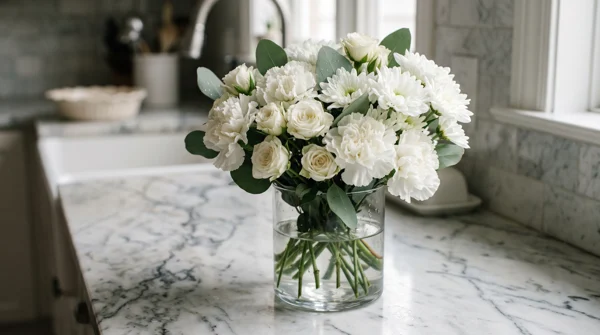
Cheap Flowers That Still Look Expensive: A Florist's Tricks
How florists make budget flowers look high-end: the best inexpensive blooms, the one-color trick, smart vase choices and the mistakes that make bouquets look cheap.
Read the article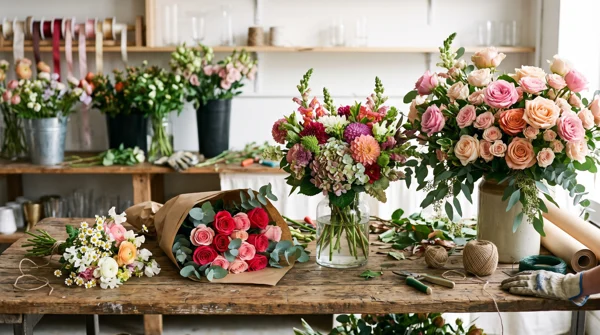
How Much Do Flowers Cost in 2026: A Florist's Price Guide
A clear 2026 price guide from a florist: what bouquets, roses, arrangements and plants really cost, what drives the price and how to get the most for your budget.
Read the article
Tulip Meaning by Color: Red, Pink, Yellow, White, Purple and More
Red tulips mean true love, pink means care, yellow means cheerful thoughts. What every tulip color says and when tulips are the right gift.
Read the article