The Victorian Language of Flowers: 10 Secret Meanings to Use Today
Imagine it is 1850 and a young man hands you a small bunch of flowers. It looks sweet, but he is not making small talk. Yellow carnations mean disdain, purple hyacinth means "please forgive me," and a sprig of basil means something rather unkind. You hold the message in your hand, and you have to read it before you answer.
That was floriography, the Victorian language of flowers. It turned a posy into a note, and it was a fashionable pastime for decades. Below is the story of where it came from, why the old books do not agree on what each flower means, and ten meanings that still work well today, whether you are choosing a bouquet or writing a card.
Where did the language of flowers begin?
Flowers have carried meaning for thousands of years. Ancient Greeks and Romans used wreaths and garlands as symbols of honor, and medieval poets wrote of rosemary for remembrance and violets for modesty. Shakespeare's Ophelia hands out flowers and says what each is for, a scene that audiences understood as coded speech.
The craze itself has a more specific starting point. In the early 1700s, the English writer Lady Mary Wortley Montagu lived in Constantinople, now Istanbul, and wrote home about the Ottoman custom of sending objects, including flowers and fruit, with hidden meanings. The idea spread through Europe, and in 1819 the French writer Charlotte de la Tour published Le Langage des Fleurs, widely seen as the first popular dictionary of the form. The trend reached Britain and the United States in the following decades and exploded in the Victorian era.
Why did Victorians need a secret language?
Social rules of the 19th century were strict. Unmarried men and women could not speak freely about feelings, and public displays of affection were frowned on. A flower message allowed someone to say "I love you," "I am sorry," "I do not trust you" or "no" without a word. Flower dictionaries, called "floral dictionaries," filled drawing rooms. Authors published them as gift books, and illustrators such as Kate Greenaway made them beautiful. People also carried small bouquets called tussie-mussies, tightly wrapped posies in a little holder, in which every bloom had a purpose.
Many of those messages were friendly and many were harsh, which is part of the charm. A bouquet could end a courtship as easily as start one.
Why do the old dictionaries disagree?
This is the part most articles skip. There was no single official language of flowers. Each author had their own list, and the lists often conflict. A yellow rose could mean friendship in one book and jealousy in another. Lavender could mean devotion or distrust. The meanings came from folklore, mythology, the look of the flower and the author's taste. Even in the 1800s, a couple had to agree on a dictionary for the code to work.
That is good news for us. Because the language was never fixed, you can treat it as a set of friendly traditions, not strict rules. The modern versions below keep the best-known and kindest meanings.
10 flower meanings to use today
- Red rose: love and desire. The most enduring message of all, and the same today as in 1850. See what rose colors mean for the other shades.
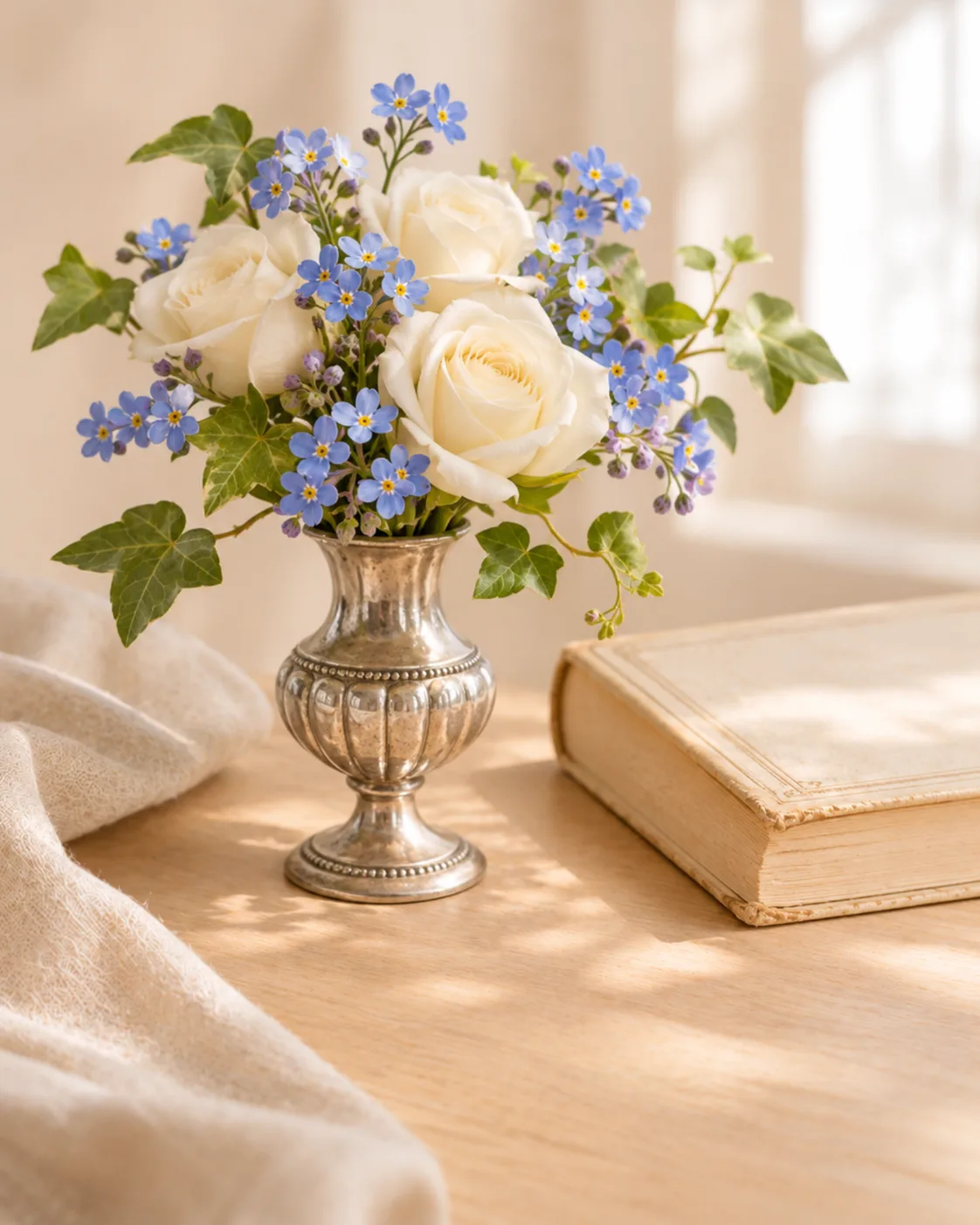
- Forget-me-not: true love and remembrance. A small blue flower with an obvious message. It works for friendships, anniversaries and long goodbyes.
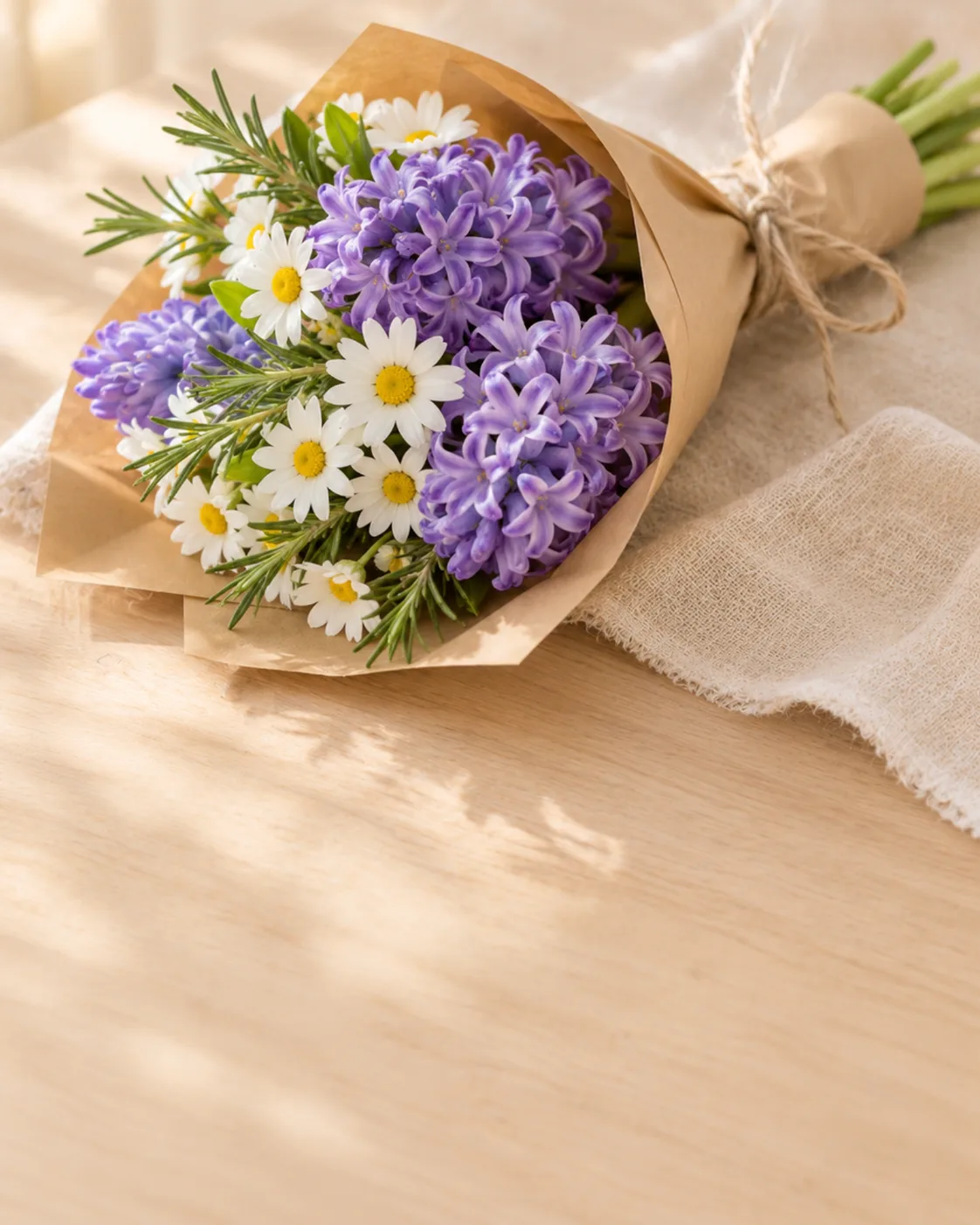
- Rosemary: remembrance. Rosemary was carried at weddings and funerals alike. A sprig tucked into a bouquet is a quiet nod to memory, and it smells wonderful.
- Ivy: fidelity and attachment. Ivy clings, which gave it a place in wedding bouquets as a symbol of loyalty.
- Daisy: innocence and a fresh start. A simple, cheerful flower that suits a new baby or a new friend.
- Lily of the valley: the return of happiness. A small, sweet-smelling spring flower. It was used in bridal bouquets, including those of royal brides.
- Purple hyacinth: sorrow and a request for forgiveness. A flower to send when you want to say sorry. For an apology bouquet, pair it with a short, honest note.
- Sunflower: adoration and loyalty. The flower that turns to follow the sun became a symbol of devotion. In some Victorian books it also meant pride, but the warm meaning won out.
- Pink carnation: "I will never forget you." A flower of gratitude and lasting memory, and a good thank-you for a mother or a mentor.
- White rose: new beginnings and purity. Used at weddings and at memorials. If you want a gentle sympathy gesture, read our sympathy flowers guide.
A few more meanings worth knowing
Beyond the top ten, some Victorian favorites are fun to add to a card. Pansies stood for thoughts, from the French word pensee, so a pansy meant "I am thinking of you." Snapdragons could mean graciousness or, in some books, deception. Ferns stood for sincerity, and a sprig of fern makes a lovely, humble bouquet filler. Violets meant modesty and faithfulness, and the white violet meant "let us take a chance on happiness." Even the herbs carried meaning: mint for virtue, sage for wisdom and thyme for courage. A small bunch of kitchen herbs tied with a ribbon is a very Victorian gift.
Victorian meanings vs. modern meanings
| Flower | Victorian meaning (varied by book) | Common meaning today |
|---|---|---|
| Yellow rose | Jealousy, infidelity | Friendship and joy |
| Carnation (striped) | Refusal, "no" | Colorful, casual cheer |
| Peony | Shame or bashfulness | Good fortune and romance |
| Lavender | Distrust, or devotion | Calm and serenity |
| Marigold | Grief, or jealousy | Warmth and autumn color |
| Tulip (red) | Declaration of love | Declaration of love |
Notice that several bad Victorian meanings have mellowed into friendly ones. A yellow rose is now one of the most popular gifts for a friend. That is the point of using the language today: pick the kind meaning, and ignore the harsh one.
How to send a message with a bouquet today
- Pick one clear idea. A bouquet with seven meanings is just noise. Choose a main flower for your message, and let the others support it.
- Add the meaning on a card. A Victorian recipient knew the code. A modern recipient needs a line of text, such as "Forget-me-nots, because I will not forget you."
- Use herbs for subtlety. Rosemary, thyme and mint add a message and scent. They also give a bouquet a natural, hand-tied look. For how to build one, see our hand-tied bouquet guide.
- Check the season. Some flowers, like lily of the valley and forget-me-nots, are spring flowers and may be hard to find in November. Ask your florist for a similar-looking substitute.
- Keep it kind. There is no need to send basil or striped carnations to anyone. The language is more fun when it is warm.
The legacy of floriography
You can still see the language of flowers everywhere. Royal wedding bouquets include myrtle and lily of the valley. The red poppy marks remembrance, and the white lily is used at funerals. Even the idea of giving red roses on Valentine's Day has its roots in the Victorian love of symbols. And modern florists still get asked daily, "What does this flower mean?" The answer is usually a mix of old tradition and personal taste.
Victorian language of flowers FAQ
What is floriography?
Floriography is the practice of sending messages through flowers. It became hugely popular in Victorian Britain and the United States during the 1800s.
Where did the language of flowers come from?
It grew from Ottoman customs of sending symbolic objects, which Lady Mary Wortley Montagu described in the early 1700s. French and English books later turned it into a fashion.
What do red roses mean in the language of flowers?
Red roses mean love and desire. This is one of the few meanings that is the same in nearly every Victorian dictionary and today.
Do flower meanings differ between books?
Yes, Victorian dictionaries often disagreed with each other. A yellow rose could mean friendship in one and jealousy in another.
Can I still use flower meanings today?
Yes, and a short card explaining the meaning makes the gesture clear. Choose the kind meaning of each flower and enjoy it.
The short version
- Floriography turned bouquets into coded messages in the 1800s.
- It began with Ottoman customs and spread through French and English dictionaries.
- The old books disagree, so there is no single correct meaning.
- Red roses, forget-me-nots, rosemary, ivy and daisies are easy meanings to use today.
- Add a short card so your recipient can read the message.
A bouquet with a story is always better than a bouquet without one. FlowerEase opens on November 21 with same-day delivery in 3-hour windows from a florist near the recipient, with space for a handwritten card, which is the perfect place for your own message in flowers.
Read next
Anniversary Flowers by Year: The Traditional List From 1st to 50th
Every anniversary year has a traditional flower, from carnations at year one to roses at fifteen. Here is the full list, what each flower means, how long it lasts and what to expect to pay in 2026.
Read the article
Birthday Flowers: What to Send by Age, Relationship and Birth Month
Which flowers to send for a birthday, how much to spend for a mom, partner or coworker, and the birth month flower for every month of the year.
Read the article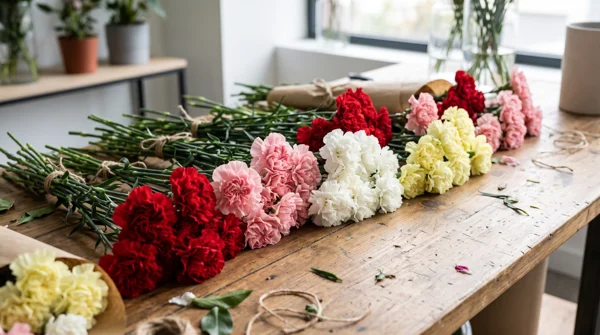
Carnation Meaning by Color: A Florist's Guide to What They Say
Red carnations mean admiration, pink means a mother's love, white means pure affection. A florist's guide to every carnation color and when to send it.
Read the article