Hospital Flowers: What to Send, What to Skip and When to Call First
A nurse at the front desk holding a bouquet she cannot place is a more common scene than most senders realize. Flowers are one of the first things people think of when a friend or relative ends up in the hospital, and one of the items hospitals turn away most often.
That does not mean you should skip them. It means a little planning decides whether your flowers brighten a room or end up on a cart in the hallway. This guide covers how to check the rules in two minutes, which flowers work, which to leave out, what size to choose, what it costs and a good alternative when the answer is no. If you are writing a note to go with them, our post on what to write on a flower card has short lines that fit a get-well message.
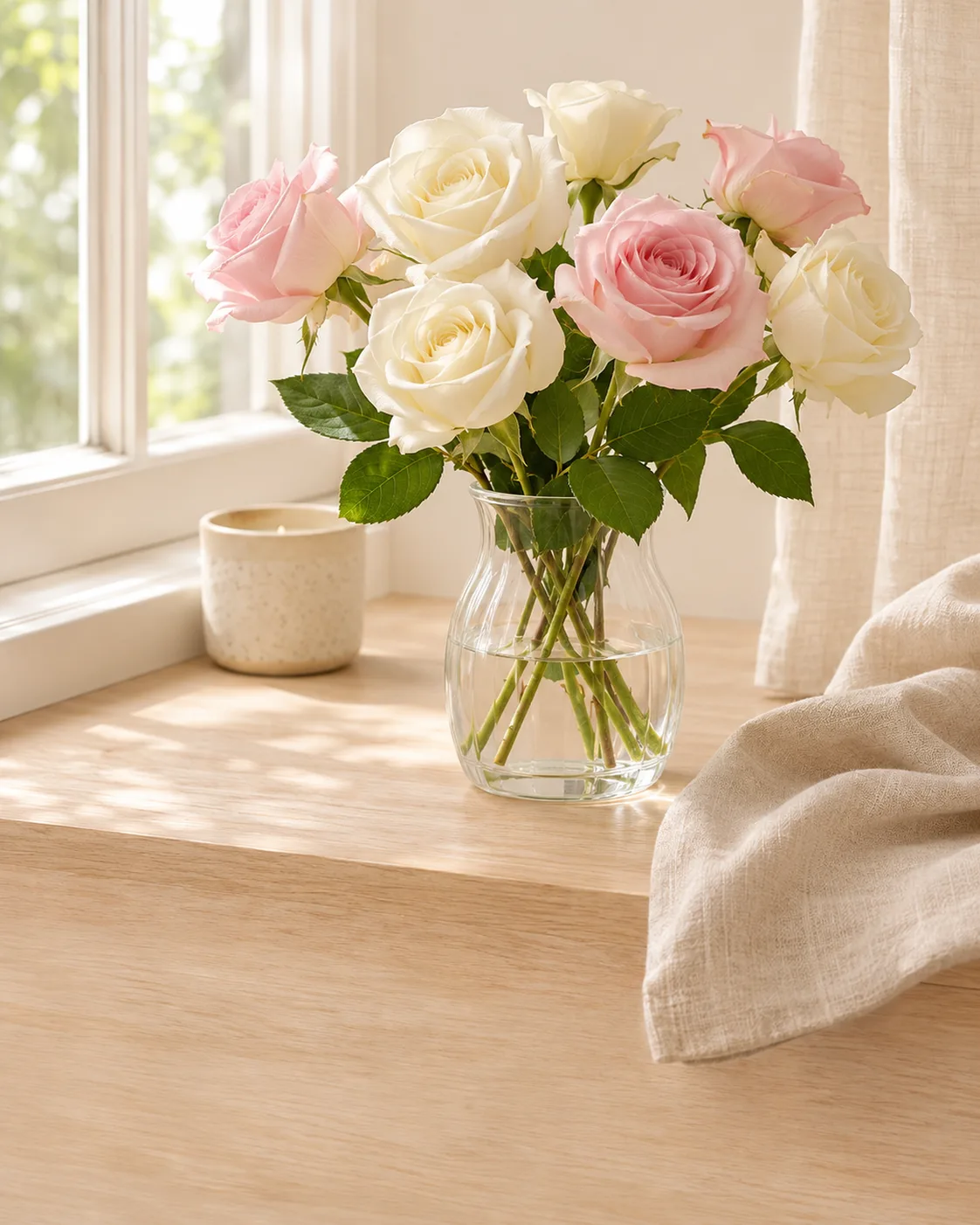
Why hospitals say no to flowers
The rules are not about being unfriendly. A few real reasons sit behind them.
- Infection risk. Standing water and soil can carry bacteria and mold. For most visitors this is a non-issue, but for patients with weak immune systems it matters.
- Allergies and asthma. Pollen and scent affect roommates, visitors and staff as much as the patient.
- Space and equipment. Intensive care rooms are full of monitors and lines. A vase on the table is one more thing in the way.
- Staff time. Nurses already manage a long list. Finding a container, filling it with water and changing it every day is not on it.
Policies differ by hospital and even by floor, so a general rule like "hospitals ban flowers" is not accurate. Some allow them everywhere except the ICU. Others only accept arrangements from the hospital gift shop. The only reliable answer is the one you get from the unit itself.
Call the unit first
This is the single step that saves the most trouble. It takes about two minutes.
- Find the hospital's main number and ask for the patient's unit, or the nurses' station.
- Ask: "Does this unit accept flowers or plants for patients?"
- If yes, ask whether delivery goes to the room or to the front desk, and whether glass vases are fine.
- Ask about visiting hours too. Some units hold deliveries until a set time.
You do not need the patient's medical details for any of this, and the staff will not share them. Just the unit name and room number if you have it.
| Unit | Flowers usually | What to do instead |
|---|---|---|
| Intensive care (ICU, NICU) | Not allowed | Card, or flowers to home |
| Oncology, transplant | Often restricted | Ask first, consider a card |
| Maternity | Usually allowed | Small, mild scent |
| General medical or surgical | Usually allowed | Small arrangement in a vase |
| Rehab and long-term care | Usually allowed | Any size that fits the room |
Treat the table as a starting point, not a rule. The phone call wins every time.
Choose light scents and skip lilies
Hospital rooms are often shared, and a patient who feels unwell is more sensitive to smell than usual. Medication can make that worse. A bouquet that smells lovely in a living room can feel overwhelming in a small room with the door closed.
Lilies are the one flower to leave out of nearly every hospital order. Their scent is heavy, the orange pollen stains sheets and clothing, and they are poisonous to cats, which matters once the arrangement goes home. Other strong scents to avoid:
- Stargazer and oriental lilies
- Hyacinth and paperwhites
- Freesia and tuberose in large amounts
- Heavily scented garden roses and gardenias
- Eucalyptus in big bunches, which is fresh but sharp
The flowers listed below are the ones florists reach for when a customer asks for something gentle. If you want to understand why so many roses at a grocery store have almost no scent at all, we explained it in why store-bought roses smell like nothing. For a hospital room, that is a feature.
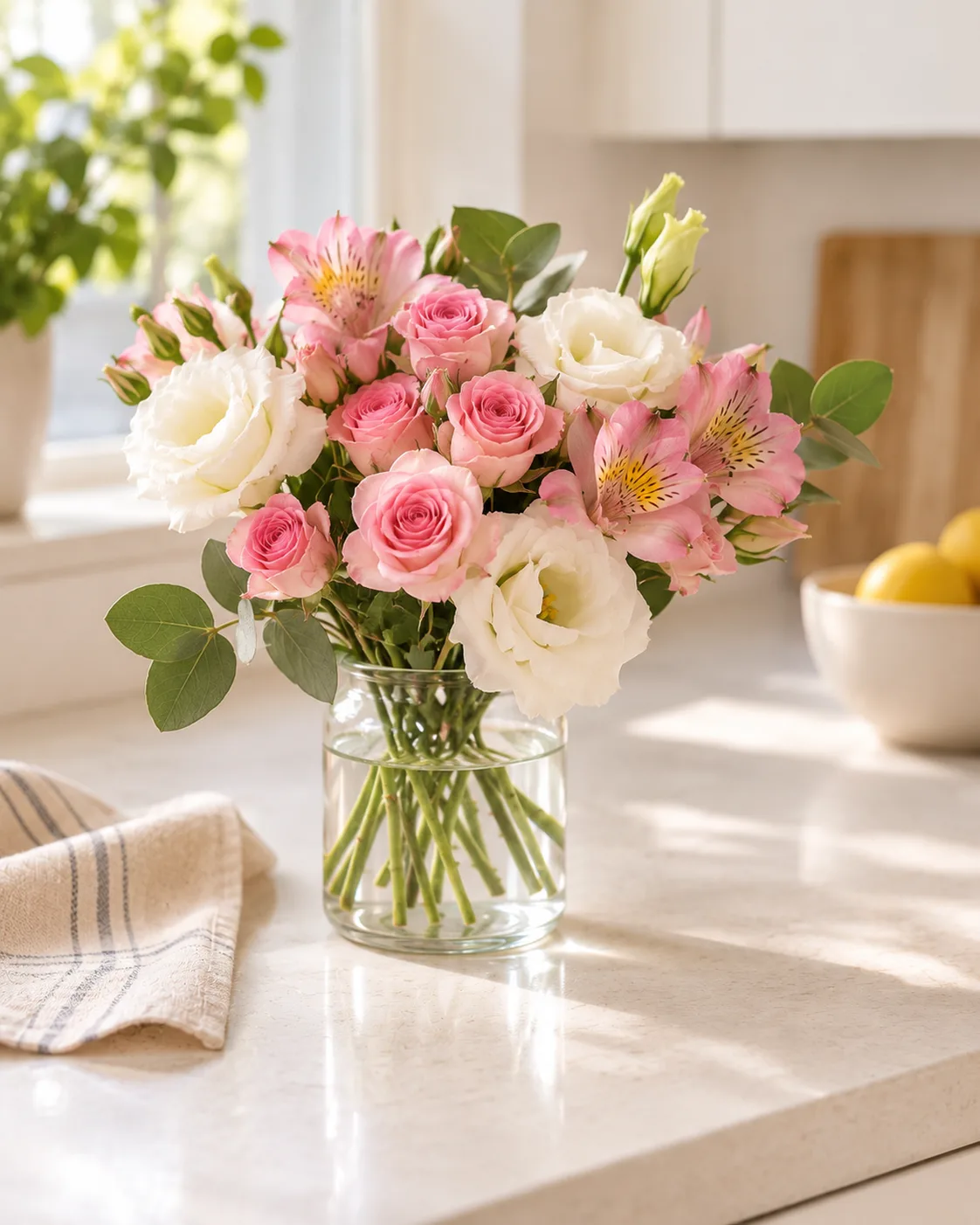
Best flowers for a hospital room
The best get-well flowers are mild, sturdy and forgiving. They should last a week or more without daily care, because nobody is going to trim stems at the bedside.
| Flower | Scent | Vase life | Why it works |
|---|---|---|---|
| Carnations | Very light | 10 to 14 days | Tough, ruffled, affordable |
| Alstroemeria | None | 10 to 14 days | Lasts, buds keep opening |
| Spray chrysanthemums | Mild, green | 10 to 14 days | Cheerful and very hardy |
| Lisianthus | None | 7 to 10 days | Looks like a rose, softer |
| Roses (standard) | Very light | 5 to 7 days | Classic, reads as caring |
| Gerbera daisies | None | 5 to 7 days | Bright, a mood lift |
| Snapdragons | Faint | 5 to 7 days | Height and color |
For a recovery room, color matters as much as the flower. Pale yellow, peach, cream, soft pink and white read as calm and fresh. Deep red and dark purple can feel heavy, and an all-white bouquet may look funeral-like to some people, so add a touch of green or a warm color. When in doubt, go for yellow. It is the color most people associate with feeling better.
To make any of them last, the usual rules apply: clean vase, fresh water, stems cut at an angle. Our guide to making cut flowers last longer covers the details, and you can pass them on to a family member who will be doing the water changes.
Send small, and already in a vase
This is the part that separates helpful flowers from a problem. A big dozen-rose bouquet in paper looks generous and is almost impossible to use in a hospital room. There is no vase, no counter space and nobody with ten free minutes.
What works better:
- Arranged in a vase or container. Water is already included. The patient can look at it right away.
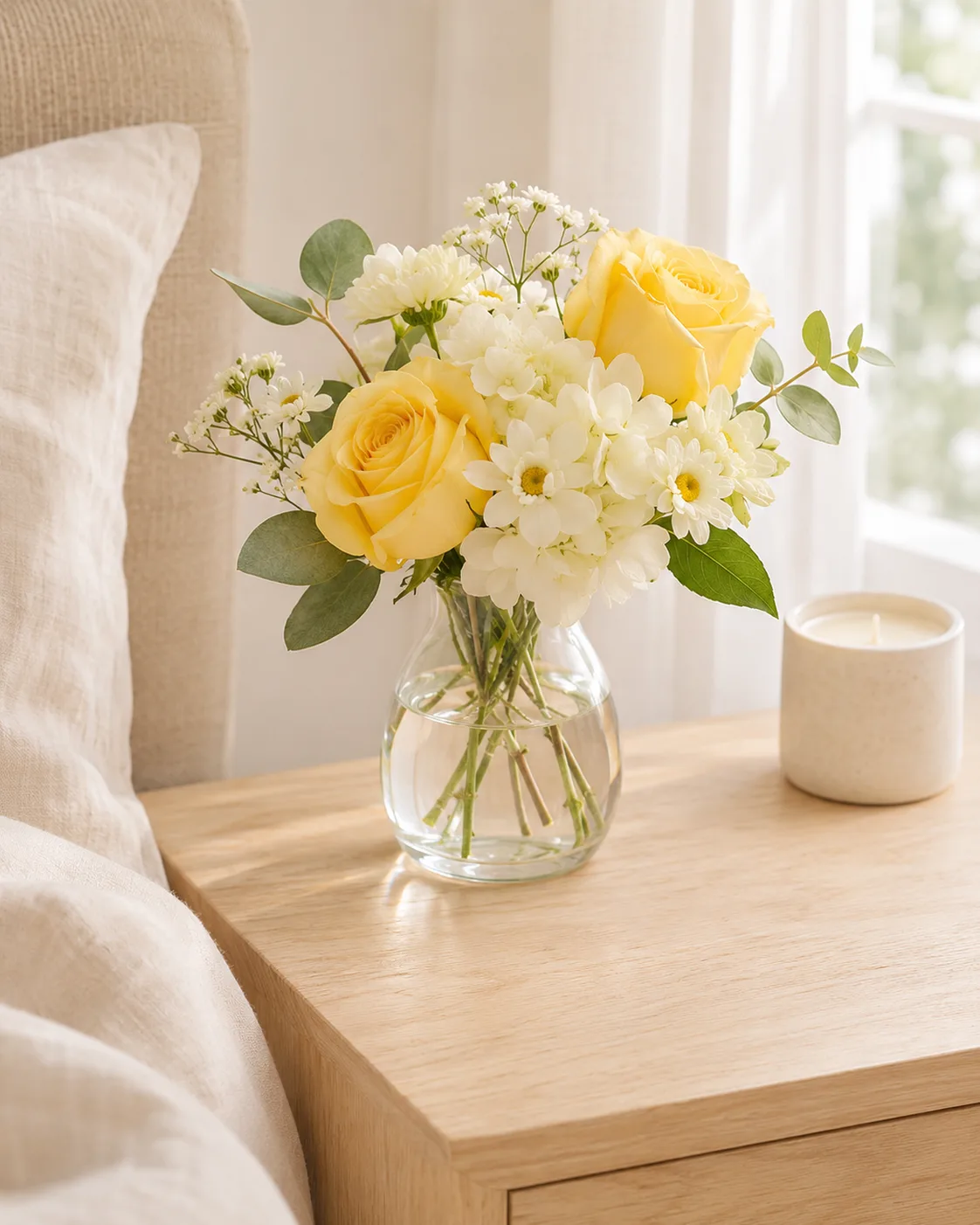
- Small, around 8 to 12 inches tall. It fits on a bedside table or window ledge.
- Stable base. A wide, low container is harder to knock over than a tall, narrow one.
- Plastic or sturdy glass is fine. Ask the unit whether glass is allowed.
- A card on the arrangement. Your name, the message and the patient's name and room number on the outside.
Keep the whole thing simple. One color family, three or four flower types, a little greenery. A hospital room is not a place for a statement centerpiece.
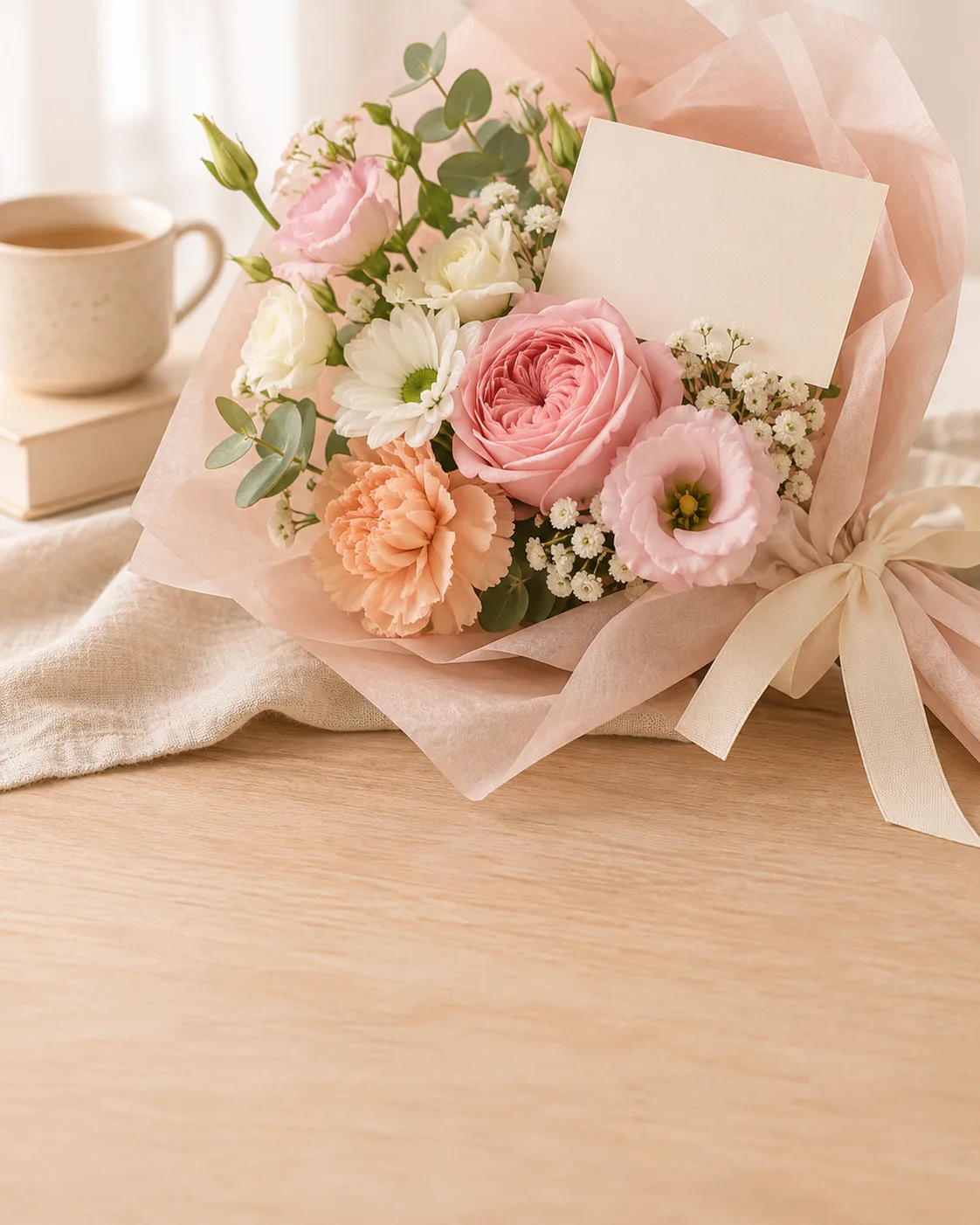
What it costs in 2026
Prices in Orange County for a ready-arranged get-well bouquet, based on what local florists are charging this year, fall into three bands.
| Size | Typical price | Best for |
|---|---|---|
| Small, 8 to 10 inches | from $40 | Hospital rooms, coworkers |
| Medium, 12 to 14 inches | $65 to $95 | Close friends, family |
| Large, 16 inches and up | $100 to $150 | Home after discharge |
Delivery usually adds $10 to $20, and some florists charge more for hospital delivery because of the wait at the front desk. If you plan ahead, ask whether the shop knows the hospital's delivery process. Many do and can tell you the best hour to arrive.
The cheapest approach is not always the best. A $40 small arrangement in a vase is a better hospital gift than a $90 bouquet that nobody can display.
Other ways to send something when flowers are not allowed
If the unit says no, you still have good options, and none of them are second best.
- Send the flowers home. Time them for the day of discharge or the day after. Coming back to a fresh bouquet on the table is a quiet, good moment.
- A handwritten card. Hospital stays are long and mail is something to look forward to.
- A small potted plant. Only if the unit allows plants, which is less common than cut flowers.
- Something to read, a cozy pair of socks or a phone charger cable. Practical and almost always welcome.
The home option is the one we recommend most. The person is tired, the schedule is full of appointments and a bouquet waiting at the door says "we thought of you" without any logistics.
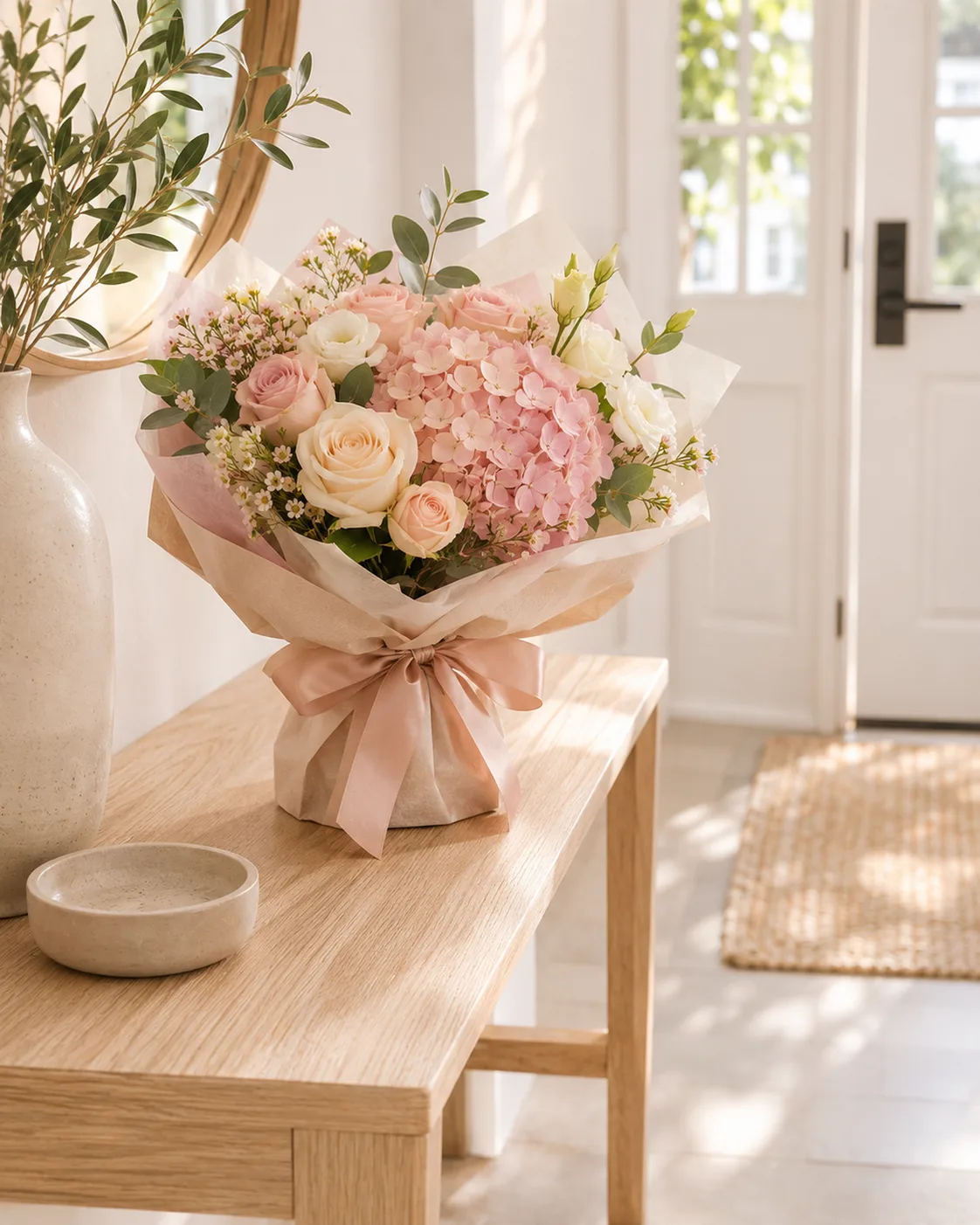
How to time a get-well delivery
Timing is half of a good get-well gift. A few rules of thumb:
- Surgery. Send the day after, not the day of. The patient is likely still groggy, and the room may be in flux.
- Short stay. Flowers can arrive after the person is already home. Do not rush to beat discharge.
- Long stay. Spread your gifts out. A bouquet in week one and a card in week three is better than two bouquets on the same day.
- Visiting hours. Many hospitals only accept deliveries before 8 PM. Morning arrival is the safest.
If you are also sending something to a family, the principles are similar but the tone changes. See our sympathy flowers guide when the situation is loss rather than recovery. For same-day timing, our page on same-day flower delivery in Orange County explains order cutoffs and how delivery windows work.
Hospital flowers FAQ
Are flowers allowed in hospital rooms?
Often yes, but not everywhere. General medical and surgical floors usually accept them, while ICUs, NICUs and many oncology or transplant units do not. Call the unit to confirm before you order.
Why shouldn't you send lilies to a hospital?
Lilies have a heavy scent that bothers roommates and patients who feel sick, the pollen stains linens and clothing, and the plant is toxic to cats once it goes home. Roses, alstroemeria and carnations are safer choices.
What size flowers should I send to a hospital patient?
Small, about 8 to 12 inches tall, and already arranged in a vase with water. That way it fits on a bedside table and nobody on staff has to find a container.
Can you send flowers to a patient in the ICU?
Usually not. Most intensive care units do not accept flowers because of infection control and limited space. Send a card, or send the flowers to the person's home for after discharge.
How much do get-well flowers cost?
A small ready-arranged bouquet starts around $40 in Orange County in 2026, a medium one is $65 to $95, and delivery adds roughly $10 to $20. A small arrangement is often the better pick for a hospital.
Is it better to send flowers to the hospital or to the home?
If the unit allows flowers, either works. If the stay is short or the unit does not accept them, home is often better, because the person gets to enjoy the flowers for the full week they last.
The short version
Call the unit first. Choose light scents and leave out lilies. Send something small, already in a vase, in soft colors. If the answer is no, send the flowers home for the day the person walks back in. It is a small kindness, done right.
Read next
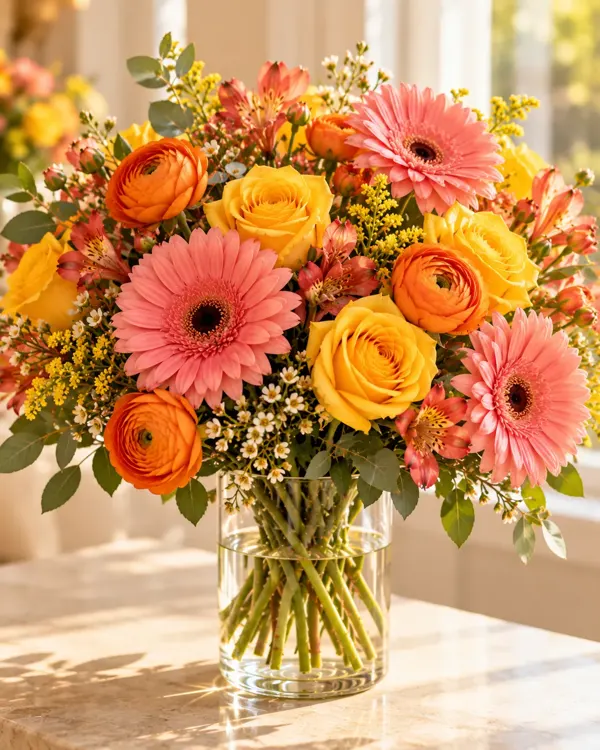
Birthday Flowers: What to Send by Age, Relationship and Birth Month
Which flowers to send for a birthday, how much to spend for a mom, partner or coworker, and the birth month flower for every month of the year.
Read the article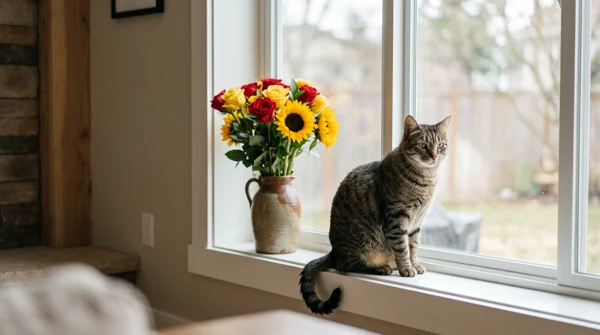
Are Lilies Toxic to Cats? What Every Pet Owner Should Know
Lilies are one of the most dangerous flowers for cats. Which lilies are toxic, the warning signs, what to do right away and safer flowers to send instead.
Read the article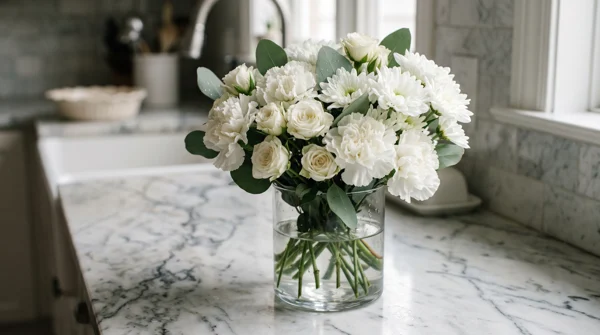
Cheap Flowers That Still Look Expensive: A Florist's Tricks
How florists make budget flowers look high-end: the best inexpensive blooms, the one-color trick, smart vase choices and the mistakes that make bouquets look cheap.
Read the article